Al-Daqqaq Condemns Bahrain's Shia Clerics Trial as Court Judgment Expected
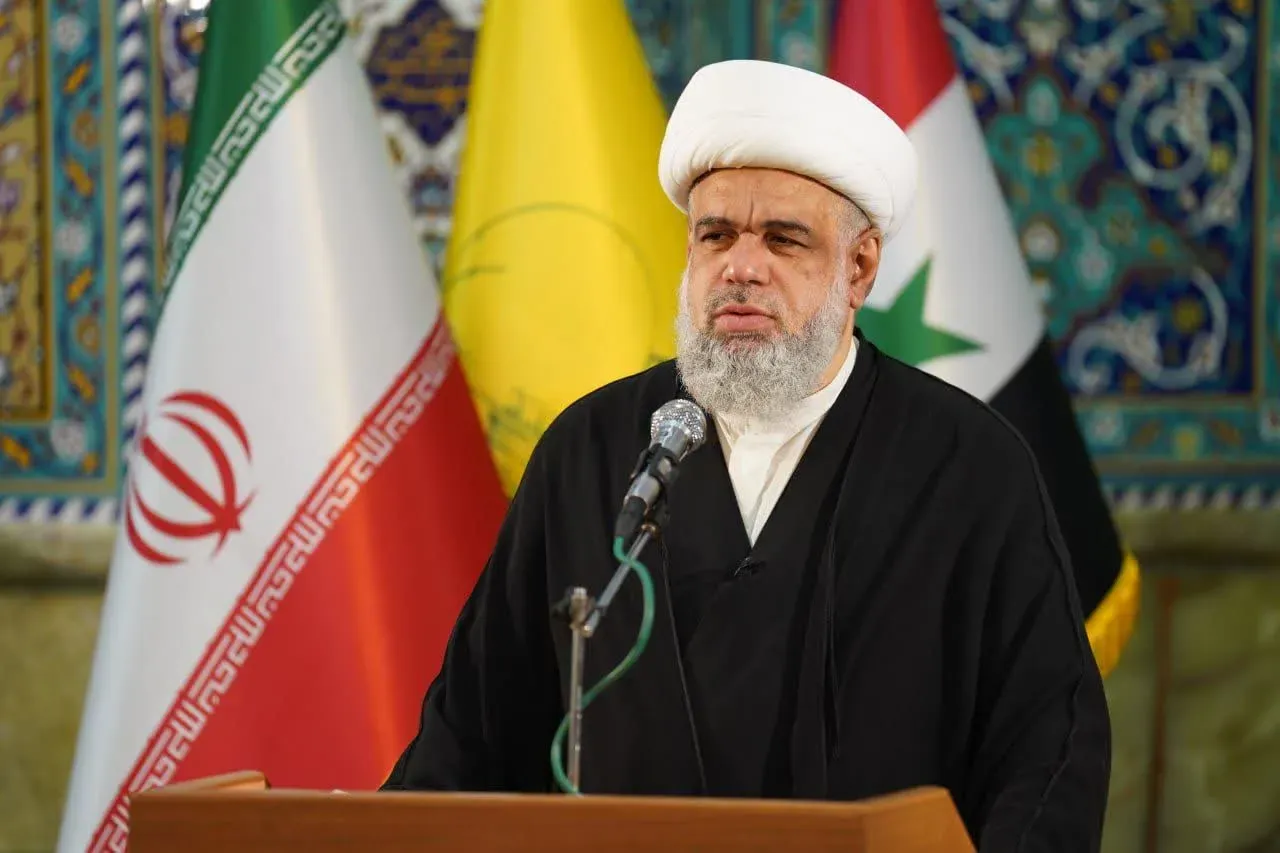
Ayatollah Abdullah al-Daqqaq has denounced the prosecution of Bahraini Shia scholars as a crime against their faith and demanded an immediate halt to the proceedings. His remarks come as Bahrain's High Criminal Court was expected to issue a judgment on...
Key points
- Prosecutors allege the defendants sought to form a terrorist group to overthrow the constitutional regime and promote Velayat-e Faqih.
- According to Amnesty International's joint statement, 60 Shia clerics and nine affiliates are defendants, with 56 in custody.
- Al-Daqqaq said 50 of 56 scholars were questioned without a defense attorney despite formal requests for counsel.
- Al-Daqqaq reported that 85% of statements entered into official minutes were identical and some scholars denied making them.
- Twenty international and regional rights organizations called for fair proceedings, exclusion of coerced confessions and release of arbitrarily detained people.
The defendants and the prosecution's allegations
According to IQNA, citing al-Daqqaq's media office, the senior Bahraini cleric rejected the trial's legitimacy during the program "Stop the Trial". He characterized it as a sham and a political farce directed not only at individual scholars but also at Twelver Ja'fari Shia Islam and a fundamental part of Bahraini society.
A joint statement published by Amnesty International identifies the defendants as 60 Shia clerics and nine affiliates. It says 56 are in custody: 47 clerics and the nine affiliates, whose ranks include religious reciters known as radoods. The other 13 clerics are on trial in absentia.
Prosecutors allege that the defendants sought to form "a terrorist group" to overthrow the "constitutional regime" and promote Iran's doctrine of wilayat al-faqih, or Guardianship of the Islamic Jurist, through control of mosques and local religious gatherings, according to the statement.
The accused include Sheikh Mohammed Sanqour and Sheikh Ali Al-Sadadi, both of whom led Friday prayers at Duraz's Imam Al-Sadiq Grand Mosque, the site of Bahrain's largest Shia Friday congregation. Another defendant, Sayed Moosa Al-Alwedaie, served as imam of the Grand Mosque in Ras Al-Ro'maan.
Religious belief and evidence of affiliation
Al-Daqqaq argued that belief in Velayat-e Faqih, or Guardianship of the Jurist, must not be treated as proof of membership in a political organization or allegiance to a foreign state. Those allegations, he said, require evidence independent of a person's religious beliefs.
To illustrate his argument, he cited Sheikh Muhammad Hasan al-Najafi, the Imami jurist who wrote Jawahir al-Kalam and supported Velayat-e Ammah, the general guardianship of the jurist. Al-Daqqaq questioned whether that belief alone could establish affiliation with an organization or the founding of a state, noting that al-Najafi had been dead for more than 170 years.
Questions over questioning and defense access
Al-Daqqaq challenged the integrity of the proceedings and the protections afforded to the defense. He said witnesses reported being unable to remember their earlier statements in 40% of their testimonies. Of 56 scholars interrogated, he said, 50 were questioned without a defense attorney even though formal requests had been made for counsel to attend.
He also reported that 47 scholars underwent questioning between 10 p.m. and 7 a.m., with several describing extreme fatigue and exhaustion. In his account, 85% of the statements entered into the official minutes were identical. Some scholars denied having made the statements recorded in their names, he added, questioning how those records had been prepared.
The volume of material was another obstacle he identified. Citing official figures, al-Daqqaq put the main case file at approximately 16,000 pages, accompanied by another 10,000 pages of financial attachments. He said repeated requests had not secured defense lawyers access to all the documents and evidence, and questioned whether a fair trial could be guaranteed under those conditions.
Rights organizations raise detention and torture concerns
In a statement dated November 6, 2026, 20 international and regional human rights organizations expressed deep concern about the mass trial. They called for fair proceedings, the exclusion of coerced confessions and freedom for people arbitrarily detained. Signatories included Amnesty International, Human Rights Watch, the World Organisation Against Torture (OMCT), the Bahrain Institute for Rights and Democracy (BIRD), ADHRB and FIDH.
The organizations reported that some defendants had been held at undisclosed locations without contact with the outside world. Detainees described being forced to stand, kept blindfolded and handcuffed for prolonged periods, deprived of sleep, and threatened with physical and sexual violence against themselves and their families.
According to the statement, Bahrain's Special Investigation Unit dismissed torture complaints. In one case, the unit cited CCTV footage that it said had been automatically deleted after a month. The organizations linked the detainees' accounts to concerns voiced in January 2026 by the UN Committee against Torture about incommunicado detention and insufficient safeguards for terrorism suspects in Bahrain.
Warnings from senior clerics amid a wider crackdown
Al-Daqqaq warned that continued detention, pressure on scholars and attacks on people's beliefs could have dangerous consequences. He said the trial was invalid in every respect and that he did not recognize its legitimacy.
His remarks also drew on five Quranic principles governing societies: respite, Istidraj, or the gradual leading of the unjust toward ruin, the consequences of oppression, divine retribution and the promised victory of believers. He said that God gives oppressors time but does not abandon them to act unchecked. In his account, oppression ultimately ends in defeat, while victory for the scholars, believers and oppressed is assured by divine promise.
The case forms part of a broader crackdown in which Human Rights Watch says more than 700 people, including children, have been arrested. The organization said at least 37 clerics were seized on May 9, 2025. Tehran Times also reported that Bahrain revoked the citizenship of 69 Bahrainis of Iranian descent in April 2026; 33 were children, the youngest just 19 days old.
Sheikh Isa Qassim, the senior Shia cleric whose Bahraini citizenship was revoked in 2016, issued a separate appeal on Friday, November 6, 2026. He urged peaceful public support for the 60 clerics awaiting the verdict and warned of grave consequences from a case he described as resting on fabricated, defamatory accusations.