Bahrain Promises More Labor Inspections After MPs Seek Tougher Penalties
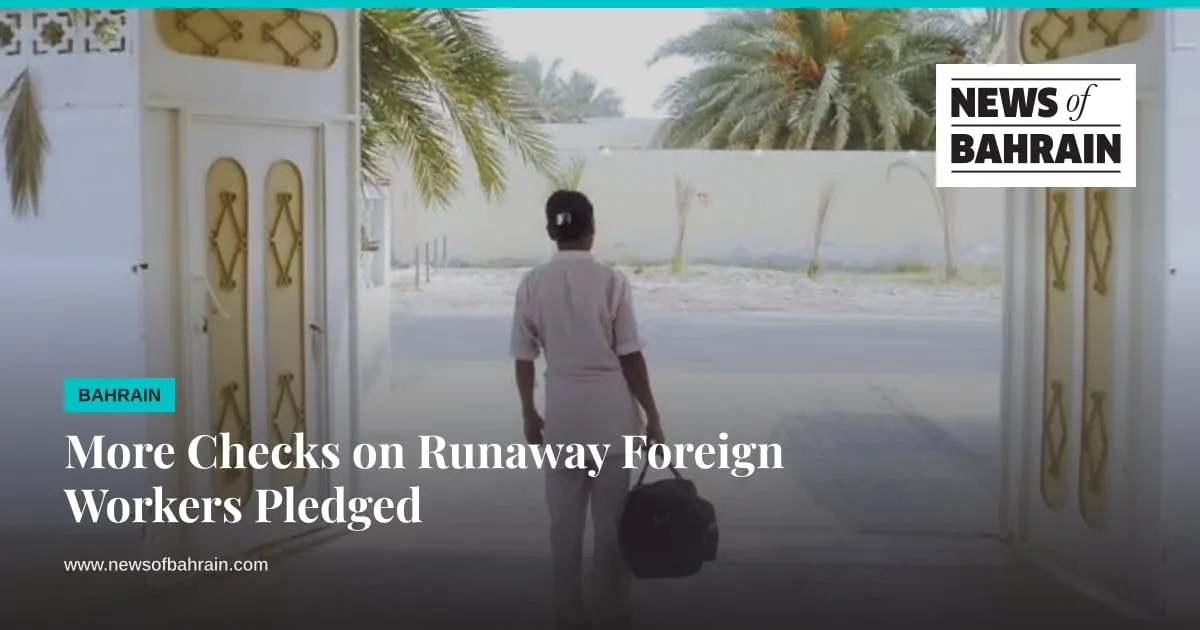
Bahrain's government has pledged to increase inspections and review labor-law enforcement in response to MPs' concerns about foreign workers leaving employers unlawfully. It warned that violations can lead to permit cancellation and a ban on new work p...
Key points
- Employers report unlawful departures to the LMRA, which has 30 days to investigate a reported violation.
- Household employers' reports are handled faster, with domestic workers' permits cancelled within five days once allegations are confirmed.
- The government put the cases at no more than 2.28% of foreign workers, saying they are not an exceptional threat to the labor market.
- The 2025 State Department report says migrant workers can change employers without consent after one year, with LMRA approval required.
MPs and government differ on the scale of the problem
The government's response followed Parliament's approval of a proposal from Second Deputy Speaker Ahmed Qarata seeking swifter action and tougher penalties for foreign workers, including domestic staff, who leave their employers unlawfully.
Qarata said such departures had increased sharply in recent months, causing financial losses, legal disputes and psychological strain for households. "Foreign workers and domestic staff running away from their jobs have become a serious problem for citizens," he said.
He also called on citizens and residents not to employ those workers. "There is a need to make all citizens and residents aware that they must not deal with or employ foreign workers and domestic staff who have run away," he said.
The government put the cases at no more than 2.28% of foreign workers and said they did not constitute an exceptional threat to the labor market. It argued that current laws already meet the aims of Qarata's proposal, but committed to more inspections, stronger enforcement and a review of further measures to prevent permit violations.
Foreign workers account for most employment in Bahrain. An August 2025 International Labour Organization factsheet, citing the country's 2020 census, put non-nationals' share of total employment at around 72%.
Inspection activity and screening concerns
The Labour Market Regulatory Authority (LMRA) reported conducting 4,847 inspection campaigns and visits in September 2026 as part of its ongoing enforcement work. It recorded 67 detentions of workers violating labor rules or lacking regular status, along with the deportation of 547 violators.
A separate assessment in the U.S. State Department's 2025 Trafficking in Persons Report on Bahrain raised concerns about screening during enforcement. The report said more than 28,000 inspections led officials to identify 84 potential trafficking victims, refer 38 potential victims to the Public Prosecution Office and deport more than 5,000 foreign workers. Those figures suggested continuing gaps in officials' use of screening tools, according to the report.
Reporting violations and changing jobs lawfully
In its response to MPs, the government outlined the process for reporting workers who leave in violation of their permit terms. Employers submit reports to the LMRA, which has 30 days to investigate. A confirmed violation leads to cancellation of the worker's permit, entry on a list of labor-law offenders and a prohibition on obtaining another work permit.
Reports from household employers follow a faster process: the LMRA checks the allegations and, once confirmed, cancels domestic workers' permits within five days. Those found in violation are barred from receiving new permits to work in Bahrain.
The LMRA's published "Expatriate Employee Absence from Work Notification" service specifies that employers may file a notification after an employee has been absent for at least 15 days without a justifiable reason. It lists an 11-working-day verification period and an administrative fee of BHD 5. Approval prevents the reported worker from transferring to a different employer or being re-employed by the employer who filed the report.
Lawful job changes remain available under the rules described in the State Department's 2025 report. It says all migrant workers, including domestic workers, may change employers without the current employer's consent after one year of employment, although each transfer requires LMRA approval. Workers may also terminate employment at any time, observing their contractual notice period, and leave Bahrain permanently without employer consent.
The government also warned of consequences for employers who knowingly hire foreign workers without valid permits. They risk prosecution, while people who assist or agree to participate in such offenses may face criminal liability under the Penal Code.
Options for households facing losses
Domestic employment involves a substantial workforce. The State Department's 2025 report cited a Bahraini government count of approximately 78,900 domestic workers as of February 2024. Women made up 85%, and workers came predominantly from the Philippines, Ethiopia, India, Indonesia, Kenya, Pakistan and Sri Lanka.
The government pointed MPs to several existing measures for households facing losses when domestic staff leave unlawfully. The LMRA maintains an online directory of licensed recruitment agencies, allowing families to locate approved providers rather than use unlicensed intermediaries.
Its complaints office handles disputes when a recruitment agency fails to provide a replacement after a domestic worker leaves during probation, despite a contractual obligation to do so. Families can also purchase optional insurance against certain domestic-worker-related risks, including departures that breach work-permit rules.