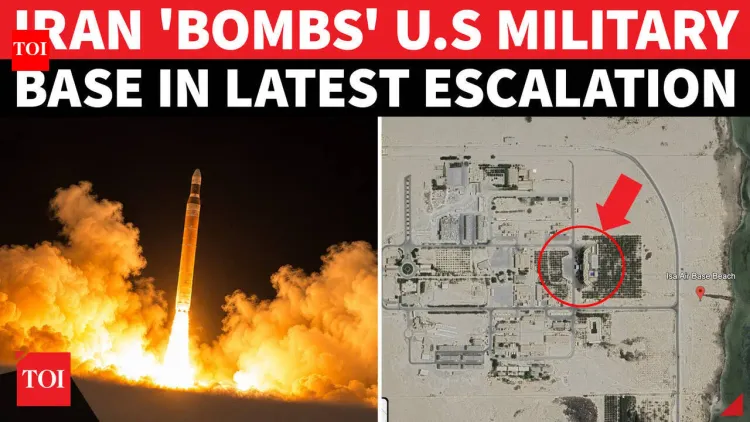
Iranian Drones Intercepted in Bahrain as US-Iran Standoff Persists
Bahrain and US Central Command said they intercepted an Iranian drone attack Tuesday that Tehran said targeted a US radar system at Sheikh Isa base. It was the third such attack in five days, amid stalled peace talks, disrupted Gulf shipping and disput...

Key points
- Iran's IRGC said Tuesday's drone launch was justified by repeated alleged incursions into Iranian airspace by US military drones.
- US Central Command said the Tuesday drones caused no damage to US equipment and injured no American personnel.
- CNN, citing seven unnamed US officials, reported Iran is drawing up options to attack Washington officials using a dirty bomb or chemical weapon.
- Iran's UN mission categorically rejected the reported attack allegations as false and fabricated, and Iran's foreign minister likened them to Iraq War-style propaganda.
- Trump said the US naval blockade would continue to pressure Tehran economically, and Iran's crude production fell to 1.86 million barrels a day in October.
Bahrain faces renewed drone attacks
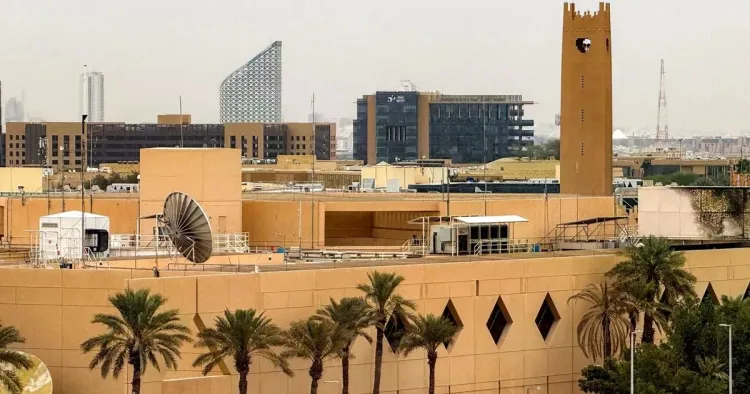
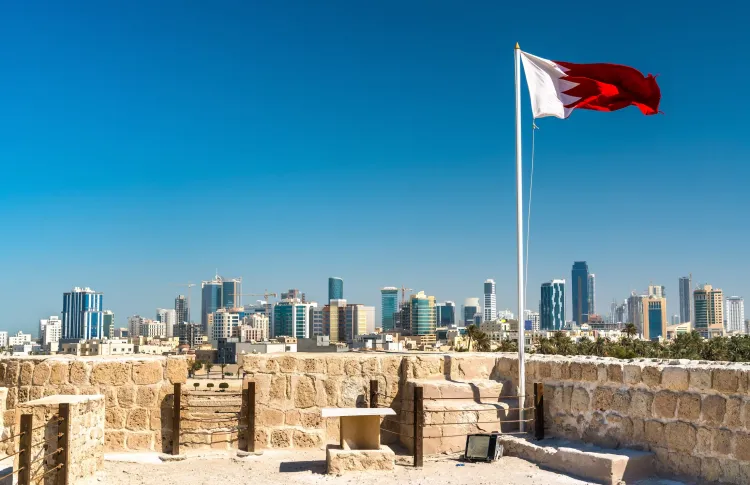
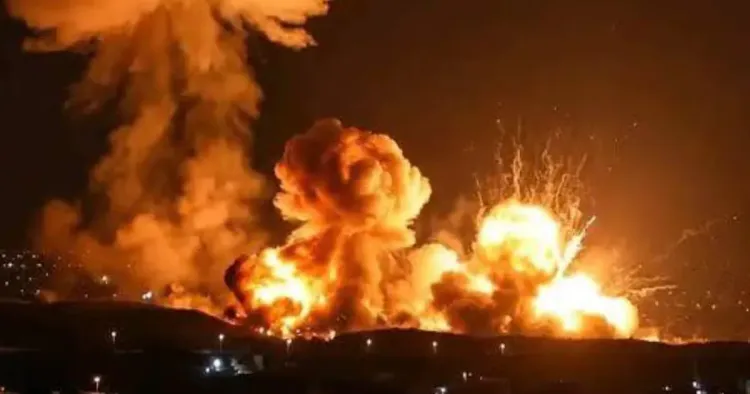
Bahrain issued an air raid alert and urged residents to seek shelter before announcing the interception. The Islamic Revolutionary Guard Corps, or IRGC, identified its target as a radar system at Sheikh Isa base, home to the US Fifth Fleet. US Central Command said the Iranian one-way attack drones caused no damage to US equipment and injured no American personnel. Reuters reported no casualties or damage.
The latest series of attacks on US-linked targets in Bahrain broke a roughly two-month lull, according to Gulf News and Yahoo News / IBTimes. Tuesday's launch followed attacks on Friday, Nov. 13, and Sunday, Nov. 15. The IRGC described Friday's target as a US early-warning radar installation and said it was retaliating for an American strike on a communications tower at Sirik overlooking the Strait of Hormuz. Central Command said it intercepted two drones that day, with no injuries or damage. On Sunday, Tehran said it targeted US radar at the Al-Rifaa helicopter base.
For Tuesday's operation, the IRGC cited alleged repeated incursions into Iranian airspace by US military drones rather than a particular American strike. Analysts cited by Gulf News said that rationale may indicate Tehran is expanding the circumstances it considers grounds for attacking US installations.
Iran has attacked radar and air-defense infrastructure elsewhere in the Gulf, including Qatar and the United Arab Emirates. Andreas Krieg, a risk analyst with MENA analytica, told AFP that Bahrain is "the most vulnerable because of its geographic exposure," noting its lack of strategic depth. He characterized the confrontation as an effort by Washington and Tehran to test each other's limits without setting off another full-scale war.
Separately, a Bahraini court imposed life sentences on 64 people, most of them Shi'ite clerics, on charges of working with Iran to undermine the state. Iran's Foreign Ministry condemned the verdict.
Washington attack allegations draw denials and warnings
CNN, citing seven unnamed US officials, reported that American intelligence indicates Iran is drawing up plans to attack senior Trump administration officials in Washington, DC, using a "dirty bomb" or chemical weapon. The network described the planning as a way for Tehran to develop options, not evidence of an imminent attack.
One source told CNN that intelligence agencies had detected Iranian "chatter" about bomb-making materials stored inside the United States. That assertion has not been independently verified, and CNN presented no supporting evidence for it.
The White House said it was "monitoring any and all potential threats, but at this time, there are no credible threats to the homeland." Iran's UN mission said Tehran "categorically rejects and unequivocally refutes the false and fabricated allegations."
Iranian Foreign Ministry spokesman Esmaeil Baghaei called the report a "fabricated media narrative" and wrote on social media that "Those who initiated the aggression against Iran are now seeking to lay the media groundwork." Foreign Minister Abbas Araghchi likened the allegations to "Iraq War-style propaganda."
President Donald Trump, speaking to reporters in the Philippines, warned that an Iranian attack on Washington would mean Tehran would "pay a price the likes of which no country has ever paid before." Homeland Security Secretary Markwayne Mullin told CNBC: "If you were to go after one of our cities or go after Washington, DC, you would cause an all-out war."
Three US carrier groups and unresolved war talks
Negotiations to end the nine-month-old US-Israel war on Iran remain stalled. Trump said last week that Washington does not "need" an agreement. On Nov. 9, he described the war as effectively finished in military terms but indicated that the US naval blockade would continue to exert economic pressure on Tehran, according to Yahoo News / IBTimes.
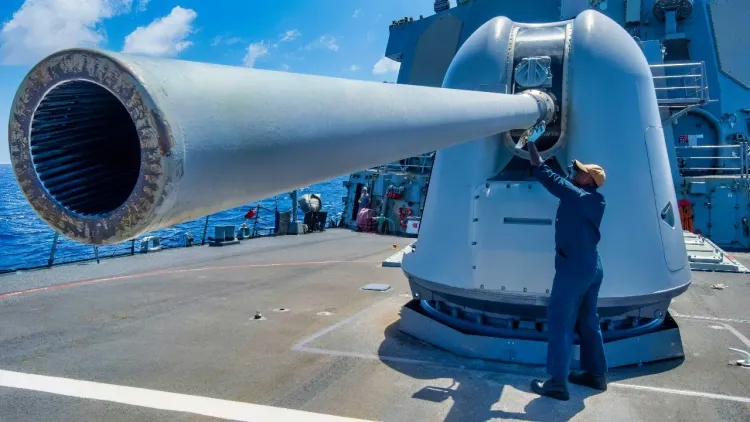
The arrival of the USS Theodore Roosevelt carrier strike group raised the number of US carrier strike groups in the Middle East to three. The force includes the USS George H.W. Bush, the USS George Washington and more than a dozen destroyers. Central Command declined to clarify whether all three groups would stay together in the region or whether the Roosevelt would replace another carrier.
Israel's Institute for National Security Studies assessed that the US naval deployment now surpasses its size during the February-March phase of the war, with greater capacity for offensive operations and missile interception. Its assessment found a different pattern on land: US air power at regional bases remained below March levels, with aircraft moved farther west or to Europe. The institute supplied no exact personnel or vessel counts.
Vice President JD Vance told Fox News host Laura Ingraham that "Trump is not going to let this become a forever war." He said Trump was weighing whether to declare "We're done now" or apply additional military and diplomatic pressure.
Iranian officials continued to reject American pressure. Chief of Staff Lt. Gen. Abdulhadi claimed "notable accomplishments in the maritime field" and said: "We managed to push the Americans back at sea, and with God's help we will push them in this region up to the South Pole, so be prepared for that." Deputy Foreign Minister Kazem Gharibabadi wrote on X that countries' destinies rest not with the White House but with "the will of the independent and resilient people of these countries."
Oman seeks dialogue as tanker attacks mount
During Araghchi's visit to Oman, he and Omani Foreign Minister Badr Albusaidi discussed protecting maritime routes and keeping international shipping and trade moving, Oman's Foreign Ministry said. They also explored reviving dialogue and negotiations to avert escalation, broaden mutual understanding among the parties and keep the crisis from spreading.
The Strait of Hormuz remains a major obstacle in peace negotiations. Before the conflict, it carried one-fifth of global energy supplies, according to the Omani ministry. Iran continues to disrupt shipping, and Trump has said the United States will maintain its naval blockade in response.
Reported tanker attacks in and around the strait reached their highest monthly total of the war in October, following the conflict's start in late February. Two tankers were reportedly attacked on Monday, Nov. 16, according to UK Maritime Trade Operations figures cited by gCaptain. Both experienced engine-room fires, and one was left disabled.
The Joint Maritime Information Center recorded five attacks off Oman's Musandam Peninsula from Nov. 1 onward. It also reported roughly 227 commercial ships stationary at major anchorages east of the strait, including Fujairah, Khor Fakkan, Sohar and Musandam.
Oil exports have recovered more than vessel traffic. Figures from the International Energy Agency and UKMTO, reported by gCaptain, put October Gulf oil exports excluding Oman at 18.4 million barrels a day, about 26 percent short of pre-war levels. Crude shipments accounted for 15 million barrels a day, or roughly 82 percent of their pre-war volume. Overall vessel traffic through Hormuz was still approximately 65 percent below its pre-conflict level.
Iran faces falling output and pressure over the blockade
Iran's crude production dropped to 1.86 million barrels a day in October, nearly 46 percent below its pre-war level, according to the International Energy Agency. Energy intelligence firm Kpler said Iranian crude loadings effectively halted in mid-August, forcing production cuts toward the amount needed for domestic consumption.
Iranian hardliners have urged Tehran to impose costs on the United States for its blockade rather than wait for another American attack. Gulf News reported that participants in a Saturday state-television roundtable titled "How to Break the Blockade?" advocated disrupting oil shipments through Hormuz.
On Tuesday, Iranian President Masoud Pezeshkian acknowledged both the public's hardship and the leadership's responsibility: "These people deserve a much better life than the situation they are trapped in now. We are to blame."