EU Envoy Says Gulf Summit Preparations Continue Despite Postponement
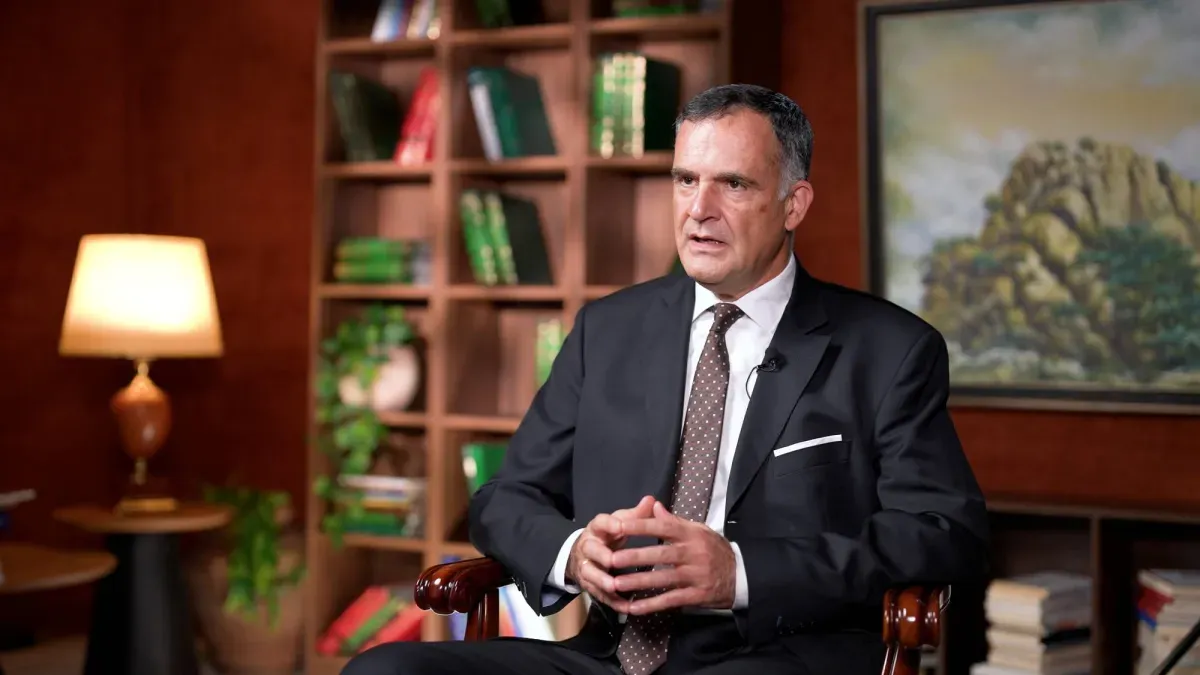
The European Union and Gulf states have yet to agree on a new summit date, but preparations are continuing, including for a ministerial meeting soon, EU Ambassador Christophe Farnaud told Asharq Al-Awsat. He said the delay had not changed either side's...
Key points
- The second GCC-EU summit was to take place in Riyadh on October 24, 2026, before being postponed by the GCC General Secretariat.
- The GCC General Secretariat cited continuing Houthi attempts to strike Saudi Arabia, prolonged airport flight suspensions and safety concerns for visiting delegations.
- The EU's maritime security operation ASPIDES was renewed through February 28, 2027, with nearly €15 million set for common operating costs.
- Farnaud said the EU is negotiating a visa-free travel dialogue with Saudi Arabia, Bahrain, Kuwait, Oman and Qatar, which does not yet grant visa-free entry.
- EU humanitarian aid to Yemen in 2026 is approximately $92 million, with combined assistance since 2015 of about $2.16 billion.
A new date remains unsettled
Farnaud, the EU's ambassador to Saudi Arabia, Bahrain and Oman, said the second Gulf Cooperation Council-EU summit would proceed once the two sides settled on a date through consultations and proposals from Saudi partners.
The meeting was to have taken place in Riyadh on October 24, 2026. Announcing its postponement on October 15, the GCC General Secretariat cited continuing Houthi attempts to strike Saudi Arabia and civilian facilities, the prolonged suspension of flights at King Khalid International Airport and concerns for the safety of visiting delegations. A replacement date would require agreement between the Gulf and European sides.
The ambassador said the first GCC-EU summit, held in October 2024, had given relations fresh momentum. Preparations for the second have continued during the delay, with both sides seeking practical results rather than a change in direction.
He identified closer links in energy, electricity, data, transportation, security and personal exchanges as priorities. The next summit would also address digitalization, supply chains and transport corridors, alongside more opportunities for students and young people to meet and study across the two regions.
Maritime security and coordination in Jeddah
Security in the Red Sea has immediate economic consequences for Europe, Farnaud said, because the route carries one-fifth of EU trade. Disruption around the Bab el-Mandeb Strait reaches European ports, factories and stores, he said, explaining why the EU established its maritime security operation, ASPIDES.
With pressure on those waterways intensifying, Farnaud said the operation had become even more important. The EU is also working with the Saudi-led Multinational Maritime Defense Coalition on deploying a liaison officer to its Jeddah headquarters. The proposed deployment is intended to improve information sharing and coordination while preventing overlapping efforts. Several EU countries have offered assistance to bolster Saudi defensive capabilities, he added.
The Council of the EU renewed the mandate of EUNAVFOR ASPIDES on February 23, 2026, after a strategic review, extending it through February 28, 2027. It set a financial reference amount of nearly €15 million for common operating costs between March 1, 2026, and February 28, 2027. Another strategic review is due in 2026/27.
Figures released by EUNAVFOR ASPIDES through the European External Action Service on May 27, 2026, put the operation's activity since its February 2024 launch at more than 1,960 merchant vessels supported and more than 650 ships protected.
Saudi partnership, trade and travel
Discussions with Saudi officials about a strategic partnership agreement are continuing, Farnaud said. He distinguished those talks from formal negotiations, which he hoped could begin soon. The EU is already negotiating with several other Gulf partners and wants a comparable agreement with Saudi Arabia.
He cited visits in recent months by the European Council president, the EU's foreign policy chief, its special representative for the Gulf and a European Parliament delegation as signs of the importance Europe places on the relationship.
An agreement would provide a framework for political dialogue, security and defense, while creating opportunities in trade, investment, energy, innovation, connectivity and ties between people, he said.
Separate consultations on Gulf-European free trade are also underway. Farnaud said an EU-GCC agreement could expand trade and investment and support economic diversification on both sides. The parties are still discussing how best to proceed.
Travel is another area under discussion. Farnaud said the EU wants stronger relations to make journeys easier for businesspeople, students and families. He described the opening of a visa-free travel dialogue with Saudi Arabia, Bahrain, Kuwait, Oman and Qatar as an indication of the EU's political intent.
On October 19, 2026, the Council of the EU adopted five separate conclusions welcoming the visa waiver process for those countries. That step did not grant their citizens visa-free entry. Each country must first meet all applicable benchmarks; the process also requires a European Commission proposal, approval from the European Parliament and the Council, and an individual visa waiver agreement.
The United Arab Emirates remains the only GCC country whose citizens can make visa-free visits to the Schengen area, under an agreement in effect since May 6, 2015. Citizens of the other five GCC states still require Schengen visas for short stays.
Yemen aid and pressure on Iran
Farnaud said EU support for Yemen includes approximately $92 million (€85 million) in humanitarian aid provided in 2026, with more assistance being mobilized. An agreement signed with the United Nations Development Programme in October committed about $9.7 million (€9 million) to a Yemeni-led recovery effort.
He put the EU's combined assistance since 2015 at approximately $2.16 billion (€2 billion), spanning humanitarian relief, development, crisis response and peacebuilding, and reaffirmed its support for Yemen's government and people.
The ambassador attributed stronger Houthi capabilities and regional destabilization to financial, military and technological backing from Iran. He said the EU had recently designated Iran's Islamic Revolutionary Guard Corps as a terrorist organization. Existing EU sanctions address Iran's nuclear program, serious human rights abuses and restrictions on freedom of navigation, and further measures are being prepared, he added.
Farnaud also described efforts to enforce UN sanctions on the Houthis, including the targeted arms embargo. Europe supports the Yemeni Coast Guard and works with regional partners, including Djibouti, against arms smuggling. Since 2018, EU contributions to UN inspections of vessels heading to Yemen's Hodeidah port have totaled approximately €10 million.
Ukraine ceasefire and sanctions
Europe has a particular stake in ending a war on its own continent, Farnaud said, but a settlement must protect Ukraine's sovereignty and territorial integrity. He said a just and durable peace also requires that borders not be altered by force and that credible security guarantees guard against another war.
Ukraine had accepted a full, unconditional ceasefire, he said, while Russia continued military attacks, including against civilians and critical infrastructure. In his assessment, Moscow had shown little willingness to reach a peaceful settlement.
Farnaud said EU foreign ministers had recently approved 140 additional sanctions listings targeting Russian refineries, banks, e-commerce companies and businesses supporting the country's shadow fleet. A 22nd sanctions package was being prepared for introduction in the coming days.
He praised Saudi Arabia's work to facilitate dialogue, prisoner exchanges and the return of Ukrainian children, saying the EU valued those efforts.
Gaza governance, relief and recovery
Farnaud said the EU sees a two-state solution as the only viable route to Palestinian self-determination, lasting Israeli security and peace in the region. He nevertheless described a substantial gap between diplomatic commitments and conditions on the ground, with West Bank violence and settlement expansion eroding the prospects for Palestinian statehood.
The EU is calling for full implementation of UN Security Council Resolution 2803, he said. That includes permanently disarming Hamas and other non-state armed groups, withdrawing all Israeli forces from Gaza and moving the territory to civilian governance. Hamas should have no part in governing Gaza in the future, he added.
He described four strands of EU support: security assistance through the EU Border Assistance Mission at the Rafah Crossing Point, known as EUBAM Rafah, and the EU Police and Rule of Law Mission for the Palestinian Territory, or EUPOL COPPS; political and financial backing for Palestinian Authority reform; early recovery under Team Gaza; and humanitarian relief, for which the EU committed €217 million in 2026.
Farnaud put the amount mobilized through Team Gaza with 15 partners at €900 million. At its launch on July 9, 2026, during the Palestine Donor Group meeting in Brussels, the European Commission and 15 partners announced an initial €883.6 million for early recovery projects.
Participants include the Commission, the European Investment Bank, the World Bank and the governments of Spain, Denmark, the United Kingdom, Germany, Norway, Finland, Italy, the Netherlands, France, Japan, Switzerland, Sweden and Belgium. Australia and Canada have indicated that they intend to join.
The initiative draws on the April 2026 Rapid Damage and Needs Assessment for Gaza. Its projects cover water and sanitation, debris removal and solid-waste management, health, energy, agriculture and food systems.
Farnaud said Gaza's families need housing, schools and hospitals. He described the EU's goal as helping Israelis and Palestinians build a future alongside one another in peace, security and dignity.