Iran Targets US Base in Kuwait and Launches More Attacks on Bahrain
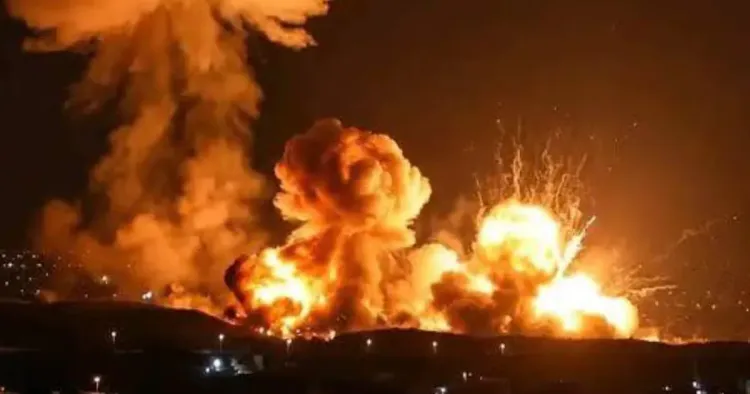
Iran expanded its Gulf military campaign on Wednesday, November 18, 2026, targeting Kuwait's Ali Al Salem Air Base and carrying out further attacks on Bahrain after a US strike on an Iranian missile site. Both Gulf countries reported intercepting incom...
Key points
- Iran's regular army, the Artesh, rather than the IRGC, claimed the drone strike on Ali Al Salem, according to Iranian state media.
- Kuwait's military said its air defenses intercepted incoming drones aimed at the air base.
- At least 30 Iranian strikes on Ali Al Salem damaged or destroyed hangars, warehouses and nearby buildings, according to an AP satellite imagery review.
- A US fighter jet struck a missile launch site on Qeshm Island, which a US official described as self-defense against IRGC aggression.
- Preliminary estimates put damage to the US Navy base in Bahrain at at least $400 million, according to a Congressional Research Service report.
Iran's regular army claims Kuwait operation
The claim of a drone strike on Ali Al Salem came from Iran's conventional military, the Artesh, rather than the Islamic Revolutionary Guard Corps, according to Iranian state news agency IRNA and Mehr News Agency. State media identified air defense systems, drone platforms and missile launch facilities as the targets. Kuwait's military said its defenses intercepted incoming drones.
Analysts cited in reporting described the Artesh's claim as a departure from the IRGC's near-monopoly on offensive operations against US installations. Iran's regular army has traditionally maintained a defensive posture.
Located in western Kuwait, Ali Al Salem houses the US 386th Air Expeditionary Wing. Its responsibilities across US Central Command's area of operations include combat airlift, intelligence, surveillance, reconnaissance and expeditionary air base support. Iranian forces have repeatedly targeted the installation since February 28, 2026, the war's first night, making it one of the Gulf's most persistently attacked US bases.
An Associated Press review of satellite imagery covering attacks through August found that at least 30 Iranian strikes on Ali Al Salem had damaged or destroyed 15 aircraft hangars, warehouses and 10 buildings near a residential area. Across the region, the review identified damaged or destroyed structures at 26 military bases and other sites housing US equipment, following more than 115 drone and missile strikes claimed by Iran or Iranian-backed militias.
Qeshm strike follows stalled Hormuz talks
The latest exchange followed a US fighter jet attack Tuesday on a missile launch site on Qeshm Island, in the Strait of Hormuz. An American military official said the precision-munitions strike was an act of self-defense responding to IRGC aggression against US personnel and assets. The official also said Central Command remained ready to defend American forces throughout the region.
Iranian state media characterized the Qeshm operation as an enemy attack. Ahmad Nafisi, Hormozgan province's deputy governor for political and security affairs, said vital infrastructure, commercial facilities and residential areas had sustained no damage.
Diplomacy had also stalled Tuesday, November 17. Talks in Muscat between Iranian Foreign Minister Abbas Araghchi and Omani Foreign Minister Sayyid Badr al-Busaidi ended without an agreement to reopen the Strait of Hormuz. According to reporting on the November 17-18 escalation, Iranian military operations followed within hours.
Tehran maintains that its attacks answer American surveillance operations, strikes on Iranian communications infrastructure and attacks on its military positions. American installations in Bahrain had already faced several attacks, including one against a radar facility earlier in the week.
Bahrain faces military damage and political threats
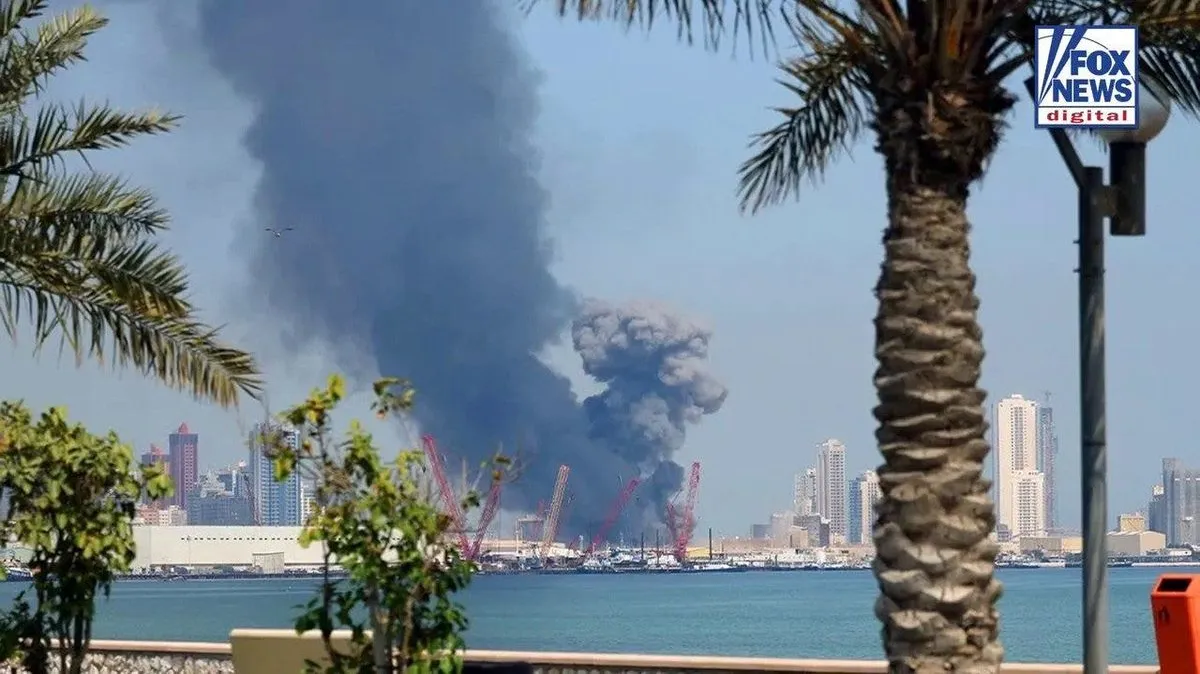
Bahrain issued emergency alerts early Wednesday while its military intercepted several Iranian aerial attacks. The kingdom hosts the US Navy's Fifth Fleet headquarters, a central base for American naval operations in the Persian Gulf.
Earlier attacks have inflicted extensive damage there. A Congressional Research Service report updated September 23, 2026, said Iranian missiles and drones had penetrated Bahraini airspace and damaged the command headquarters at Naval Support Activity Bahrain, two AN/GSC-52B satellite communications terminals, warehouses and a dozen other buildings. Preliminary estimates put damage to the base at at least $400 million.
Acting Navy Secretary Hung Cao told a Senate committee Tuesday that he could not give a complete assessment of damage to the regional headquarters. "It's a nonpermissive area for us to go," he said.
The Congressional Research Service also documented strikes on Bahrain's civilian infrastructure, including an oil refinery, aluminum smelter, desalination plant and Amazon-owned data center. The report cited preliminary indicators of a nearly 5% economic contraction in 2026 and an almost 40% increase in sovereign credit default swap prices, a measure of debt-insurance costs. It also noted a $5.4 billion currency-swap agreement with the United Arab Emirates and the relocation of the Bahrain Grand Prix to Malaysia.
Alongside the military campaign, IRGC Brig. Gen. Hossein Mohebbi threatened Bahrain's ruling Al Khalifa family. He accused the monarchy of three fundamental mistakes: assisting US military operations, depending on American security protection and challenging Shiite religious authority. Continuing those policies, he warned, would put its survival in doubt under a new regional security order. He concluded: "A word to the wise is enough."
Mohebbi spoke after a Bahraini court on Monday sentenced dozens of Shiite clerics to life imprisonment on terrorism-related charges. Bahrain's Public Prosecution said some defendants had communicated with Iranian authorities, including the IRGC, and accused the clerics of backing terrorism and sabotage intended to undermine the government.
Bahrain is the only Gulf Cooperation Council state with a Shia-majority population, according to the Congressional Research Service. Its report traces Iran's territorial claim to the Shah's 1957 designation of Bahrain as Iran's fourteenth province. Iran formally renounced that claim in 1970 when it recognized Bahrain's independence, although some Iranian officials have periodically revived it.
Behnam Ben Taleblu, a senior fellow at the Foundation for Defense of Democracies, described the confrontation as part of Tehran's decades-long effort to inflame tensions in Bahrain. He said Iran's grievances involve sectarian divisions, politics, strategic interests and the kingdom's ties to Washington. In his assessment, Iran seeks inexpensive ways to strike nearby American forces, push the United States out of the region and make hosting those forces politically harder for Bahrain's rulers.
Taleblu also questioned whether Washington could afford to build and defend bases so close to Iranian territory under missile and drone fire. He said US decisions about the Fifth Fleet headquarters and Bahrain's radar installations could signal the shape of the American military presence in the Gulf after the war.
Shipping attacks deepen economic pressure
The conflict has continued to threaten commercial traffic through the Strait of Hormuz. ADNOC, the UAE's state-owned energy company, said an attack on one of its tankers Tuesday left one crew member missing and 11 injured.
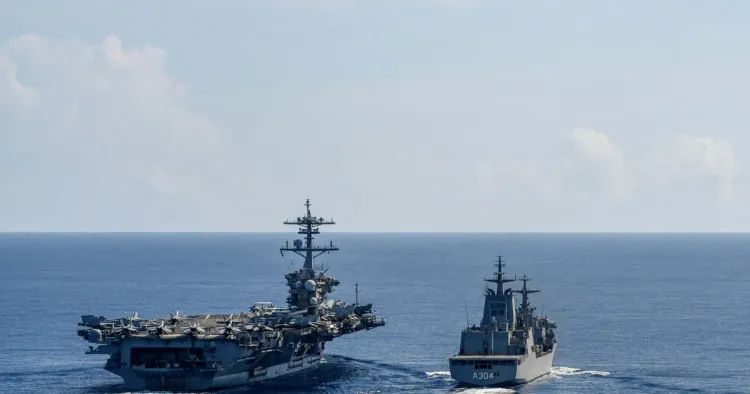
US naval forces continued escorting commercial ships and enforcing restrictions on Iranian ports. A third American aircraft carrier strike group had also entered Central Command's area of responsibility.
The strait carried about 20 million barrels of crude oil and oil products a day on average in 2025, according to the International Energy Agency. That represented roughly 25% of global seaborne oil trade, with about 80% of the flows bound for Asia. Iran, Iraq, Kuwait, Qatar and Bahrain depend on the passage for the vast majority of their oil exports.
The IEA's World Energy Outlook projects that prolonged severe disruption could reduce those flows to 8.5 million barrels a day by 2030 and below 2 million by 2035. Dow Jones Newswires reported that projects under construction or consideration would add around 7 million barrels a day of pipeline capacity, requiring an estimated $40 billion in investment.
Brent crude rose from about $71 a barrel before the war to peaks above $126, then retreated toward $93 in November 2026, according to Dow Jones Newswires.
Analysts warn of escalation without an agreement
Hamidreza Azizi, an Iran analyst at the International Crisis Group, warned that incidents accumulating across several fronts could produce miscalculation and a wider confrontation even if neither side wanted one. He also questioned how long Washington could sustain economic pressure and its naval blockade without another major outbreak of fighting.
Danny Citrinowicz, a researcher at Israel's Institute for National Security Studies, assessed Iran's operations as deliberate, calibrated escalation. Rather than necessarily seeking all-out war, he said, Tehran appeared intent on increasing the military, economic and political costs of the blockade. He described Washington as facing difficult choices between limited retaliation and stronger action, and identified a negotiated agreement or a US decision to lift the blockade as the two paths to de-escalation.
President Donald Trump has signaled a preference for continued economic pressure while leaving renewed combat operations open. On Wednesday, Central Command commander Adm. Brad Cooper met in Tel Aviv with Israeli military chief of staff Eyal Zamir and Mossad director Roman Gofman.