US-Iran retaliation spreads across Gulf ahead of Shenzhen summit
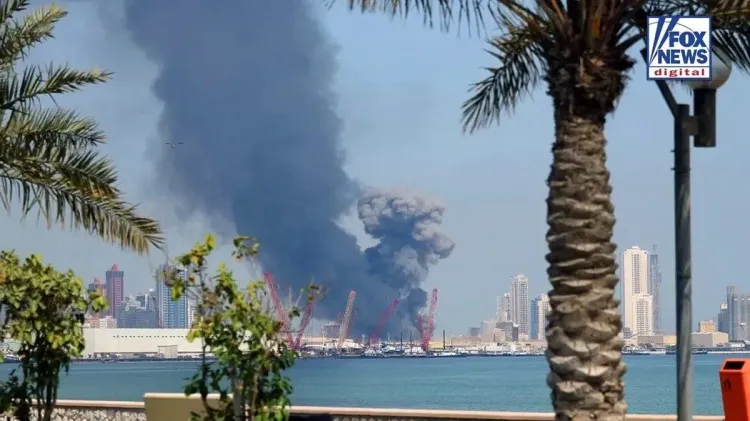
Drone and missile attacks spread to Bahrain, Kuwait and Saudi Arabia on November 18 after US warplanes struck an Iranian missile launcher on Qeshm Island in the Strait of Hormuz. The exchanges came a day before the first summit bringing together the US...
Key points
- An unnamed US official said American jets struck the IRGC launcher over threats to US personnel and property.
- Iran's military said its drones targeted US Patriot air defense systems at Kuwait's Ali Al-Salem air base.
- Bahrain's armed forces reported destroying several Iranian airborne targets early on November 18.
- US Central Command said both one-way drones sent toward Bahrain were shot down, disputing Iran's radar strike claim.
- The USS Theodore Roosevelt joined the Fifth Fleet on November 15, bringing the regional US carrier strike groups to three.
Strikes and interception claims across the Gulf
An unnamed US official told AFP that American fighter jets struck the Islamic Revolutionary Guard Corps (IRGC) launcher with precision weapons because of threats to US personnel and property. The US Navy has been escorting ships through the Strait of Hormuz amid Iranian efforts to blockade the waterway.
Iran's military subsequently announced on state broadcaster IRIB that its drones had targeted US Patriot air defense systems and missile launchers at Kuwait's Ali Al-Salem air base. Kuwaiti authorities said air defenses were engaging hostile drones and urged residents to observe safety instructions.
Bahrain's armed forces reported destroying several Iranian airborne targets early on November 18. The country hosts the US Navy's Fifth Fleet. The IRGC-affiliated Sepah news agency claimed Iranian drones hit an American-operated radar at Sheikh Isa Air Base, describing the attack as retaliation for an alleged US aircraft intrusion into Iranian airspace. Sepah also claimed Iran had captured a US drone south of Qeshm.
US Central Command has disputed Iran's claim of a radar strike in Bahrain. In a social media statement, it said the IRGC sent two one-way drones toward the country and both were shot down.
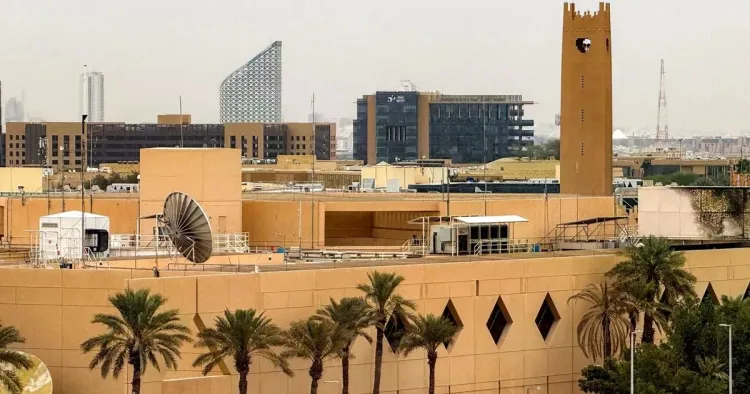
The Saudi-led coalition fighting in Yemen separately reported intercepting a cruise missile fired toward Riyadh by the Iran-backed Houthis.
Three US carrier strike groups in the region
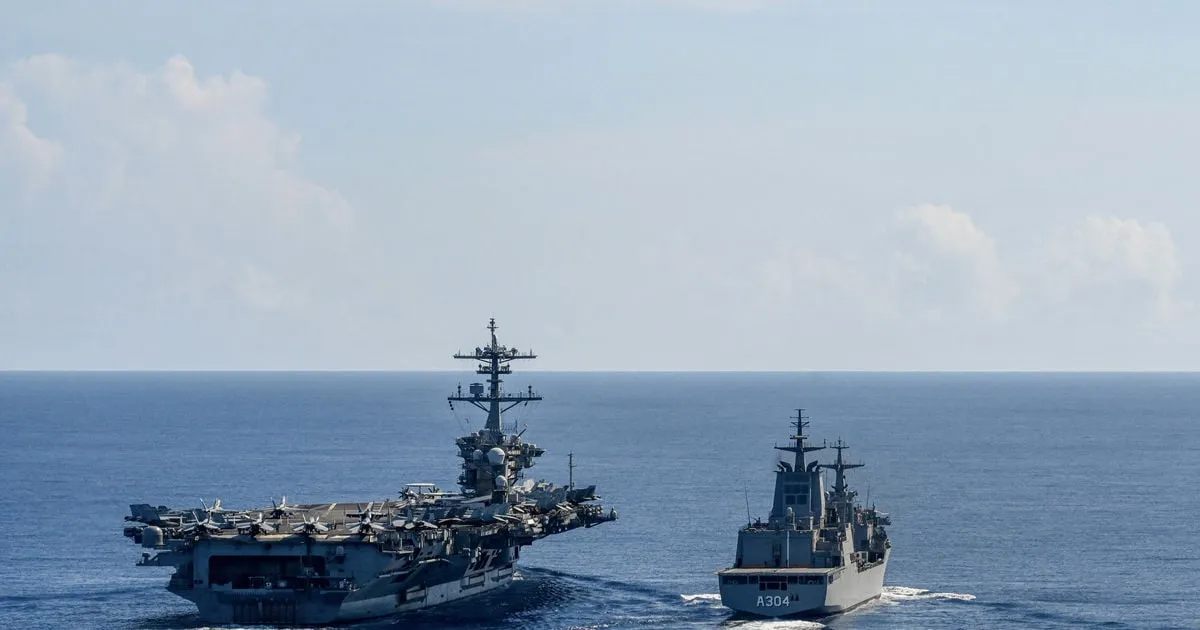
The Pentagon has deployed USS Theodore Roosevelt to the Middle East amid the escalation. According to USNI News, the carrier entered US Central Command's area of responsibility and joined the Fifth Fleet on November 15, 2026. It is expected to replace USS George Washington, which reached the region in late August.
The Roosevelt's arrival brought the regional US carrier strike group presence to three, alongside USS George Washington and USS George H.W. Bush. More than a dozen US destroyers are also in the region.
Al Jazeera reported that the Makin Island Amphibious Ready Group followed the Roosevelt to the Middle East with more than 2,000 Marines aboard. The Wall Street Journal reported that the carrier strike group and other naval deployments could add 9,000 to 10,000 US personnel.
Negotiations after a collapsed agreement
Diplomatic efforts have continued despite the military exchanges. A two-week US-Iran ceasefire in April 2026 was followed by a broader memorandum of understanding in June, but that agreement broke down in early July. Pakistani and Qatari mediators have since sought to avert another full-scale exchange of attacks.
Earlier in November, after discussions with Qatari Prime Minister Sheikh Mohammed bin Abdulrahman bin Jassim Al Thani, President Donald Trump described further strikes on Iran as "quite unlikely" and the military part of the war as "effectively over." The US naval blockade remained in place.
Iranian parliamentary speaker and chief negotiator Mohammad Bagher Ghalibaf said Tehran had sent seven conditions for an agreement through a Qatari mediator. Among them were the removal of the US naval blockade and sanctions, the release of frozen Iranian funds, an end to fighting on all fronts and a formal declaration that the war was over.
Iran on the Shenzhen agenda
China's foreign ministry announced on November 16 that President Xi Jinping would host Trump and Russian President Vladimir Putin in Shenzhen on November 19. Their first-ever trilateral summit is scheduled alongside the Asia-Pacific Economic Cooperation (APEC) leaders' summit.
Beijing has described the agenda as "world peace," while Trump has confirmed that the Iran crisis will be a central subject. US officials said he also plans to discuss reducing nuclear arsenals, but is not expected to raise Russia's war in Ukraine.
German President Frank-Walter Steinmeier said Xi had shown "irritation" during a recent meeting when discussion turned to whether the trilateral summit might address Ukraine. According to Steinmeier, Xi said Europeans must have a place at the table for talks about a European conflict.