U.S. Strikes IRGC Site After Third Iranian Drone Attack on Bahrain
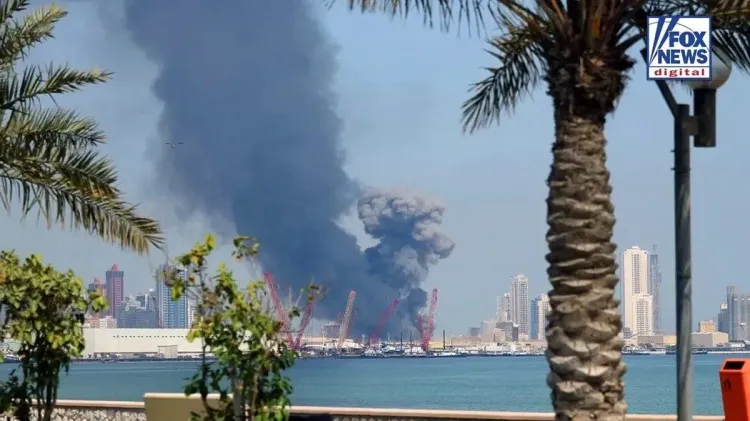
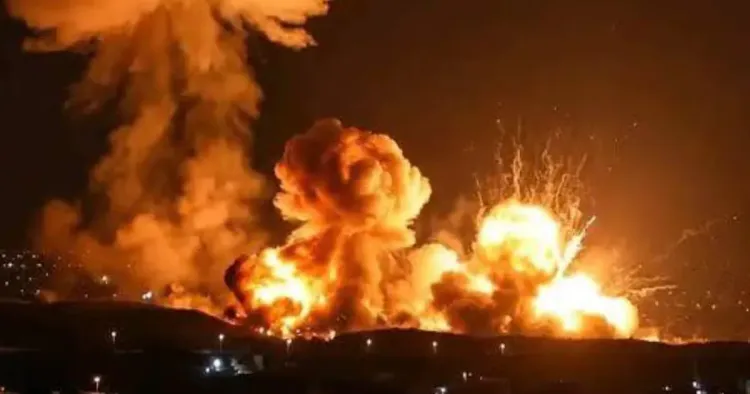
A U.S. fighter jet struck an Iranian missile launch site hours after Iran targeted an American radar in Bahrain on November 17, its third drone attack there in less than five days. U.S. Central Command said the drones were intercepted without damage or...
Key points
- Iran's Islamic Revolutionary Guard Corps said its drone attack was a precision operation responding to repeated U.S. drone airspace violations.
- Bahrain's Interior Ministry urged residents to seek safety, warning of a possible threat, and confirmed its air defenses intercepted the drones.
- The attack ended a roughly two-month lull in Iranian strikes on U.S. military targets in Bahrain, following earlier claims against radar systems that remain unconfirmed.
- Bahrain's Foreign Ministry accused Iran of turning its territory into an arena for settling scores, and Egypt, Qatar, Saudi Arabia and the UAE condemned the attack.
- The U.S. naval deployment has expanded to three aircraft carriers in the region, and an Israeli institute analysis says forces now exceed the deployment at the war's outset.
Drone interceptions followed by U.S. strike
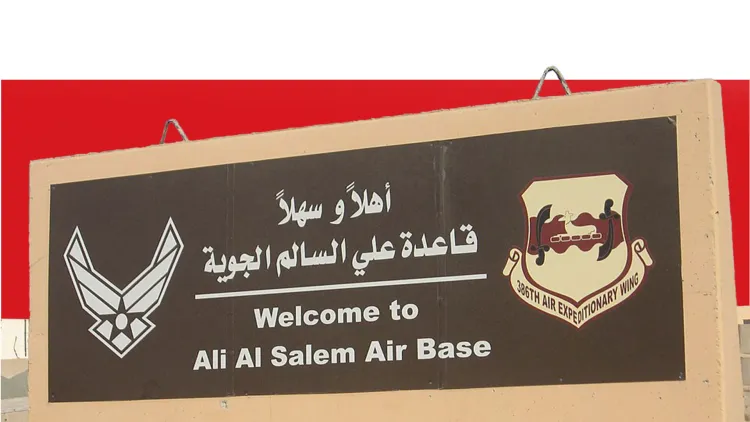
Iran's Islamic Revolutionary Guard Corps said it launched drones early Tuesday against a U.S. radar at Sheikh Isa Air Base. Describing the attack as a "precision operation," the IRGC said it was responding to "repeated violations of Iranian airspace by U.S. military drones."
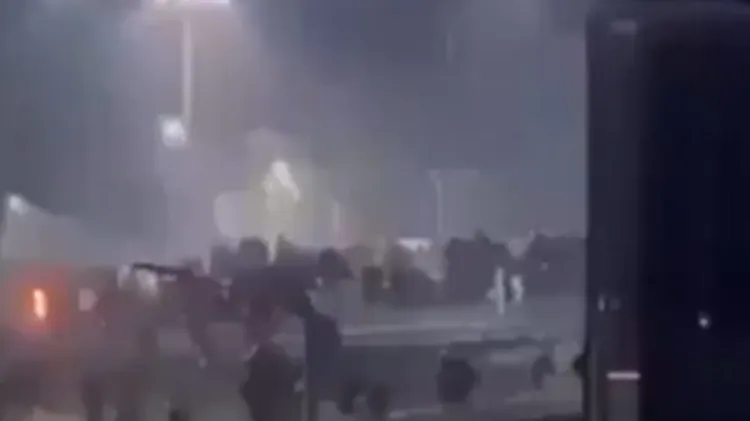
CENTCOM said it intercepted the Iranian one-way attack drones and reported no damage to American assets or injuries to U.S. personnel. Bahrain also confirmed interceptions by its air defenses. The country's Interior Ministry urged residents to seek safety, warning of a "possible threat."
Hours later, an American fighter jet attacked an IRGC missile launch site on Qeshm Island in the Strait of Hormuz, according to Associated Press reporting carried by NPR. A U.S. official described the strike as self-defense in response to "aggression" toward American personnel and said the aircraft used "precision munitions." Local official Ahmad Nafisi reported no damage to residential or commercial areas or infrastructure.
Three attacks after a two-month lull
The renewed attacks followed roughly two months without Iranian strikes on U.S. military targets in Bahrain. The first came on November 13, when Iran claimed it had hit an early warning radar after accusing American forces of attacking a telecommunications tower in southern Iran. CENTCOM rejected the claim of a successful hit, saying it had downed two Iranian drones without casualties or damage.
On November 15, Iran said it launched six drones against an air defense radar at Bahrain's Al-Riffa helicopter base. Bahrain reported intercepting them. None of Iran's claims to have hit the radar systems has been independently confirmed.
Bahrain's Foreign Ministry accused Iran of "turning its territory into an arena for settling scores," according to Radio Free Europe/Radio Liberty. Following the November 17 attack, Egypt, Qatar, Saudi Arabia and the United Arab Emirates condemned the action as a violation of Bahraini sovereignty that threatened the country's security and stability.
Qatar said Iran's "continued attacks" on Bahrain "undermine diplomatic efforts." Foreign Ministry spokesman Majed Al Ansari warned that escalation presented an "extremely grave danger" to efforts to reach an agreement.
Naval buildup and Tehran's calculations
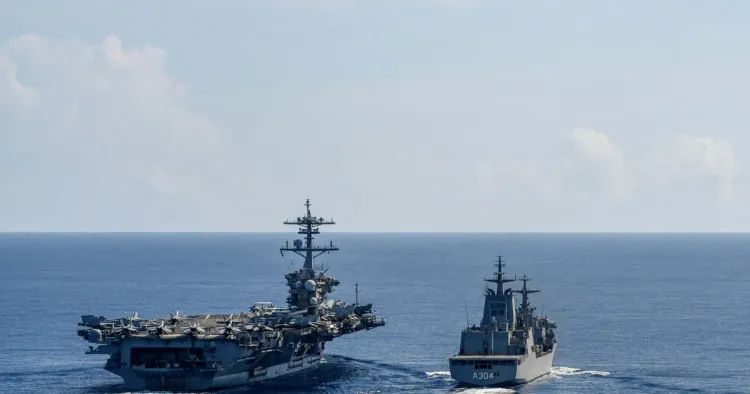
Washington has also expanded its naval deployment. The USS Theodore Roosevelt carrier strike group arrived in the region to join the USS George H.W. Bush and USS George Washington, bringing the number of American aircraft carriers across the wider region to three, the AP reported. President Donald Trump is weighing whether to expand military operations against Iran. Bahrain, home to the U.S. Navy's Fifth Fleet, is a key base for American operations in the Persian Gulf.
An analysis by Israel's Institute for National Security Studies, cited by NPR and the AP, found that U.S. naval forces across the Persian Gulf, Arabian Sea, Red Sea and Mediterranean now surpass the deployment at the war's outset. The reporting described the conflict as being in its eighth month, despite an initial U.S. promise that it would last only weeks.
The IRGC has warned that attacks on Iran launched from regional bases "will not go unanswered." Tehran-based security analyst Mostafa Najafi told the AP that Iran was adopting a "more active, preemptive strategy" intended to disrupt U.S. military operations before threats develop.
Other analysts questioned whether limited drone strikes could influence Washington's decisions. Sascha Bruchmann, a Bahrain-based defense analyst at the International Institute for Strategic Studies, said Iranian attacks on shipping had produced no decisive result. "This is not it – yet," he said. Hamidreza Azizi, senior Iran analyst at the International Crisis Group, wrote that Tehran was weighing whether "the costs of continued restraint" now exceeded the risks of escalation.
Talks continue under a renewed blockade
Iranian Foreign Minister Abbas Araqchi was in Oman on Tuesday as talks continued on securing shipping routes through the Strait of Hormuz. The diplomatic efforts seek an end to the conflict that began with U.S. and Israeli attacks on Iran on February 28, 2026. A UK House of Commons Library briefing says those initial strikes killed Supreme Leader Ali Khamenei and that Iran later appointed his son to succeed him.
The United States continues to enforce a naval blockade, while Iranian restrictions and attacks have disrupted shipping. Mahdi Mohammadi, an adviser to Iran's parliamentary speaker, has accused Washington of using economic sanctions to create a "security crisis" inside Iran.
The blockade was initially imposed on April 13 and lasted through mid-June. According to the Congressional Research Service, CENTCOM reported redirecting more than 140 ships during that period and said it had "disabled" nine vessels that failed to comply.
On June 17, Trump and Iranian President Masoud Pezeshkian signed a memorandum of understanding providing for the blockade's removal and Iranian arrangements allowing commercial vessels to pass safely without charge for 60 days. By early August, the United States had reinstated the blockade in response to renewed Iranian attacks on commercial shipping and several Arab states, the CRS report said. Iran accused Washington of failing to fulfill its obligations under the memorandum.
Shipping losses and reduced energy traffic
Before the war, the Strait of Hormuz carried about 20% of the world's petroleum and 20% of its liquefied natural gas each year, according to the UK House of Commons Library. World Trade Organization data cited in its briefing indicate that, since the conflict began, the number of crude-carrying ships traveling to and from Persian Gulf ports has fallen 95%, while LNG ship traffic has dropped 99%.
The UN's International Maritime Organization recorded about 134 incidents in the Strait of Hormuz and the wider Middle East maritime area through November 11, with 25 seafarers dead and many others injured or missing. October had the highest number of incidents involving commercial ships in those waters since the war began in February.
Another major route is also affected: by mid-November, Yemen's Iran-backed Houthi rebels had consolidated their control of the Bab el-Mandeb Strait, according to NPR and AP reporting.
The UAE's state-owned oil company estimates that full flows through Hormuz will not return until 2027, even if negotiators reach a deal quickly.