UAE urges diplomacy to avert renewed US-Iran conflict
The United Arab Emirates is looking to Qatar-led negotiations to prevent another US-Iran confrontation, presidential adviser Anwar Gargash said Sunday. Speaking in Bahrain, he warned that further military action would compound the crisis rather than of...
Key points
- Gargash said the distance between Washington's and Tehran's positions remained substantial, with serious consequences possible if unresolved.
- Gargash said every Gulf country was communicating with Iran through different channels, according to The National.
- Egyptian Foreign Minister Badr Abdelatty warned that a further escalation would bring greater danger and destruction without achieving anything.
- Araghchi said Qatar-mediated talks produced a two-day plan, shortened from a seven-day proposal Iran presented in mid-September 2026.
- Under the plan, the US would take measures on day one and Iran would reopen the strait and restore normal transit on day two.
Diplomatic efforts and preparations for conflict
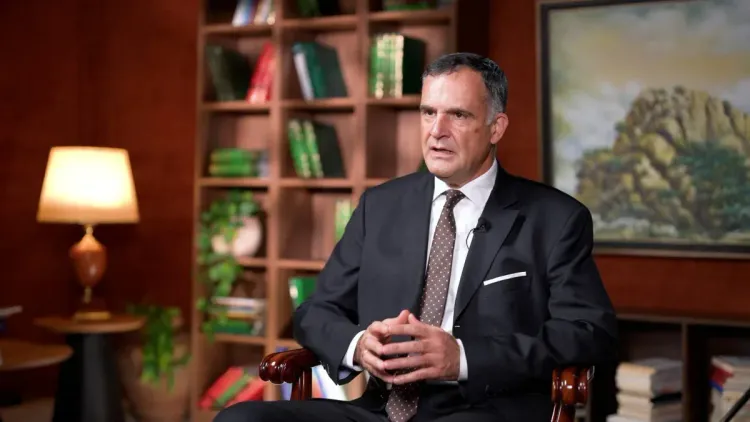
Gargash told the Manama Dialogue on November 1 that the distance between Washington's and Tehran's positions remained substantial, with serious consequences possible if they could not resolve their differences. He called for political judgment and diplomatic engagement, saying another war would benefit neither Iran nor the rest of the region.
"We don't really want to see another round of confrontation in the region," he said. Even so, the UAE and other regional governments were preparing for renewed hostilities. According to The National, Gargash also said every Gulf country was communicating with Iran through different channels.
The warning followed remarks a day earlier by Egyptian Foreign Minister Badr Abdelatty, who said a further escalation would bring greater danger and destruction without achieving anything.
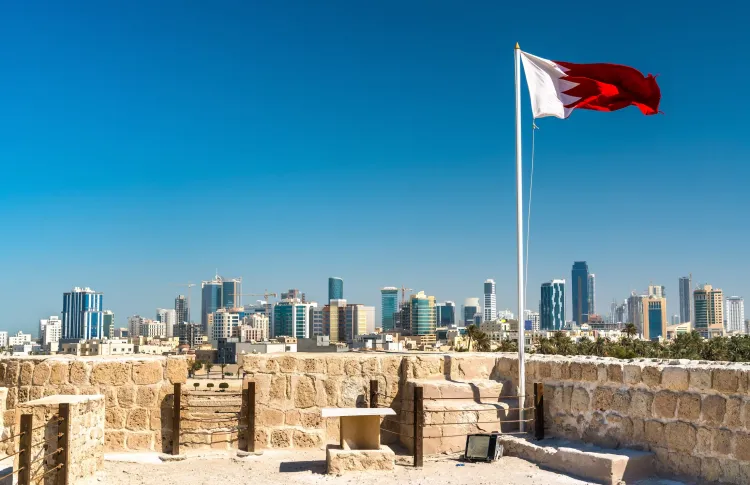
The three-day security summit took place against fears of another outbreak of fighting. Organized annually by the International Institute for Strategic Studies (IISS), the 22nd Manama Dialogue ran from October 30 to November 1, 2026, at The Ritz-Carlton in Bahrain. Delegations represented more than 50 countries, with over 40 senior ministers and military chiefs attending alongside other officials and experts.
Iran outlines a conditional Hormuz proposal
Iranian Foreign Minister Abbas Araghchi said negotiators in Qatar were working on a proposal that could allow the Strait of Hormuz to reopen soon. He stressed that Iran was not negotiating directly with Washington and that further progress required US answers to Iranian questions.
According to Arab News Pakistan, Araghchi said Sunday that the Qatar-mediated discussions had yielded a "two-day plan," shortened from a seven-day proposal Iran first presented in mid-September 2026. The United States would take a set of measures on day one; Iran would reopen the strait and restore normal transit on day two. Implementation remained conditional on US action, and Washington had not publicly accepted the proposal.
In an interview posted to his Telegram channel, Araghchi said Iran wanted the United States to pursue diplomacy rather than other options. Tehran, he added, was ready both to defend itself and to engage diplomatically.
The previous day, October 31, Iran's Supreme Leader Mojtaba Khamenei instructed senior military commanders to answer any threat with "an immediate, impactful and geographically unrestricted response," according to a statement reported by Arab News Pakistan. He also ordered an updated target list covering "all types of tangible and intangible assets belonging to the American-Zionist enemy."
This was Khamenei's first reported meeting with the military leadership. He has not appeared publicly since succeeding his father, Ayatollah Ali Khamenei, in March 2026, after his father was killed in US-Israeli strikes.
US President Donald Trump said on October 31 that American forces had knocked out much of Iran's military, although one or two targets still needed to be dealt with. He characterized negotiations to end the war as "going fine but... not very reliable."
War damage and shipping restrictions
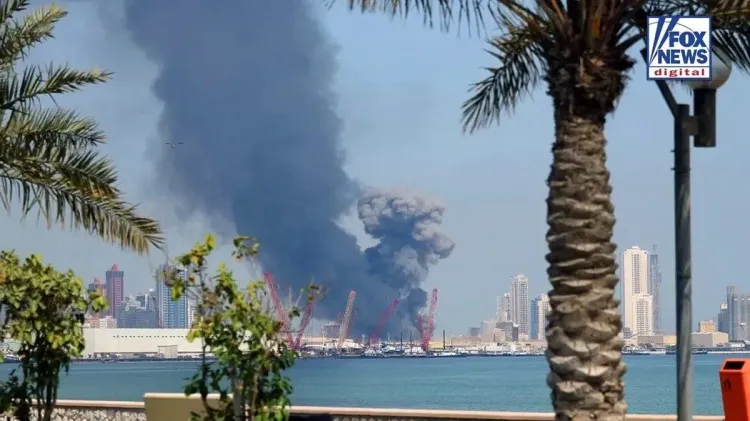
Gargash described the war as a turning point for both the region and the world. Fighting began with joint US-Israeli strikes on Iran on February 28, followed by Iranian attacks on Gulf countries. The National reported that Iran had retaliated against all six Gulf states and Jordan.
An April ceasefire followed a period in which the UAE experienced more Iranian aerial attacks than any other country, according to the IISS. More than 3,000 drones and ballistic missiles were directed at Emirati airports, military sites and oil facilities; most were intercepted. Gulf governments have since invested billions of dollars in stronger defenses. Gargash said the war had reinforced UAE-US ties and increased the partnership's importance to Emirati defense.
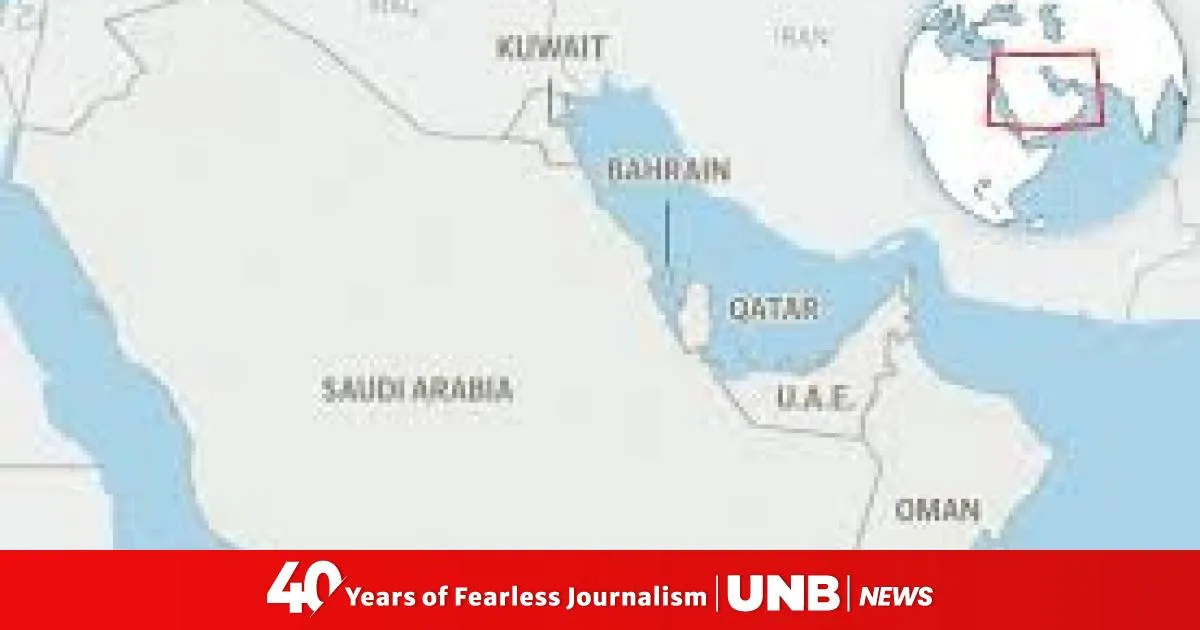
The IISS also recorded roughly 500 Iranian drones and almost 200 ballistic missiles launched toward Bahrain at the war's height. Bahrain hosts the US Navy's 5th Fleet. The naval base, homes, the financial district and a desalination facility were among the sites struck.
An interim agreement in June did not produce a durable ceasefire or bring shipping through Hormuz back to normal, according to The National. Iran has effectively kept the passage closed since March, while a US counter-blockade has squeezed Iranian oil exports.
Bahraini Foreign Minister Abdullatif bin Rashid Al Zayani put the broader toll on GCC countries and Jordan at nearly 7,000 attacks involving ballistic missiles, drones and cruise missiles. Speaking Sunday, he said civilian and economic infrastructure, including airports, ports and data centers, had been targeted, Asharq Al-Awsat reported.
Al Zayani said about 1,600 vessels had been held up in the strait since the crisis began, leaving more than 23,000 seafarers without freedom of movement. He warned that disrupted shipping threatened food security for as many as 45 million people, predominantly in the Global South.
Bahrain warns of continuing infrastructure threats
Al Zayani said Bahrain supported efforts to reduce tensions, avoid further escalation and make dialogue possible. He accused Iran of a continuing pattern of attacks and threats against maritime, aviation and data infrastructure that endangered regional and global stability.
Those threats had persisted beyond the ceasefire, he said, citing concerns about underwater data cables in October. He also pointed to attacks on neighboring Saudi Arabia by Iran-backed Houthi rebels. "These attacks are part of one continued pattern," he said. "The hands may change, the approach doesn't."
During the summer, the Houthis stepped up attacks against Saudi oil facilities and airports, describing them as retaliation for Saudi airstrikes on Sanaa airport. The strikes hit major oil pipelines and disrupted flights.
Calls for a collective security response
The forum exposed shortcomings in joint defense among the Gulf Cooperation Council's six members: Saudi Arabia, the UAE, Kuwait, Bahrain, Qatar and Oman. Rather than operate through a coordinated GCC defense mechanism, governments largely dealt with Iranian attacks separately while working with US command centers in the region. The IISS said that approach sometimes reduced the effectiveness of their collective defenses.
Gargash criticized the gap between national and bilateral action and the bloc's collective response. According to The National, he said confidence in the GCC had in some cases proved "hollow," despite individual countries' efforts to defend themselves.
GCC Secretary-General Jasem Mohamed Al Budaiwi said at the summit that Gulf governments were still prepared to negotiate with Tehran, but cautioned that "diplomacy needs partners, partners who respond in kind."
Al Zayani proposed an interconnected regional security framework open to neighbors that would respect sovereignty and freedom of navigation and reject the threat or use of force. He said Iran remained welcome, but participation would require adherence to rules and demonstrated action rather than statements of intent.