Syrian foreign minister meets German officials at Manama Dialogue
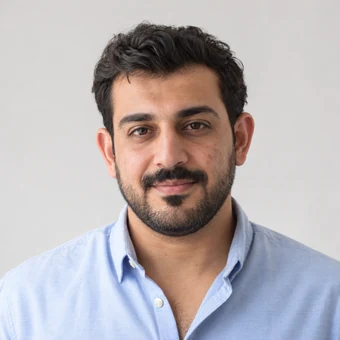
Syrian Foreign Minister Asaad Hassan al-Shaibani held talks with senior German officials in Bahrain on October 31, 2026, after addressing regional security at the Manama Dialogue, according to SANA.
Key points
- Al-Shaibani met Alexander Eberl, Germany's deputy national security advisor, and Clemens Hach, head of the Middle East and North Africa Department at the German Federal Foreign Office.
- The 22nd Manama Dialogue, organized by the International Institute for Strategic Studies, runs from October 30 through November 1 with over 50 countries represented.
- Germany is described by the German Federal Foreign Office as Syria's most important bilateral donor for stabilization and reconstruction.
- Al-Shaibani said consultations were underway on whether Syria should join the Mecca Joint Defence Pact, without specifying their nature or timing.
- Al-Shaibani said more than 1,000 Israeli attacks on Syrian territory in under two years had killed dozens of people, and called for a return to pre-December 8, 2024 lines.
German officials join talks in Bahrain
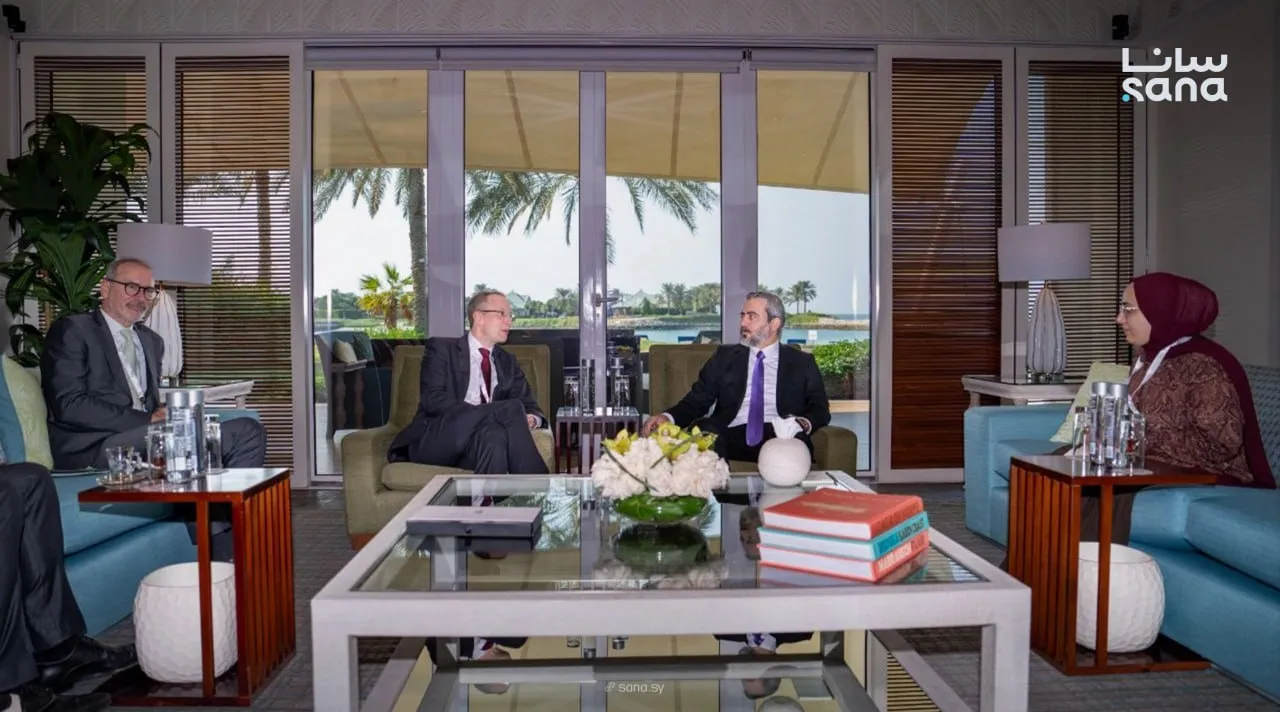
Al-Shaibani met with Alexander Eberl, Germany's deputy national security advisor, and Clemens Hach, who heads the Middle East and North Africa Department at the German Federal Foreign Office. SANA reported that the meeting took place on the conference sidelines but provided no details of the discussions.
Organized by the International Institute for Strategic Studies, the 22nd Manama Dialogue runs from October 30 through November 1 in Bahrain. Participants include delegations from more than 50 countries, more than 40 senior figures such as ministers and military leaders, and high-level representatives of more than 10 international organizations.
Bilateral agreements earlier in 2026
The meeting came after Syrian President Ahmad al-Sharaa visited Germany on March 29 for talks with Chancellor Friedrich Merz. It was the first official visit to Germany by a Syrian president in nearly five decades and resulted in a memorandum of understanding and two agreements covering energy and civil aviation.
According to the German Federal Foreign Office, Germany is Syria's most important bilateral donor for stabilization and reconstruction. Merz and al-Sharaa agreed on a German-Syrian Action Plan in March, and implementation began with the first joint committee meeting in Damascus on July 16.
Al-Shaibani and German State Secretary Géza Andreas von Geyr co-chaired that committee meeting, which also yielded a new German-Syrian air transport agreement.
Defense pact consultations and regional security
Before meeting the German officials on Saturday, al-Shaibani spoke at a session on the foundations of regional security. He emphasized the importance of regional security and said consultations were underway to assess whether Syria should join the Mecca Joint Defence Pact, The New Arab and Türkiye Today reported. He did not specify the nature or timing of those consultations.
Saudi Arabia, Türkiye and Pakistan signed the collective-defense agreement in Mecca on August 7, 2026. The pact treats an attack against any member as an attack against all members.
Al-Shaibani also condemned missile and drone attacks on Gulf states. He said Syria stands "shoulder to shoulder with the Gulf states and Jordan in the face of any aggression," describing stability in the Gulf as a natural extension of Syrian security.
Turning to Israel, he said more than 1,000 Israeli attacks on Syrian territory in less than two years had killed dozens of people. He reiterated Syria's position on the occupied Golan Heights, citing UN Security Council Resolution 497, and called for a return to the lines that existed before December 8, 2024, along with implementation of the 1974 Disengagement Agreement.
The minister said Syria had joined the international coalition against Daesh, also known as Islamic State. He characterized the integration of armed groups from Syria's northeast into state institutions as a historic step.
Al-Shaibani also said more than 3.7 million Syrians had returned home since the Assad regime fell in December 2024.