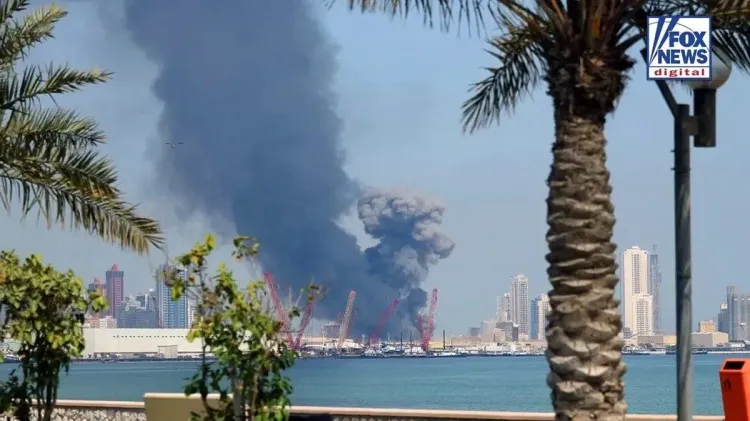
Four Arab states condemn alleged Houthi missile launch toward Madinah
Qatar, Kuwait, Bahrain and Jordan condemned the reported targeting of Saudi Arabia's Madinah region on November 5, after the Saudi-led coalition said it had intercepted a ballistic missile. The four governments backed Saudi Arabia's security and sovere...
Key points
- Bahrain's Foreign Ministry warned that the attempted strike endangers civilians, religious visitors and the sanctity of Islamic holy places.
- Bahrain urged the UN Security Council to strengthen measures against repeated Houthi attacks and ensure accountability.
- Qatar called the alleged attempt a blatant provocation of Muslims and a breach of Saudi sovereignty and international law.
- Kuwait described continuing missile and drone threats as a flagrant violation of Saudi sovereignty and international humanitarian law.
- Coalition spokesman Turki al-Malki said air defenses destroyed the missile without reporting launch location, casualties or damage.
Governments pledge support for Saudi Arabia
The presence of the Prophet's Mosque, one of Islam's holiest sites, was central to Bahrain's response. Its Foreign Ministry warned that an attempted strike on Madinah endangers civilians and religious visitors and threatens the sanctity of Islamic holy places. Bahrain urged the United Nations Security Council to strengthen measures against repeated Houthi attacks, protect religious sites and civilian infrastructure, and ensure accountability.
Qatar's Foreign Ministry called the alleged attempt "a blatant provocation of Muslims, a reckless disregard for civilian lives," as well as a breach of Saudi sovereignty and international law. It backed the kingdom's right to take legitimate steps to defend its territory, national security and citizens. In its November 5 statement, the ministry also said Saudi security was integral to Qatar's own security and that of the Gulf Cooperation Council states.
Kuwait's Foreign Ministry supported Saudi efforts to defend the country and keep residents safe from potential attacks. It characterized the continuing missile and drone threats as "a flagrant violation of Saudi Arabia's sovereignty, international law and international humanitarian law."
Jordan said the reported launch threatened regional security and stability and breached Saudi sovereignty, international law and the United Nations Charter. Its Foreign Ministry affirmed solidarity with Riyadh and support for measures to defend Saudi territory and protect citizens and residents.
Interception reports and emergency warnings
Coalition spokesman Maj. Gen. Turki al-Malki announced on November 5, 2026, that Saudi air defenses had destroyed the missile fired toward Madinah, according to Siasat Daily. He gave no launch location and did not report casualties or damage. The coalition also reported bringing down a Houthi drone over the Eastern Province.
In further reports of interceptions that day, the coalition said it had destroyed a ballistic missile bound for Najran and nine drones, according to Asharq Al-Awsat. Al-Malki said four drones were headed toward the Eastern Province, while the other five targeted Riyadh and Madinah.
Saudi Arabia's Civil Defence sent shelter warnings to residents of Yanbu and Sharurah governorates on November 5 through the National Early Warning Platform, Siasat Daily reported. The authority subsequently announced that the danger had passed in both locations.
Competing accounts amid continuing hostilities
The Houthis' denial of targeting Madinah followed another dispute over the region days earlier. On October 31, 2026, the group denied sending a drone toward Madinah after the coalition announced that it had intercepted and destroyed an unmanned aircraft over the region, according to Siasat Daily.
The competing accounts come amid ongoing fighting between the Houthis and the Saudi-led coalition. Yemen's civil war dates to September 2014, when Houthi forces took Sanaa and other territory. The coalition entered the conflict in March 2015 to support Yemen's internationally recognized government.
Missile and drone attacks during the prolonged conflict have continued to threaten civilians and infrastructure, drawing calls from Arab governments for stronger international action to prevent escalation.
Earlier, on October 23, 2026, UN Secretary-General Antonio Guterres expressed concern about continued Houthi attacks on civilian targets in Saudi Arabia and intensifying hostilities around Taiz in Yemen. Speaking to reporters in New York, he called for attacks on homes, hospitals, schools, airports and energy facilities to stop.