Iranian attacks caused billions in damage at 26 US military bases and sites
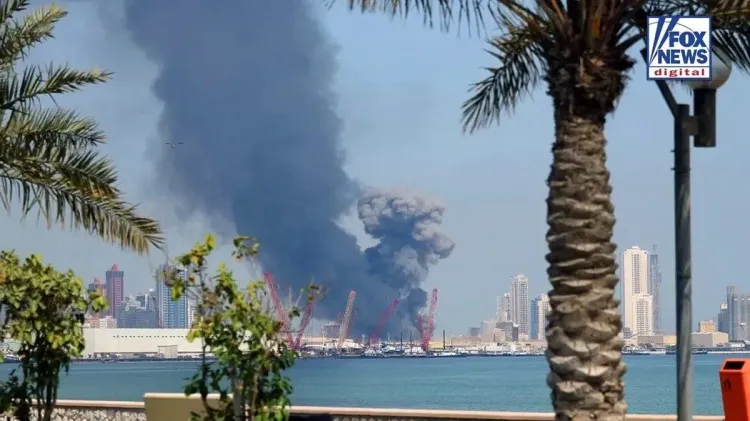
More than 115 drone and missile strikes by Iran and Iranian-backed militias damaged structures at 26 US military bases and other sites housing American equipment through August, according to The Business Standard. The damage, estimated in the billions...
Key points
- Strikes first targeted early-warning radars and air defense systems before hitting hangars, warehouses, fuel bunkers, communications and troop housing.
- Attacks reached facilities in Kuwait, Bahrain, Iraq, Jordan, Oman, Qatar and Saudi Arabia, according to Gulf News reporting on April through June damage.
- The Pentagon inspector general estimated Defense Department spending on Operation Epic Fury at $33.4 billion, including $3.7 billion in equipment losses.
- Damage to Naval Support Activity Bahrain left the base unusable, and Diego Garcia became a sea logistics hub, stretching resupply cycles to 14 to 18 days.
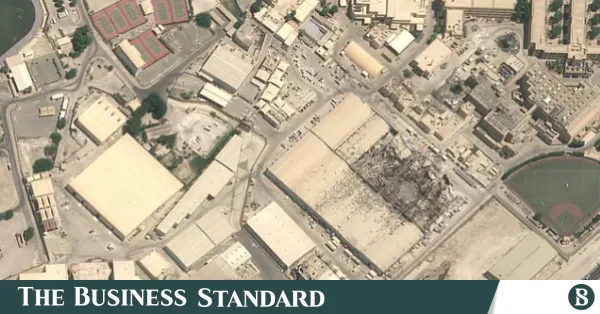
- US officials asked satellite imagery companies to delay public release of images of affected sites, making it harder for researchers to assess the destruction.
Air defenses targeted before other infrastructure
The attacks reached facilities in Kuwait, Bahrain, Iraq, Jordan, Oman, Qatar and Saudi Arabia. Gulf News reported that hundreds of facilities at military bases were damaged or destroyed in April through June alone.
The campaign began with strikes against early-warning radars and air defense systems used to detect and intercept attacks. Aircraft hangars, warehouses, fuel bunkers, communications infrastructure and troop housing were targeted afterward.
In the conflict's first two days, strikes destroyed the protective enclosures around US radar systems at Kuwait's Camp Arifjan and Naval Support Activity Bahrain. Attacks also hit portable radar units at Prince Sultan Air Base in Saudi Arabia and Muwaffaq Salti Air Base in Jordan.
The radar losses included a $500 million Army system in Jordan, one of only 13 the service operates worldwide. In Qatar, a separate $1.1 billion radar system—the only one of its kind in the region—suffered significant damage.
Kuwait bases and Saudi aircraft hit
Kuwait was among the hardest-hit countries. At Ali Al Salem Air Base, at least 30 strikes damaged or destroyed 15 aircraft hangars, numerous warehouses and 10 buildings near living quarters. More than 30 structures were lost at Camp Buehring from March through August, including a troop gym, an exchange store, a dining room and the main garage.
The deadliest single attack on US personnel occurred at Port Shuaiba on March 1, when a drone strike killed six soldiers.
In Saudi Arabia, strikes on Prince Sultan Air Base hit barracks, mess halls and two aerial refueling tankers. They also damaged the rear of a Boeing E-3 Sentry surveillance aircraft. A CIA unit at the US Embassy in Riyadh was hit in a separate Iranian strike.
Reports confirmed damage to at least 15 US aircraft at bases across the region.
Watchdog accounting details losses and spending
The Pentagon inspector general issued its first formal accounting of equipment and facility losses on September 14, 2026. Covering the war's start on February 28 through June 30, the report cited US Central Command information showing that Iranian attacks damaged or destroyed hundreds of buildings and structures. Its geographic accounting included the United Arab Emirates as well as Kuwait, Bahrain, Qatar, Saudi Arabia, Iraq, Oman and Jordan.
The report also documented depleted stockpiles of key US munitions. US and partner forces intercepted more than 6,000 Iranian drones and 1,500 ballistic missiles aimed at their locations, but some weapons penetrated the defenses and caused casualties and damage across the region.
For the period covered, the watchdog estimated Defense Department spending on Operation Epic Fury at $33.4 billion, of which $3.7 billion represented equipment losses. It reported dozens of US aircraft damaged or destroyed, including up to 30 MQ-9 Reaper drones estimated to cost upward of $30 million apiece.
The accounting, prepared with the State Department and USAID inspector general offices, put damage to US diplomatic facilities in the Middle East at roughly $184 million. Iraq accounted for the largest share: more than 600 attacks on US facilities there caused about $157 million in damage.
Relocations change logistics and medical evacuations
Damage to the bases forced the US military to take aircraft, air defense systems and communications equipment out of the Gulf region. The inspector general also described CENTCOM moving personnel, assets and storage facilities under Iranian attack.
Those moves included withdrawing Army medical evacuation helicopters from Iraq and Kuwait. As a result, most medical evacuations were conducted by ground to local treatment facilities, the report said.
Naval Support Activity Bahrain, which houses the US Fifth Fleet and Naval Forces Central Command, was left unusable. Acting Navy Secretary Hung Cao said on September 9, 2026, that Iran "blew the hell out of Bahrain" and said a task force was examining whether to repair the base. At an August 31 town hall, Chief of Naval Operations Adm. Daryl Caudle told sailors the Navy was "not getting back in there anytime soon."
With the Navy's regional hub in Bahrain destroyed, Diego Garcia in the Indian Ocean became a sea logistics hub. The inspector general said that change stretched resupply cycles to 14 to 18 days.
Force levels and rebuilding costs under consideration
Defense analysts said the attacks exposed the vulnerability of fixed military infrastructure to sustained, large-scale drone attacks using relatively inexpensive weapons. The sequence of strikes also raised questions about protecting permanent bases when attackers first target surveillance and air defenses, then other facilities.
An August 18, 2026, Washington Post report, carried by The Philadelphia Inquirer, said the Pentagon was assessing whether to reduce its Middle East presence, including a possible pullback from the Persian Gulf. The Pentagon's policy office led the analysis, while the Joint Staff and CENTCOM were also studying the issue.
Defense Secretary Pete Hegseth had not ordered a formal review at that point. An official characterized the work as "prudent planning." CENTCOM normally has about 40,000 troops at almost 20 sites spread along a 1,500-mile arc from Jordan to Oman.
The same Washington Post report said the Pentagon had publicly projected war costs of about $37.5 billion by the end of September 2026, excluding the rebuilding of damaged bases. The center-right American Enterprise Institute had estimated in April that repairing the targeted US bases would cost $5 billion.
Restrictions complicate damage assessments
US Central Command declined to detail the damage to military bases, while Pentagon spokespeople maintained that American forces remained well-protected.
Citing national security, US officials asked satellite imagery companies to delay public release of images of the affected sites. Those restrictions made it harder for researchers to assess the destruction, leading them to seek alternative sources, including Airbus's OneAtlas satellite imagery platform.