Yemen's Foreign Minister Urges Action on Taiz Siege at Manama Dialogue
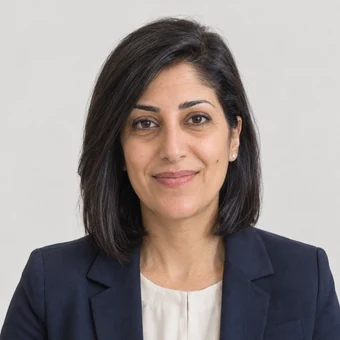
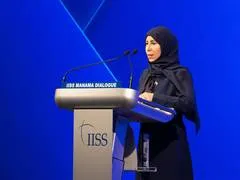
Yemeni Foreign Minister Afrah Al-Zouba called for international action to end the siege of Taiz, describing it as a "war crime," and said lasting regional security requires a stable Yemen whose legitimate institutions control its territory, weapons and...
Key points
- Human Rights Watch said Houthi forces used explosives on October 18, 2026, to severely damage the Hayjat al-Abd road.
- The UN World Food Programme said on October 14 it could not reach more than 600,000 people in Taiz relying on aid.
- Wheat flour stocks in Taiz were nearly depleted, and remaining market food might last only a short time.
- According to Human Rights Watch, control of Taiz has been split since 2015, with the Houthis blocking vital roads.
- Al-Zouba raised the Taiz blockade and attacks on Aden airport with US Assistant Secretary Donald Blome on October 31, 2026.
Taiz roads and aid access
Addressing the Manama Dialogue in Bahrain during a session titled "The Foundations of Regional Security," Al-Zouba urged a firm international response to the siege and the permanent, safe reopening of roads into Taiz.
The appeal follows reports of damage to a key supply route. Human Rights Watch said Houthi forces used explosives on October 18, 2026, to severely damage the Hayjat al-Abd road, the main route for food, medicine and fuel entering the besieged city. The group said deliberately destroying infrastructure essential to civilians' survival would violate the laws of war and constitute a war crime.
Even before that attack, the UN World Food Programme had warned of dwindling supplies. On October 14, it said it could not reach more than 600,000 people in Taiz who rely on humanitarian assistance. Wheat flour stocks were nearly depleted, and the remaining food available in markets might last only a short time if access restrictions persisted.
According to Human Rights Watch, control of Taiz has been split since 2015, when Houthi forces entered the governorate and encircled its capital, Yemen's third-largest city. The government has retained control of the city, while the Houthis have blocked vital roads connecting it with other parts of Yemen, including the route to Aden, the port city serving as the government's current capital.
State authority and maritime security
In a post on X describing her remarks, Al-Zouba said other countries share responsibility for helping rebuild Yemen's state institutions. She argued that a stable Yemen requires legitimate institutions to exercise authority nationwide and to hold sole control over arms and decisions about war and peace.
She linked the protection of the Bab al-Mandab Strait and international shipping to enforcement of the arms embargo, an end to Iranian support for the Houthis and support for Yemen's national institutions. She described the group as the "terrorist Houthi militia" and said Yemenis rebuilding their state were also protecting neighboring countries and global trade routes.
News of Bahrain reported that Al-Zouba advocated a definition of security encompassing the economy, energy and food supplies, as well as the safety of civilians and facilities. She said protecting maritime routes through Hormuz, Bab al-Mandab, the Red Sea and the Gulf requires stopping weapons supplies and financing for armed groups.
Al-Zouba also cited a UN panel of experts as documenting support for the Houthis from Iran, Iraqi armed groups and Hezbollah. She said information indicated Houthi links with Somalia's Al-Shabaab involving training and weapons, and called for information-sharing and measures to cut off funding.
Talks with Washington and appeals at the UN
Al-Zouba raised several of those concerns with US Assistant Secretary of State for Near Eastern Affairs Donald Blome during an October 31, 2026, meeting on the sidelines of the Manama Dialogue, Asharq Al-Awsat reported. Their discussion covered support for Yemen's government and state institutions, the Houthi blockade of Taiz, repeated attacks on Aden International Airport and efforts to stop arms smuggling to the Houthis. Blome reaffirmed Washington's support for the government and its institutions.
Al-Zouba thanked Bahrain for its hospitality and organization of the dialogue, and expressed appreciation to participating countries for discussions she described as fruitful.
The Yemeni government also renewed its appeal to the UN General Assembly for help enabling state institutions to exercise authority throughout the country, according to Asharq Al-Awsat. It sought a comprehensive, sustainable peace grounded in agreed references, particularly UN Security Council Resolution 2216. Yemen's UN representative, Abdullah Al-Saadi, said the government remained committed to working with UN human rights mechanisms.
Separately, the UN Human Rights Office said its employee Mohammad al-Shami had died after being arbitrarily detained by the Houthis since June 2024. His family had only recently learned of his death. UN High Commissioner for Human Rights Volker Turk called for an independent investigation. On October 14, 2026, UN spokesman Farhan Haq said the Houthis were holding 71 UN personnel.
Reported raids in Hodeidah
Al Jazeera, citing the Houthi-affiliated broadcaster Al Masirah TV, reported that the Saudi-led coalition fighting the Houthis carried out two raids on an oil facility in Bajil district in western Hodeidah governorate. Al Masirah said at least three civilians were wounded. The coalition had not immediately commented, according to the report.
Al Jazeera reported that fighting had intensified since September, after the Iran-backed Houthis seized strategic territory on the Red Sea coast and forces aligned with the internationally recognized government launched a counteroffensive. Saudi Arabia has supported the government campaign, while the Houthis have retaliated by attacking airports and oil facilities in the kingdom, the outlet said.