Bahrain Used Saudi and Omani Ports to Keep Cargo Moving During Hormuz Crisis
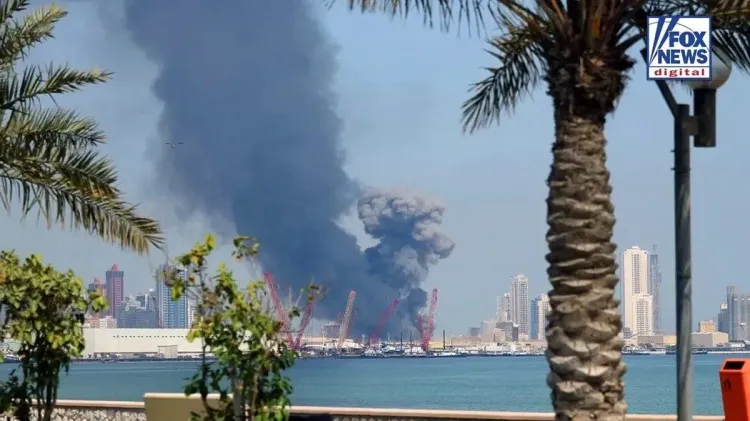
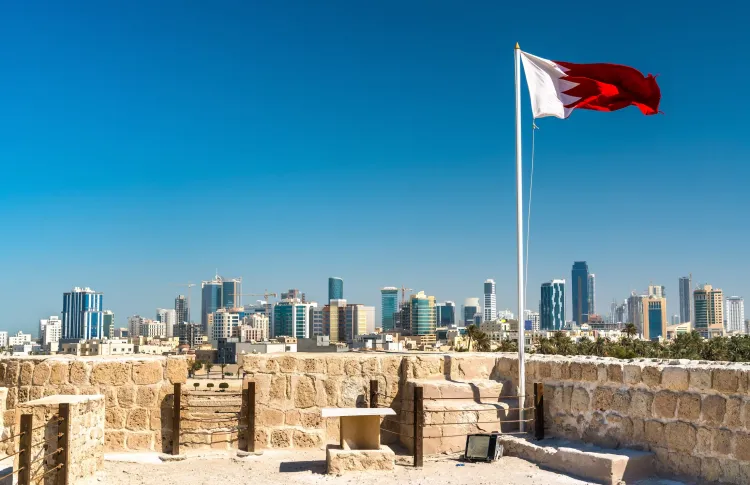
Bahrain kept goods reaching the country by routing shipments through ports in Saudi Arabia and Oman, then transporting them by road, Customs President Shaikh Ahmed bin Hamad Al Khalifa told a conference in Rome.
Key points
- Bahrain Customs gave priority to cargo from companies holding Authorized Economic Operator status during the rerouting.
- Bahrain assigned liaison officers to coordinate operations, share information and respond quickly as conditions changed.
- A peer-reviewed MDPI Sustainability study found daily commercial Hormuz passages fell 95.1% below the pre-crisis baseline from March through May 2026.
- The study found overland rerouting raised costs per ton-kilometer by 2.4 to 4.2 times, though door-to-door costs stayed below war-risk shipping.
- Shaikh Ahmed said Bahrain's trade with EFTA states reached about BD68.7 million, roughly 163 million euros, in 2026 despite the crisis.
Alternative routes and customs support
Shaikh Ahmed said disruption to shipping and transport prompted Bahrain to use alternative cargo entry points, including Saudi Arabia's Jeddah Islamic Port and ports in Oman. Bahrain Customs worked with its GCC counterparts on advance measures to protect supply chains and maintain trade.
Alongside the rerouting, customs officials prioritized cargo belonging to companies with Authorized Economic Operator (AEO) status. Bahrain also assigned liaison officers to coordinate operations, share information and respond quickly as conditions changed.
Speaking on the conference's main panel, "Adapting to a Changing World: Objectives and Tools of Modern Customs Policies", Shaikh Ahmed described how Bahrain had handled geopolitical pressures and logistics disruptions.
The disruption and the cost of rerouting
A peer-reviewed study published in MDPI Sustainability measured the scale of the shipping slowdown. During the crisis peak from March through May 2026, daily commercial vessel passages through the Strait of Hormuz were 95.1% below the pre-crisis baseline of 74.1 vessels a day. Dry bulk passages declined 88.8%.
A temporary bilateral agreement took effect on June 17, 2026, reopening the strait to commercial shipping without tolls for 60 days. The study found that traffic was still severely restricted through August and that normal commercial conditions had not returned by the end of its study period.
The researchers also examined cargo diversions through Salalah and Sohar in Oman and Jeddah on Saudi Arabia's Red Sea coast. In those scenarios, overland rerouting raised costs per ton-kilometer by 2.4 to 4.2 times and CO2 emissions by 1.47 to 3.54 times. Even so, total door-to-door costs for the overland routes were lower than those for direct shipping subject to war-risk surcharges.
Regional coordination at borders
Shaikh Ahmed called for stronger cooperation among GCC customs administrations under the Gulf Customs Union Authority. He said such cooperation helps trucks move more easily, limits congestion at border crossings and improves the passage of goods between member states.
A separate GCC response to the Strait of Hormuz closure involved a temporary exceptional mechanism for logistical transit. Gulf Daily News reported on September 2, 2026, that the GCC Customs Union Authority's executive council had reviewed the mechanism at a meeting in Bahrain.
Bahrain's interior minister, General Shaikh Rashid bin Abdulla Al Khalifa, said the arrangement had sped up goods movements, especially food and medical supplies, by combining rapid information sharing with coordinated customs procedures.
Rome discussions on changing trade routes
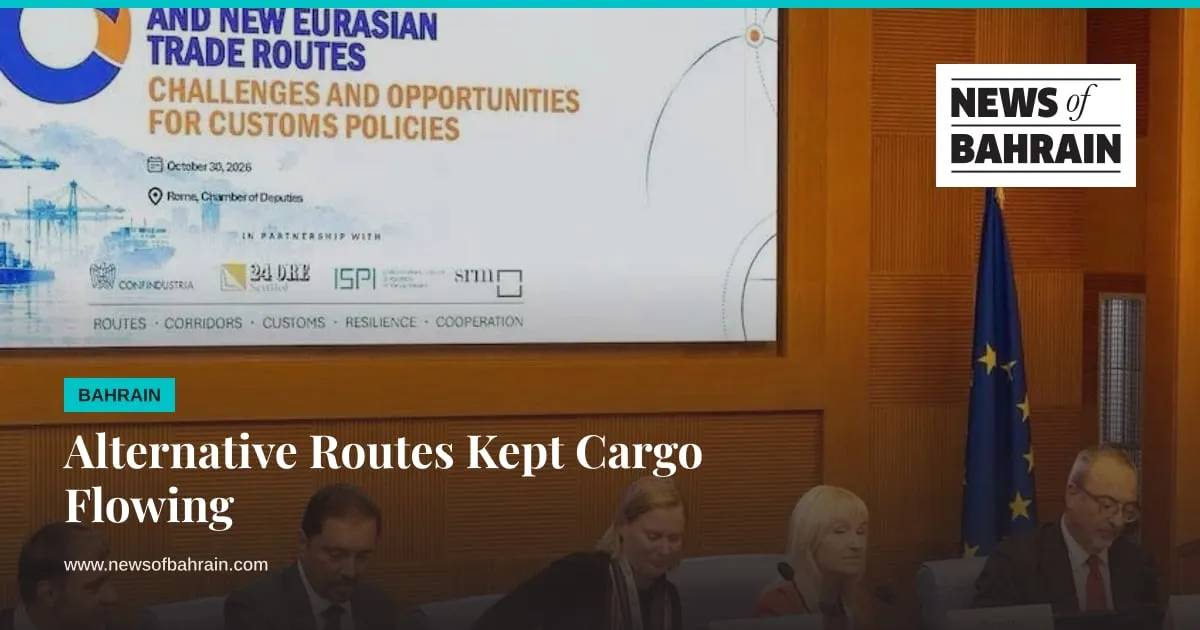
Italy's Customs and Monopolies Agency (ADM) hosted the October 30, 2026, conference at the Chamber of Deputies in Rome. According to Decode39, the event was titled "The Hormuz Crisis and the New Routes of Eurasian Trade: Challenges and Opportunities for Customs Policies" and was organized with Confindustria, Il Sole 24 Ore, ISPI and SRM.
Customs leaders and officials joined representatives of international organizations and economic experts. Participants included Gerassimos Thomas, director-general of the European Commission's DG TAXUD; Judson Murdock of US Customs and Border Protection; and Suleiman bin Masoud Al-Ghafri, executive director of the GCC Customs Union Authority. Senior customs representatives attended from Ireland, Turkey, Tunisia, Greece, Germany, the Netherlands, the UAE and Bahrain.
The agenda also included the India-Middle East-Europe Economic Corridor (IMEC). Decode39 reported that Ambassador Francesco Maria Talò, Italy's special envoy for IMEC, addressed the event and described Italy's view of the initiative as a form of geoeconomic redundancy.
European trade and talks with Italy
Shaikh Ahmed cited the longstanding trade relationship between GCC and European countries, urging continued customs cooperation to support legitimate commerce and dependable trade corridors. He said Bahrain's trade with European Free Trade Association (EFTA) states reached about BD68.7 million, or roughly 163 million euros, in 2026 despite the crisis.
He also met Roberto Alesse, director of Italy's Customs and Monopolies Agency, on the sidelines of the conference. According to GCC Business News, they discussed implementation of the Memorandum of Understanding that Bahrain Customs Affairs and the Italian agency signed in February 2025, as well as preparations for a joint action plan covering activities and technical assistance in 2027.