Egypt Calls for Regional Early-Warning and Rapid-Response System
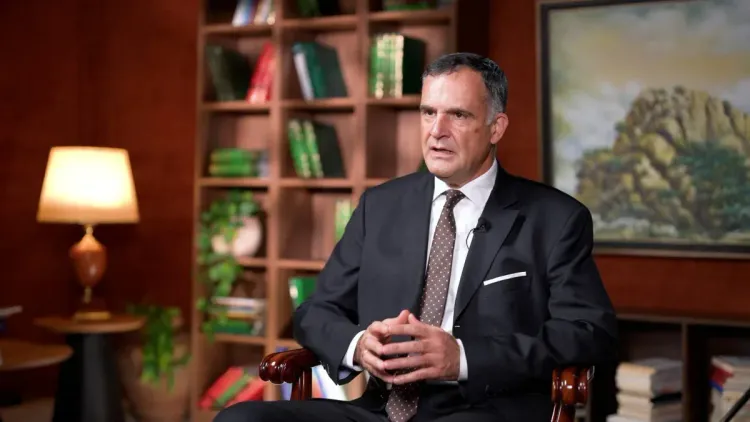
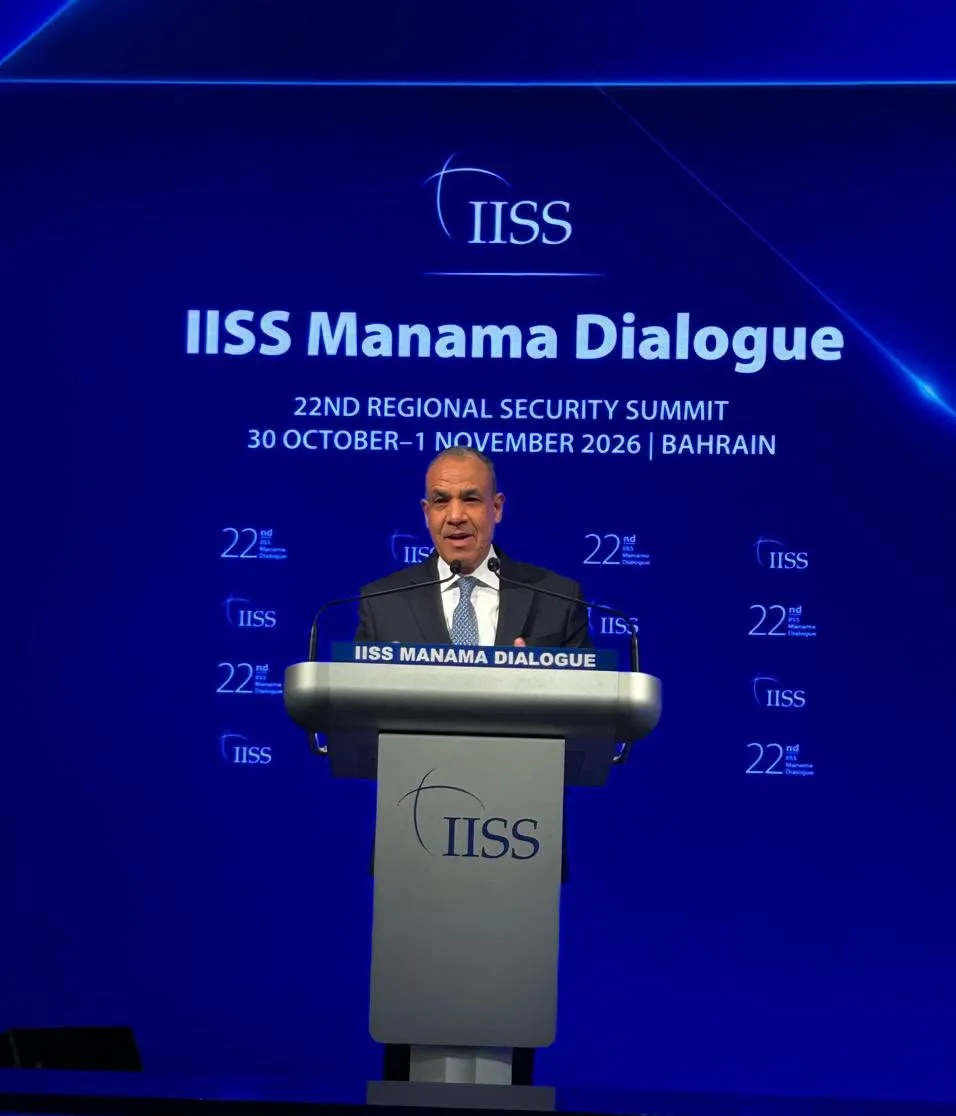
Egyptian Foreign Minister Badr Abdelatty urged regional states on Saturday to establish a system that could detect security threats and respond before they become crises, saying Egypt's national security is inseparable from the security of the Gulf.
Key points
- Abdelatty spoke on October 31 at the Pillars of Regional Security panel during the 22nd Manama Dialogue in Bahrain.
- He warned that a renewed US-Iran escalation would be more dangerous and destructive, according to The National.
- He stressed that no side can unilaterally control the consequences of a war, once it begins, according to Iran International.
- He proposed a security framework based on rule of law, renunciation of force and respect for states' internal affairs.
- Gulf Cooperation Council Secretary-General Jasem Mohamed Al Budaiwi called for shipping through Hormuz to return to pre-February 28 conditions.
Warnings of a more destructive escalation
Abdelatty spoke on October 31 at the "Pillars of Regional Security" panel during the 22nd Manama Dialogue in Bahrain. He condemned attacks on Gulf states and warned that further military escalation could undermine regional and international stability, disrupt the global economy and interrupt food and energy supply chains.
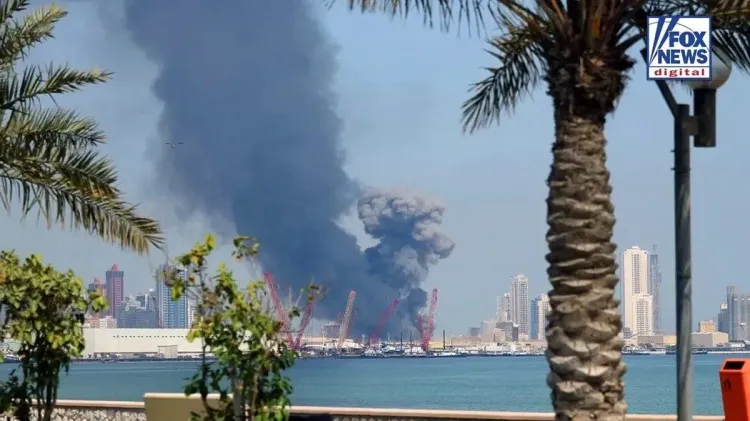
The Egyptian Foreign Ministry's account did not identify the attacks or the Gulf countries he meant. The National reported that all six Gulf states had faced repeated Iranian missile and drone strikes following the outbreak of war in late February 2026, when the US and Israel launched air strikes against Iran. Iran's retaliation targeted countries hosting US military assets, along with energy infrastructure and other strategic sites in the region.
According to The National, Abdelatty said he was "extremely worried" about renewed escalation between the US and Iran. "The second round will be more dangerous, more destructive, and it will lead nowhere. We have to draw lessons from the past," he said.
Iran International also quoted his warning about the limits of military control: "A war can begin with a unilateral decision, but no one can unilaterally control its consequences or stop it."
Diplomacy and a region-led security framework
Abdelatty's proposal would shift the region's focus from handling crises after they erupt to recognizing risks and acting earlier. He outlined a security framework grounded in the rule of law, renunciation of force and respect for states' internal affairs, with regional countries taking greater ownership and sharing responsibility.
He advocated diplomacy backed by deterrence to settle disputes. "Deterrence without diplomacy may postpone war, but cannot prevent it," he said, according to Iran International. He also cautioned against repeating what he characterized as mistakes in the negotiations over the 2015 Iran nuclear agreement.
To put those principles into practice, Abdelatty urged a structured dialogue led by regional states, drawing on a framework adopted by the Arab League in September 2025, News of Bahrain reported. He argued that greater security and stability would help advance economic and social development throughout the region.
He also made a settlement of the Palestinian issue a condition for lasting regional stability. That settlement, he said, must establish an independent, sovereign Palestinian state on the June 4, 1967 borders, with East Jerusalem as its capital. He reaffirmed Egypt's opposition to Palestinian displacement, annexation and settlement activity.
Shipping and infrastructure under threat
Abdelatty called for safeguards for international navigation, energy supplies and critical infrastructure, warning that threats to them could interrupt global trade.
An interim agreement reached in June 2026 had neither produced a lasting ceasefire in the US-Iran war nor restored normal shipping through the Strait of Hormuz, according to The National. The newspaper also reported that Yemen's Iran-aligned Houthi rebels were opening another front with renewed attacks on Saudi Arabia and threats against Red Sea shipping, prompting concern about trade routes and energy supplies.
Addressing the same summit on October 31, Gulf Cooperation Council Secretary-General Jasem Mohamed Al Budaiwi called for shipping through the Strait of Hormuz to return to conditions before February 28, when the war began. He said Iranian attacks on GCC countries had caused casualties and damaged both civilian and critical infrastructure.
"The GCC states were not a party to the war and did not seek it," Al Budaiwi said, according to Iran International.
Delegations and research at the Manama Dialogue
The 22nd IISS Manama Dialogue runs from October 30 through November 1, 2026, at The Ritz-Carlton in Bahrain. News of Bahrain reported that it brought together representatives from more than 50 countries, with over 40 participants at the ministerial or military-chief level, 600 to 700 senior delegates and more than 10 international organizations, including UN bodies.
IISS Middle East chief Martin "Sammy" Sampson said Iran had not been invited because it lacked diplomatic relations with Bahrain. Russia and China received invitations.
The program also included "The Gulf at War," an 80,000-word study produced by young researchers in the IISS Bahrain office. Sampson said the study examined the political, economic and security effects of events since February 28, 2026.