Gulf states sign joint railway framework with full operations targeted for 2030
The six Gulf Cooperation Council countries signed an agreement in Bahrain on November 8, 2026, setting shared rules for building and operating a cross-border passenger and freight railway. The GCC Railways Authority puts overall project completion at 5...
Key points
- The framework sets shared standards for construction schedules, operations, safety and technical compatibility so differences in national systems do not disrupt cross-border trains.
- The GCC Railways Authority will oversee coordination, track implementation milestones and help governments resolve technical and operational problems.
- Qatar's government said the agreement includes an execution and operating timetable and mechanisms for overcoming implementation obstacles.
- The 55.92% progress figure measures construction on the regional project and does not mean international services are already operating.
- Saudi Arabia's 672 km GCC section remains in design, with design work reportedly expected to finish around 2028, beyond the 2030 operating target.
Shared rules for cross-border service
The framework defines each country's responsibilities and establishes requirements for construction schedules, operations, safety and technical compatibility. Its common standards are intended to keep differences in national infrastructure and operating procedures from disrupting trains crossing borders.
The GCC Railways Authority will oversee coordination, track implementation milestones and work with governments to resolve technical and operational problems. Qatar's government, confirming its participation, said the agreement includes an execution and operating timetable as well as mechanisms for overcoming implementation obstacles.
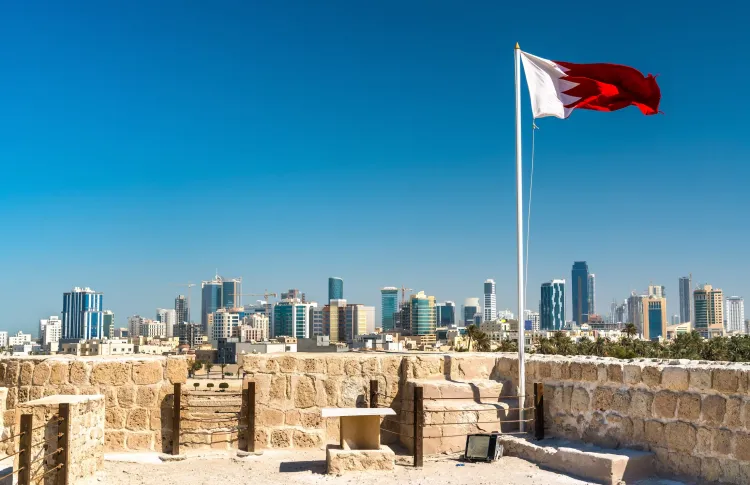
Bahrain hosted the signing at Riffa Palace during its presidency of the GCC Supreme Council. Those present included Crown Prince and Prime Minister Salman bin Hamad Al Khalifa, GCC Secretary-General Jasem Mohamed Albudaiwi and the member countries' transport ministers.
The ceremony accompanied transport ministers' talks in Manama, chaired by Bahrain and attended by the railway authority's director-general, Mohammed bin Fahd Al Shabrami. The authority said ministers reviewed the project's 2026 implementation and operations progress report and findings from a study of the proposed operating plan.
Albudaiwi said the agreement marked an important step toward integrated Gulf transport and coordinated railway operations, with an interoperable system supporting travel and economic ties. Bahrain's crown prince emphasized the need for cooperation and exchanges of expertise, highlighting the railway's potential role in trade, logistics and investment.
Construction progress is not operating readiness
The authority's 55.92% assessment measures progress on the regional project; it does not mean that more than half of the planned international services are running. Reaching the December 2030 target still requires countries to complete construction, connect their networks and agree on cross-border operating arrangements.
Saudi Arabia and the UAE already have substantial domestic freight rail infrastructure, but the sections needed for the regional network are at different stages. Saudi Arabia's planned 672 km GCC section, the second-longest national segment after the UAE's 684 km stretch, remains in design. House of Saud, citing EnterpriseAM, reported that design work is expected to finish around 2028, followed by construction tenders—a schedule that puts the Saudi section beyond the December 2030 operating target.
Bahrain and Saudi Arabia are also developing a rail connection needed to bring the island kingdom into the regional system. That link must conform to the specifications agreed by the participating governments.
The current timetable follows earlier delays. The railway received initial approval at the 2009 Kuwait Summit with completion planned for 2018. Reporting compiled by House of Saud attributes the setbacks to the 2014–16 oil price crash and fiscal austerity, the 2017–21 Qatar blockade and COVID-19. The GCC Railways Authority was established in December 2021 with the current 2030 target.
Network size, costs and traffic forecasts
The railway is planned to connect Kuwait, Saudi Arabia, Bahrain, Qatar, the UAE and Oman, linking industrial and commercial centers with ports and logistics facilities. Rail would complement existing road and maritime freight services while providing another option for passenger travel.
Published length estimates differ in scope. Reporting compiled by House of Saud around the signing puts the core cross-border route at about 1,700 km and the wider network, including connecting national spurs, at roughly 2,100–2,177 km. The GCC Railways Authority has separately given a network length of about 2,117 km.
The same reporting places core infrastructure costs at an estimated $15.4 billion to $16 billion. A broader spending estimate, covering national networks, stations and logistics facilities, reaches as high as $250 billion.
The agreement projects freight volumes of 200 million metric tons by 2030 and 271 million metric tons by 2045. Passenger numbers are forecast to reach 6 million by 2030 and more than 8 million by 2045.
GCC officials expect easier cross-border freight movement and more passenger travel options, but those benefits require completed national sections, working border connections and agreed procedures. Officials have also described the railway as a way to provide safer, more economical and environmentally sustainable transport; those outcomes will depend on service patterns, passenger demand, freight volumes and operating performance.
Hafeet Rail advances on a separate timetable
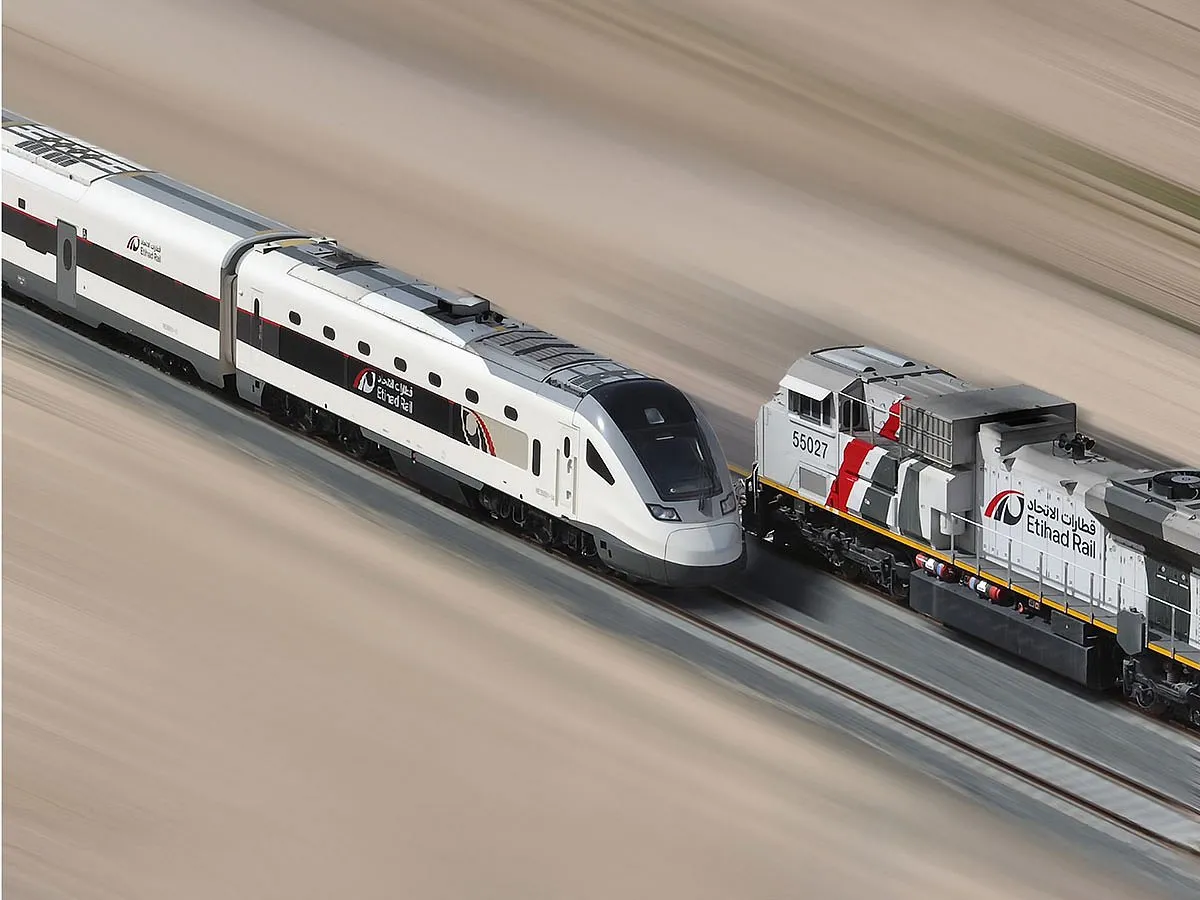
The UAE–Oman connection is being developed separately through Hafeet Rail. The 238 km line, estimated to cost $2.5 billion to $3 billion, was about 40% complete in April 2026. Trial operations are targeted for the fourth quarter of 2027.
Its infrastructure includes approximately 2.5 km of tunnels and 36 viaducts. The line is designed to accommodate freight trains traveling at up to 120 km/h and passenger services at up to 200 km/h.
Oman's Sultan Haitham bin Tarik issued Royal Decree 75/2026 ratifying the railway agreement with the UAE, which the two countries had signed on June 21, 2026. The decree took effect on September 3, 2026. Gulf News reported that the Hafeet Rail project, valued in that account at $2.5 billion, had secured $1.5 billion in project financing from regional and international banks.