Iraq's Al Zaidi seeks closer Bahrain ties in first visit by a post-2003 Iraqi leader
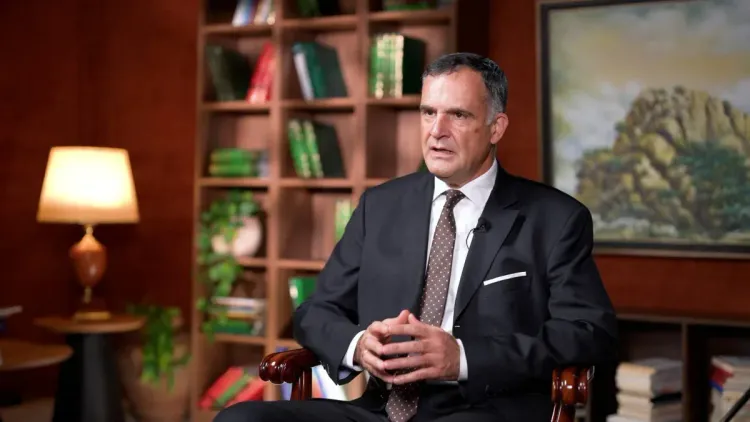
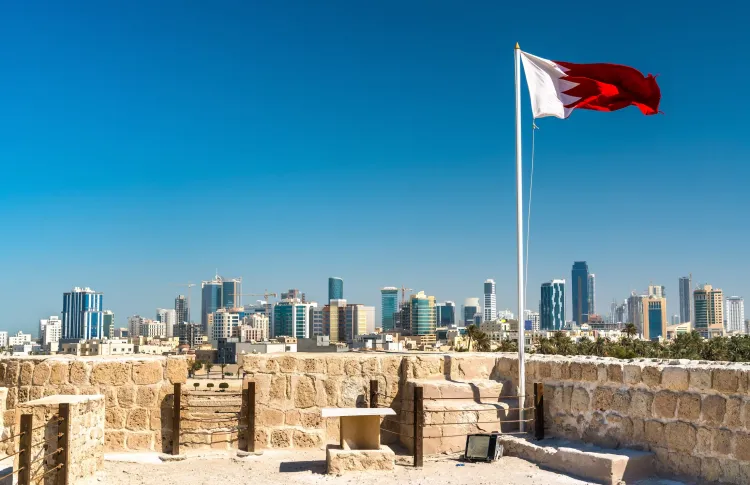
Iraqi Prime Minister Ali Al Zaidi visited Manama on November 4 to rebuild ties with Bahrain, marking the first trip to the kingdom by a leader of post-2003 Iraq. He called for stronger economic and political cooperation and invited King Hamad to Iraq.
Key points
- Al Zaidi's government wants to revive the historic relationship and broaden cooperation across economic, political and social affairs.
- Iraq's prime minister office described the two countries as sharing a common security and urged coordinated regional approaches.
- King Hamad said the visit would open new horizons for relations and called for stronger security and stability.
- Bahrain's statement said Al Zaidi condemned what it called Iranian aggression against the Kingdom, according to Asharq Al-Awsat.
- Relations were strained by sectarian tensions, Bahrain's 2011 uprisings, and Iran-aligned groups' attacks on Gulf targets during the Iran war.
Cooperation and regional security
Crown Prince and Prime Minister Salman bin Hamad Al Khalifa received Al Zaidi, and the two jointly chaired talks. Al Zaidi said his government wanted to revive the countries' historic relationship and broaden cooperation across economic, political and social affairs.
The Iraqi prime minister's office described the two countries as sharing "a common security" and urged a coordinated approach to regional issues, with dialogue taking priority as a means of ending tensions and establishing peace.
King Hamad voiced support for Iraq's government and said the visit would "open new horizons for the relationship between the two countries". He also called for efforts to strengthen security and stability.
According to the Iraqi statement, Prince Salman described the visit as historic and an opportunity to develop economic partnerships. He emphasized Iraq's pivotal regional role and its efforts to promote peace and stability, which he described as essential to prosperity and economic integration.
Bahrain also said Al Zaidi condemned what it called "the Iranian aggression against the Kingdom". Asharq Al-Awsat reported that the Bahraini statement followed his meetings with King Hamad and Prince Salman.
Repairing ties after years of mistrust
Al Zaidi's outreach comes against a history of sectarian tensions and regional competition. Bahrain regarded the Shiite-led governments that emerged in Baghdad after 2003 with suspicion, while perceptions of Iraq siding with Tehran against Gulf states prolonged the chill despite continued diplomatic relations.
The rift deepened during Bahrain's 2011 uprisings. Support for the protests from influential Shiite figures angered Bahraini officials, who viewed it as interference.
More recently, Iraq's Gulf relationships have faced pressure from the war that Israel and the US began against Iran in February. Iran-aligned groups operating in Iraq have fired drones and missiles at targets in Kuwait, Saudi Arabia, the UAE and Jordan.
Since becoming prime minister in May, Al Zaidi has sought to repair those relationships and expand cooperation. At home, his government is also pursuing an effort to bring weapons under state control. The Insight International reported that the effort, opposed by some armed factions, is expected to be completed by June 2027.
Bahrain follows visits to Jordan and Syria
The Manama trip extends a busy diplomatic schedule. Last week, Al Zaidi met King Abdullah II in Jordan; two days later, he traveled to Damascus to meet Syrian President Ahmad Al Shara. That was the first visit by an Iraqi prime minister to Syria since Bashar Al Assad's fall in 2024.
The Damascus discussions covered trade, investment and border security, along with restoring the Kirkuk-Baniyas oil pipeline. Bringing the pipeline back into service could offer Iraq another oil export route through Syria to the Mediterranean.
The leaders also discussed resuming organized Shiite pilgrimages to the Sayyida Zaynab shrine near Damascus. Al Zaidi visited the shrine and the Umayyad Mosque during the trip.
Before the Jordan and Syria visits, he held meetings with Saudi Crown Prince Mohammed bin Salman and Turkish President Recep Tayyip Erdogan. His office has presented the outreach as an effort to build relations with neighboring countries and widen economic and energy cooperation.
Rudaw's account of his travel since taking office also listed Washington, Ankara, Tehran, Paris, Berlin, Doha, Riyadh, Amman and Damascus. His first major foreign trip was a week-long visit to Washington in July 2026, when he met US President Donald Trump for discussions on economic cooperation in energy, electricity and infrastructure.
The proposed 6+2 security framework
Alongside bilateral diplomacy, Baghdad has promoted a regional security initiative known as 6+2, bringing together the six Gulf Cooperation Council states, Iraq and Iran. The aim is a security framework developed by the region's own countries.
The format predates the latest outreach. In late June 2026, Iraqi Foreign Minister Fuad Hussein said Iraq had proposed an eight-party meeting on Gulf security. Iranian Foreign Minister Abbas Araghchi welcomed the idea at a joint news conference in Baghdad, according to The New Arab.
The New Arab also reported that Iraqi government security adviser Qasim Al-Araji unveiled the 6+2 proposal. Its central principle is that none of the eight countries bordering the Arabian Gulf should allow its territory to be used to threaten a neighbor.
The proposal's formal status remained limited as of early September 2026: Iraq's government had neither officially adopted it nor published a document setting out its provisions, and none of the six Gulf states had responded.