Bahrain's Cabinet welcomes GCC Railway agreement
Bahrain's Cabinet has welcomed the signing of the General Agreement on the GCC Railway Project, highlighting the railway's role in developing transport and logistics, supporting trade and investment, and generating economic opportunities and growth.
Key points
- Each GCC member state will finance and build the railway sections within its own borders, according to Bahrain's transport minister.
- Member states will jointly set costs, fees and expenses for shared cross-border connections, per Sheikh Abdulla bin Ahmed Al Khalifa.
- Gulf Construction Online reported that GCC economy ministers lowered the total project cost to about $15 billion under the scaled framework.
- The planned network spans about 2,117 kilometers from Kuwait through Saudi Arabia, Bahrain, Qatar and the UAE to Oman.
- GCC Secretary-General Jasem Mohamed Albudaiwi said the project was 55.9% complete and on track for full operations in December 2030.
Agreement signed in Manama
The signing took place on November 8, 2026, at Al Riffa Palace in Manama alongside a meeting of the GCC Ministerial Committee on Transport and Communications. Bahrain currently holds the presidency of the 46th Session of the GCC Supreme Council, known as the "Bahrain Summit."
Bahrain's Crown Prince and Prime Minister Prince Salman bin Hamad Al Khalifa attended the ceremony, along with GCC Secretary-General Jasem Mohamed Albudaiwi and the transport and communications ministers of all six member states.
National funding and a December 2030 target
Each member state will finance and carry out work on the railway within its borders, Bahrain's Minister of Transportation and Telecommunications Sheikh Abdulla bin Ahmed Al Khalifa told Asharq Al-Awsat on November 8. The countries will jointly determine the costs, fees and expenses for shared cross-border connections.
Gulf Construction Online reported that GCC economy ministers had lowered the project's total cost to approximately $15 billion under the current scaled framework.
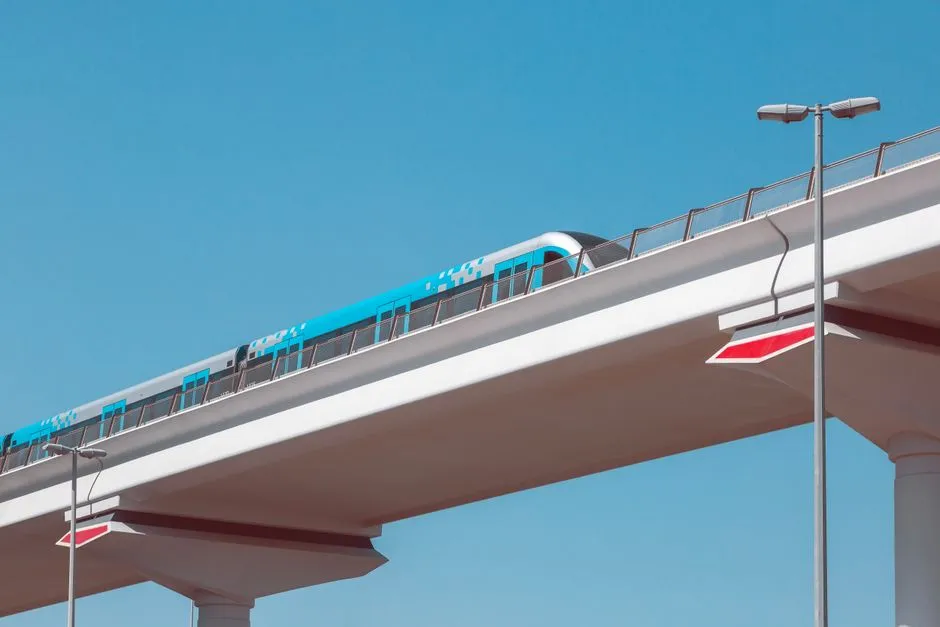
The planned network covers about 2,117 kilometers, extending from Kuwait through Saudi Arabia, Bahrain, Qatar and the UAE to Oman. Bahrain's transport minister said full operations are targeted for December 2030. The railway aims to carry 6 million passengers and 200 million metric tons of freight by 2030, with those figures projected to reach more than 8 million passengers and 271 million metric tons by 2045.
The project dates to its approval at the 30th GCC Summit in Kuwait City in December 2009. Its initial completion deadline was 2018, later pushed back to 2021. In December 2021, GCC leaders approved the creation of a GCC Railways Authority to coordinate the project.
Progress figures and work on national sections
Albudaiwi put the project's completion level at 55.9% on November 8, 2026, and said it remained on track to begin full operations in December 2030. Separately, Bahrain's transport minister explained that a widely cited 50% figure is an average of progress across member states, not a measure showing that half of all construction on the Gulf network is finished.
The minister also said neighboring countries need not wait for the whole network to be completed before opening their cross-border links: those lines can enter service once their components are ready.
By late 2026, work on national sections was advancing. Saudi Arabia Railways had sought design consultancy bids in May 2026 for a 672-kilometer section linking Kuwait and the UAE. Kuwait had awarded Turkish firm Proyapi an $8 million design contract in April 2025 for its 85-kilometer segment.
Track-laying on the $2.5 billion Hafeet Rail project between Abu Dhabi and Sohar in Oman had passed the halfway point. Trial operations were scheduled for the fourth quarter of 2027.
Bahrain's connection depends on the Saudi link
For Bahrain, the King Hamad Bridge project includes both road lanes and railway lines that would link the country's international passenger station with Saudi Arabia's rail network, the transport minister said. He described completion of the Bahrain-Saudi rail connection as a fundamental requirement for operating the line between the two countries within the December 2030 target.