GCC states to sign railway agreement in Manama on November 8
The six Gulf Cooperation Council countries are set to sign an agreement in Bahrain on Sunday, November 8, 2026, covering how their shared railway project will be implemented and operated. The network aims to begin full operations by 2030.
Key points
- The agreement will set member states' responsibilities and provide for construction and operation under a jointly agreed work plan and timetable.
- The agreement calls for closer cooperation with the GCC Railways Authority to track progress and address obstacles.
- The railway aims to offer safe, economical and environmentally friendly passenger and freight transport while encouraging trade and exchanges.
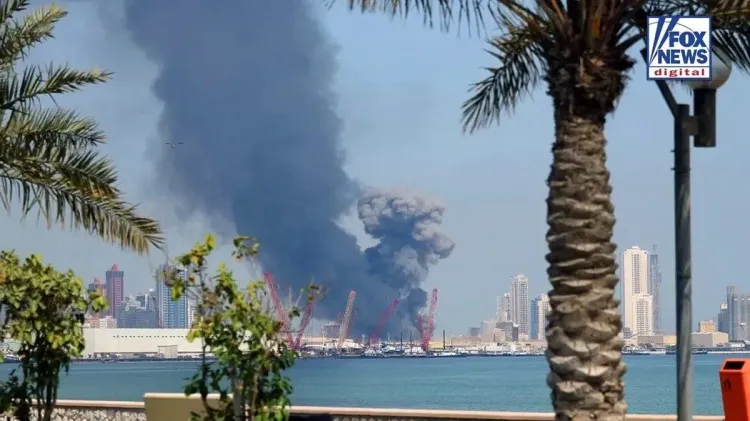
- Shipping disruptions linked to the Iran war and tensions around the Strait of Hormuz have pushed Bahrain toward roads and alternative ports.
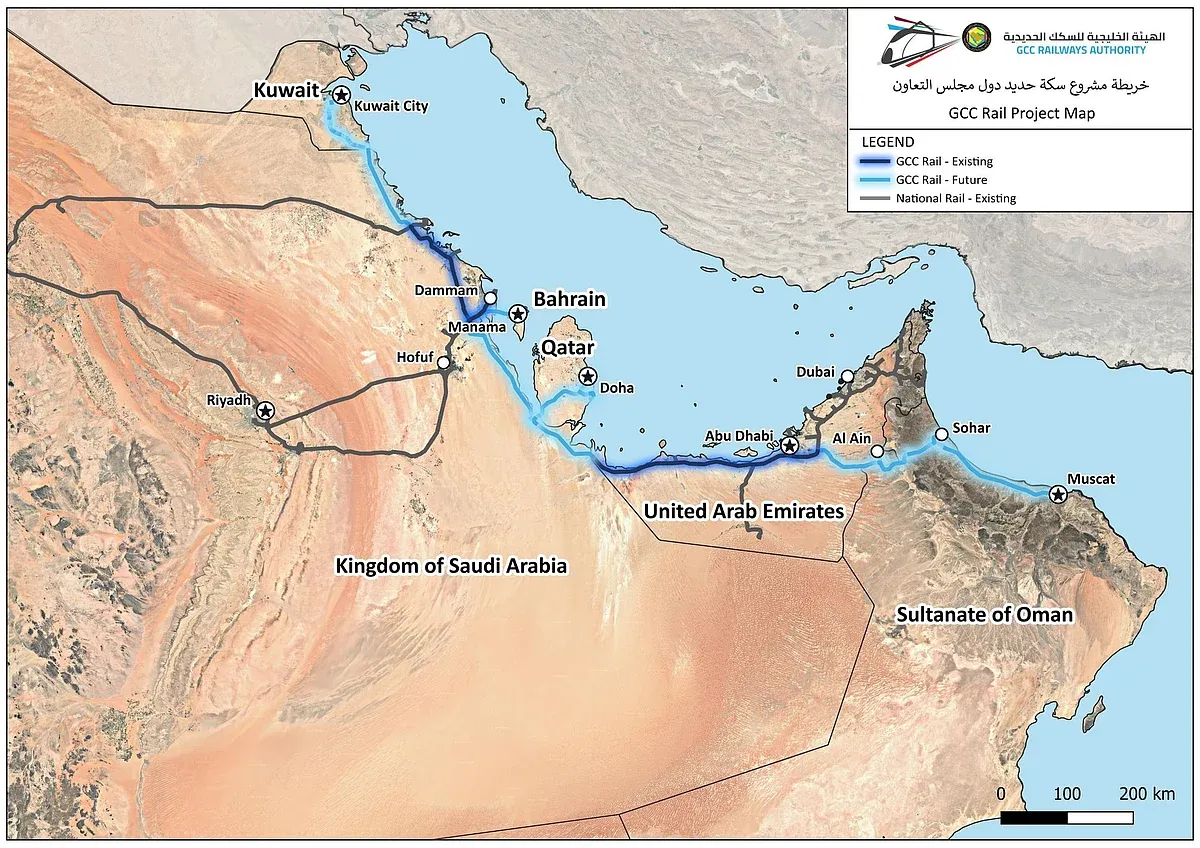
- The planned network extends more than 2,100 kilometers and was reported about 50 percent complete in a June PwC Middle East report.
Agreement to set responsibilities and schedule
Transport and communications ministers from Saudi Arabia, the UAE, Oman, Qatar, Kuwait and Bahrain are expected at the Manama ceremony, alongside GCC Secretary General Jassim Albudaiwi. The GCC said Bahrain is hosting the signing as the current holder of the bloc's presidency.
The agreement will establish member states' responsibilities and provide for construction and operation under a jointly agreed work plan and timetable. It also calls for closer cooperation with the GCC Railways Authority to track progress and address obstacles.
The railway's stated purpose is to offer safe, economical and environmentally friendly passenger and freight transportation, while encouraging trade and economic and social exchanges within the bloc.
Shipping disruptions add urgency
The push for rail alternatives comes amid tensions around the Strait of Hormuz, a passage used each day by nearly 20 percent of global oil supplies and a significant share of regional trade. Those tensions have exposed the vulnerability of established shipping routes.
Bahrain's Transport Minister Sheikh Abdulla bin Ahmed Al Khalifa told The National that shipping had been disrupted by the Iran war and Iran's de facto blockade of the strait. The war began in late February 2026, when the US and Israel launched strikes against Iran.
The minister said Bahrain increased its reliance on roads and alternative ports, particularly Saudi Arabia's Jeddah Islamic Port, Oman's Sohar and Duqm ports, and Fujairah in the UAE. Vessel calls declined at Bahrain's Khalifa bin Salman Port, while GCC transport ministers convened two extraordinary meetings to coordinate their response.
A network of more than 2,100 kilometers
The planned railway extends more than 2,100 km across the six countries. A June report by PwC Middle East put overall completion at approximately 50 percent and identified 2030 as the target for full operations.
Gulf Construction Online reported in June 2026 that the network is projected to handle six million passengers a year by 2030 and carry 201 million tonnes of freight. Its design calls for passenger speeds of 220 km/h, with freight trains running at 80 to 120 km/h.
The same report put the revised project cost at approximately $15 billion, following a downward adjustment by GCC economy ministers under the current scaled framework.
Saudi, UAE and Oman links
Saudi Arabia Railways sought design consultants for the kingdom's 672-km section through a tender issued May 7, 2026, with a June 30 bid deadline. The assignment covers concept, preliminary and Issued-for-Construction design. The route runs south from Al-Khafji in the Eastern Province, near Kuwait, to Al-Batha at the UAE border.
The UAE already has an operating freight network that connects the Saudi border with Fujairah and passes through all seven emirates. That Etihad Rail system forms the UAE backbone of the wider GCC railway, according to Gulf Construction Online.
Etihad Rail says its network can reduce road emissions by 21 percent annually by 2050. It also says a single freight train can replace up to 300 trucks on Gulf highways.
The cross-border connection between the UAE and Oman is the 238-km Hafeet Rail line. Its route joins Abu Dhabi and the Omani port city of Sohar through Al Ain and Al Buraimi. The project adopted the Hafeet Rail name in April 2024, when AED 5.5 billion, or about $1.5 billion, in civil works contracts were signed.
Hafeet Rail was 40 percent complete as of late April 2026, with trial operations expected in 2027.
Kuwait plans and a separate Riyadh-Doha railway
Kuwait's first-phase design work advanced in April 2025, when Public Works Minister Noura Al-Mashaan signed an $8 million contract with Turkish consultancy Proyapi for the Kuwait National Rail Road.
The country's Municipal Council subsequently approved an approximately 85-km corridor between the southwestern border with Saudi Arabia and the Shadadiya area. This section belongs to a broader 500-km Saudi-Kuwait corridor. Plans call for three daily round trips, with trains reaching up to 300 km/h and making the Riyadh-Kuwait journey in less than two hours.
A separate electric high-speed line is planned between Riyadh and Doha. The 785-km railway would operate at more than 300 km/h, stopping at Al-Hofuf and Dammam in Saudi Arabia, with terminals at Riyadh's King Salman International Airport and Doha's Hamad International Airport.
Qatar's cabinet approved a framework agreement for that connection in October 2025; Saudi Arabia's cabinet formally approved a bilateral agreement in February 2026. Construction is expected to last about six years, with completion targeted for the early 2030s.
A timetable revised over two decades
The GCC Railway dates to feasibility studies commissioned at the 2003 GCC Summit. Its formal launch followed at the 30th summit in Kuwait City in December 2009. An initial 2018 completion deadline was subsequently moved to 2021.
After the January 2021 Al-Ula Declaration restored diplomatic ties within the GCC, the bloc's leaders approved the creation of the GCC Railways Authority in December that year.
By December 2023, transport ministers had adopted binding administrative, legal and financial rules for the authority and approved its budget. They also ratified a general agreement setting a December 2030 target date.