GCC Approves Kuwait Command Post as Bahrain's King Meets Saudi Crown Prince
Gulf defense ministers approved a new command post in Kuwait on November 10 as Bahrain's King Hamad bin Isa Al Khalifa held talks with Saudi Crown Prince Mohammed bin Salman in Riyadh. The GCC linked its decision to Iranian attacks on member states; th...
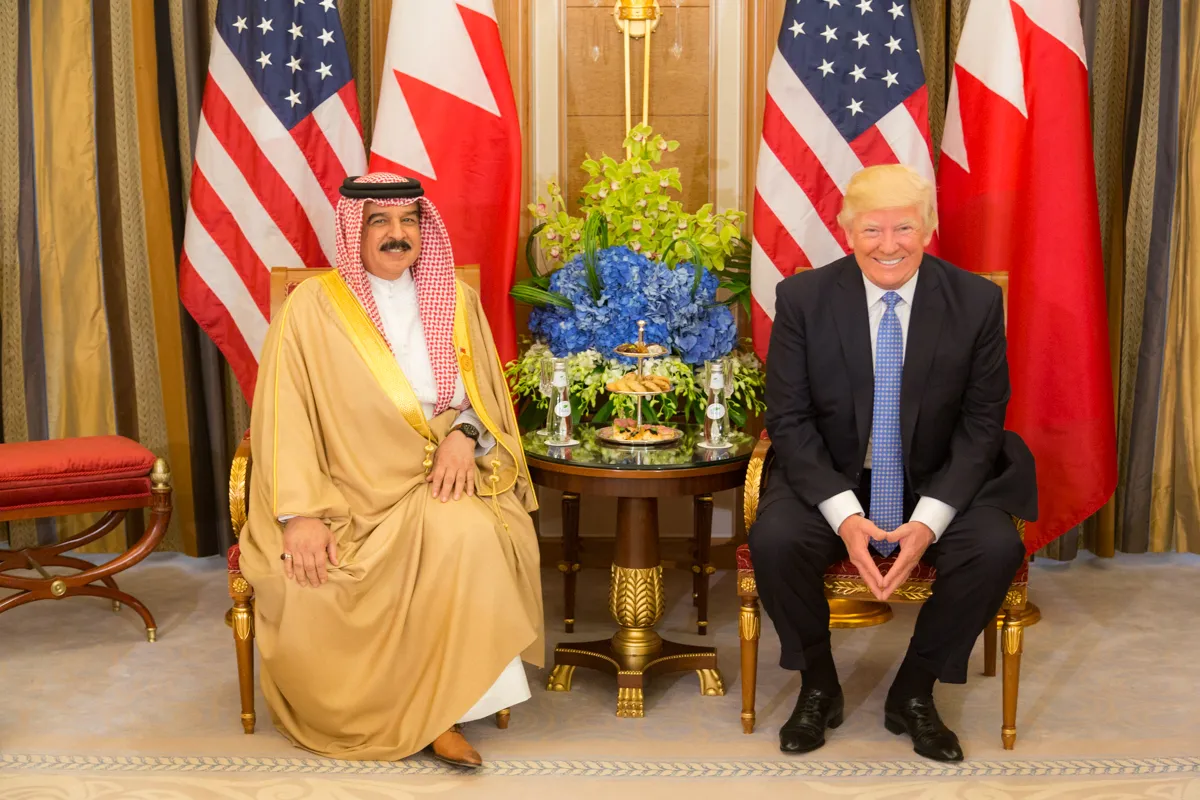
Key points
- Bahrain hosted the 23rd GCC Joint Defence Council session in Manama, chaired by Lieutenant General Abdullah bin Hassan Al Nuaimi.
- Ministers authorized an advanced command post in Kuwait under the GCC Unified Military Command, according to Euronews.
- GCC Secretary-General Jasem Mohamed Al Budaiwi explicitly cited Iranian attacks on member states when explaining the Kuwait decision.
- Kuwait accounted for one in four recorded attacks on nonmilitary infrastructure across the GCC, according to Armed Conflict Location & Event Data Project data.
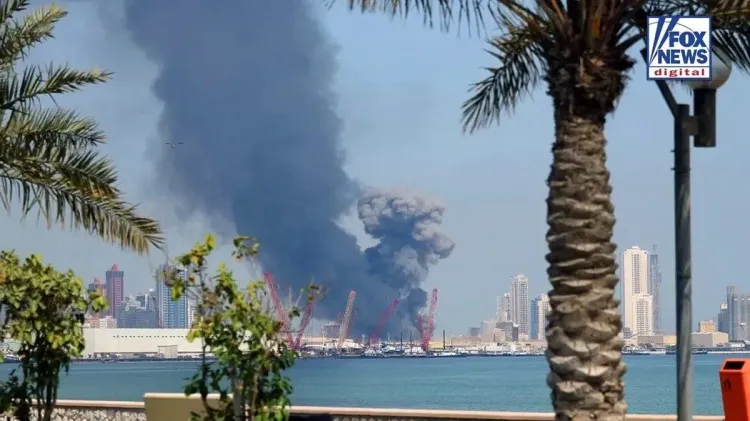
- Iranian missiles and drones hit NSA Bahrain on February 28, 2026, with damage put at nearly $400 million by Military Times.
Parallel meetings in Riyadh and Manama
Bahrain hosted the 23rd GCC Joint Defence Council session in Manama while King Hamad visited the Saudi capital. Ministers authorized an advanced command post in Kuwait under the GCC Unified Military Command, Euronews reported. Bahrain's Minister of Defence Affairs, Lieutenant General Abdullah bin Hassan Al Nuaimi, chaired the session, according to the GCC General Secretariat.
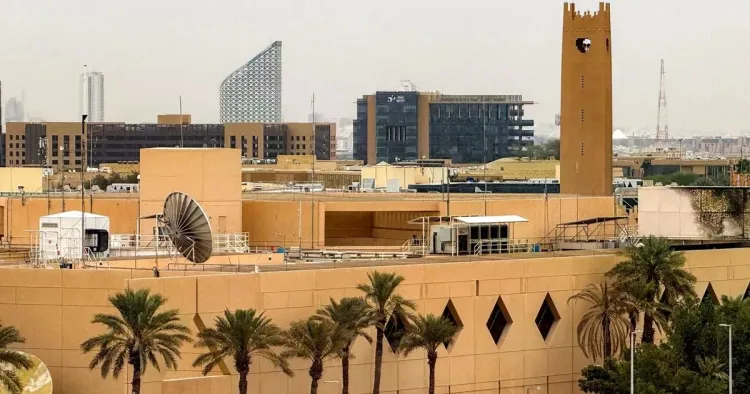
In Riyadh, Mohammed bin Salman welcomed King Hamad at King Khalid International Airport, Asharq Al-Awsat reported. The airport had come under Houthi ballistic missile attack in early October, killing 12 people and injuring more than 300, according to The National.
The king's delegation included Crown Prince Salman bin Hamad, Foreign Minister Abdullatif Al-Zayani, Finance Minister Sheikh Salman bin Khalifa Al-Khalifa, and diplomatic adviser Sheikh Khalid bin Ahmed bin Mohammed Al-Khalifa, Arab News and The National reported.
The Saudi Press Agency and Bahrain's state news agency BNA distributed a readout describing discussions about bilateral ties, broader cooperation, and regional efforts to strengthen security and stability. Neither a joint statement nor new agreements, pledges, or coordination arrangements followed, according to Asharq Al-Awsat and The National.
The Saudi account said Mohammed bin Salman reaffirmed his commitment to closer relations with Bahrain across all fields. King Hamad credited Saudi Arabia's "benevolent efforts" toward a Gulf "joint action system" and praised the crown prince's "pivotal role" in regional security, The National reported. In a separate statement carried by News of Bahrain, the king called for "stronger Arab and Gulf unity amid regional challenges" and urged GCC leaders to consult and coordinate.
Preparations included a November 4-5 visit to Mohammed bin Salman by Bahrain's National Security Adviser Sheikh Nasser bin Hamad Al Khalifa, who delivered the king's greetings, Asharq Al-Awsat reported. Iraq's prime minister, Syria's president, and French President Macron had also traveled to Riyadh earlier in November, according to The National.
The Kuwait post and the GCC's military structure
GCC Secretary-General Jasem Mohamed Al Budaiwi explicitly cited "Iranian attacks on member states" in explaining the Kuwait decision, Al Jazeera reported. That language was more specific than the Riyadh readout's reference to "the latest regional developments." An unnamed GCC analyst told Al Jazeera the post was "part of a longer-term GCC strategy to build deterrence against Iran, not a sign of an imminent strike."
Al Budaiwi said the decision carried out directives to reinforce joint Gulf military action issued by GCC leaders at their extraordinary April 2026 meeting in Jeddah. Analyst Muhanad Seloom said GCC chiefs of staff met on October 29 before defense ministers gave their approval on November 10.
Saudi Defense Minister Prince Khalid bin Salman headed his country's delegation. He was joined by Chief of the General Staff General Fayyadh bin Hamed Al-Ruwaili and the defense minister's intelligence adviser, Hisham bin Abdulaziz bin Saif. Saudi Gazette reported that Prince Khalid said Saudi Arabia would host the next round of joint Gulf military cooperation meetings at all levels.
The new post will operate within a command structure created at the GCC's December 2013 summit in Kuwait to plan and manage joint military operations. Its main headquarters opened in Riyadh in 2021, according to Arab News. The command's land component, the Peninsula Shield force, dates to the mid-1980s and has about 40,000 personnel in two brigades.
Kuwait has faced attacks originating in both Iran and Iraq since the US-Israeli conflict with Iran began in February 2026. Arab News described it as the GCC member most exposed to attacks. Data from the Armed Conflict Location & Event Data Project showed that Kuwait accounted for one in four recorded attacks on nonmilitary infrastructure across the GCC. Targets included Kuwait International Airport, oil refineries, and the Shuaiba power and desalination plant.
Bahrain coordinates its defense relationship with Saudi Arabia through the GCC Unified Military Command and Joint Defence Council. It is not a party to the Makkah Joint Defence Agreement, which Saudi Arabia, Turkey, and Pakistan signed on August 7, 2026.
Bahrain's US military ties and wartime damage
Bahrain hosts the headquarters of US Naval Forces Central Command and the US Fifth Fleet at Naval Support Activity Bahrain in Juffair, Manama. Both have been headquartered there since 1995. The American naval presence is older: Bahrain has hosted a US naval command headquarters since 1948, when the regional posting was recognized as the Middle East Force. The facility received the Naval Support Activity Bahrain name in 1999, according to the Congressional Research Service and US Navy history.
A Defense Cooperation Agreement signed on October 28, 1991, gives US regional military operations access, basing, and overflight privileges in Bahrain. The agreement was renewed in 2017 for 15 years, the Congressional Research Service said. The countries added the Comprehensive Security Integration and Prosperity Agreement in September 2023, committing them to regard external aggression against either as a matter of grave concern. The United Kingdom joined that agreement in December 2024.
Iranian missiles and drones hit NSA Bahrain on February 28, 2026. An August 28 Military Times report put the damage at nearly $400 million. Chief of Naval Operations Admiral Daryl Caudle said full operations would not resume "anytime soon," according to the Congressional Research Service's September assessment.
After the strike, the US Navy began using Naval Support Facility Diego Garcia as a logistics hub for ships supporting operations against Iran, including aircraft carriers, the Congressional Research Service reported. Avoiding the Iranian coastline requires a logistics network spanning an estimated 2,200 miles.
The war has also affected Bahrain's economy and tourism. Preliminary indicators cited by the Congressional Research Service suggest an economic contraction of nearly 5% in 2026, while credit default swap prices on Bahraini sovereign debt rose almost 40% over the year. Bahrain and the UAE signed a $5.4 billion currency-swap agreement, and the Bahrain Grand Prix was moved to Malaysia.
Diplomatic break with Iran and direct security threats
Bahrain has maintained its break in diplomatic relations with Iran since 2016. It rejected an Iranian proposal for an Oman-hosted collective meeting on the Hormuz crisis on September 12, 2026. Bahrain said it "will not be a party to any collective meeting involving Iran prior to the restoration of diplomatic relations," Al Jazeera reported.
Instead, Bahrain pursued multilateral action. In late September, it led an 80-country statement seeking the full reopening of the Strait of Hormuz "without the imposition of tolls, conditions or illegal charges," according to Tribune India and gCaptain. Earlier, a Bahraini resolution on Hormuz at the UN Security Council was defeated 11-2 on April 7, 2026, with vetoes from Russia and China.
Bahrain's Defence Force reported that, by April 6, it had intercepted a cumulative 188 ballistic missiles and 468 drones targeting the country. Those totals preceded more than six additional months of hostilities. On November 9, Bahrain's cabinet condemned the Houthis' "continued terrorist attacks" against Saudi Arabia and said Saudi security was "an integral part" of Bahrain's security and that of the GCC system, Sabq reported.
Iran has presented Bahrain's hosting of the Fifth Fleet as justification for military action. In a July 15 statement carried by Tasnim News Agency, the IRGC described its February 28 attack on the fleet's command-and-control center as retaliation for the United States "claiming control of the Strait of Hormuz" and blocking oil and gas shipping. That claim was not independently verified.
No identifiable coverage of King Hamad's Riyadh meeting appeared in Iranian state media outlets IRNA, PressTV, Tasnim, or Fars News during the November 10-12 period.