Maritime nations call for joint action to keep trade routes open
Singapore and other maritime nations at the Manama Dialogue in Bahrain urged stronger security cooperation to protect global shipping, as months of disruption in the Strait of Hormuz exposed the risks of relying on vulnerable sea passages.
Key points
- Singapore's Zaqy Mohamad argued that countries must cooperate more closely because security has not kept pace with economic interdependence.
- Zaqy urged countries bordering and using the waterways to lead protection efforts, with support from other users.
- Zaqy outlined three priorities: prompt exchange of threat information, readiness for joint action, and securing underwater infrastructure.
- Singapore launched Guiding Principles on Underwater Infrastructure Defence Exchanges in May 2025 with 16 countries, including Qatar.
- Indian Foreign Secretary Vikram Misri said Indian seafarers passing through Hormuz had been attacked by more than Iranian actors, and criticized US actions.
Security cooperation lags economic ties
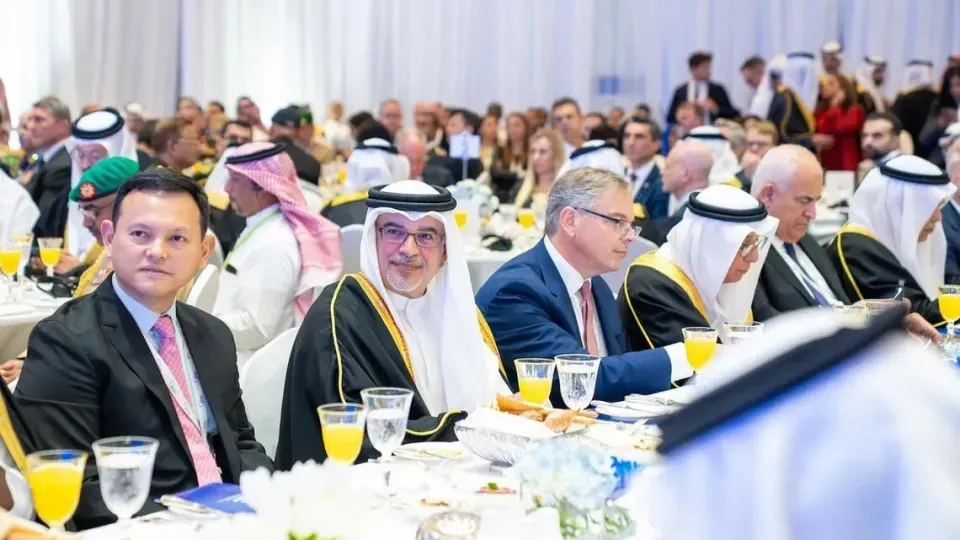
The conference, organized by the International Institute for Strategic Studies, brought calls to prevent maritime chokepoints from holding economies and livelihoods hostage. Participants looked beyond the war on Iran to a problem that economic interdependence has not resolved: how to keep essential waterways open when shared commercial interests fail to prevent conflict.
Singapore's Zaqy Mohamad, acting minister for Muslim affairs and senior minister of state for defense, argued that protecting those routes requires countries to work together. Speaking on a maritime security panel on Nov. 1, he said: "The lesson from Hormuz is not that our world has become too interconnected. It is that our security cooperation has not always kept pace with our interdependence."
Zaqy urged countries bordering and using the waterways to lead that effort, with support from other users. No country can protect the maritime commons by itself, he said. Accepting greater danger, longer voyages and higher costs as routine business expenses would risk making insecurity a lasting condition of international trade.
"We must not allow insecurity to become the new normal," he said.
Hormuz remains largely closed
The dialogue ended amid widespread concern that the US and Israel could launch another attack on Iran after the US midterm elections. Iran has threatened retaliation against Gulf states and other US-friendly governments across West Asia. Qatar was leading diplomatic efforts over the weekend to avert renewed fighting.
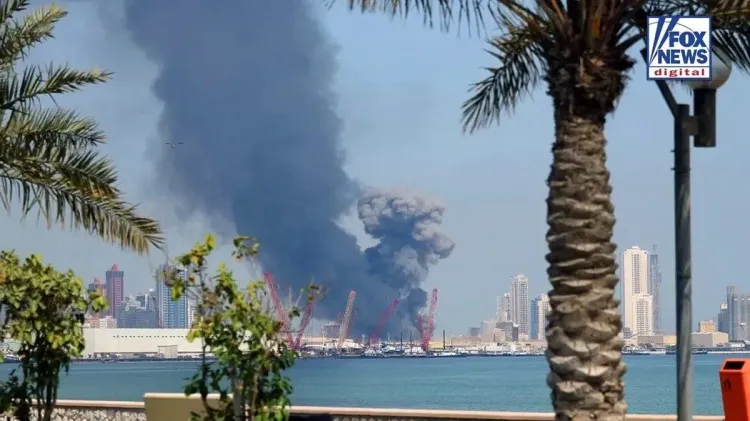
Iranian threats have left Hormuz almost entirely closed, cutting off a passage previously used by much of Asia's energy supply. October recorded more attacks on shipping than any other month since the war began in late February. High oil prices continue to fuel inflation worldwide.
Tehran can also influence shipping through the Bab el-Mandeb Strait and the Red Sea through allied or sympathetic irregular forces in Yemen. Its 2,000-kilometer coast along the Persian Gulf and Gulf of Oman gives it the ability to obstruct commerce through Hormuz. Iran also has a small Caspian Sea coastline used for trade with Russia and Central Asia.
At an RSIS conference in Singapore in October, West Asia specialist Vali Nasr said control of Hormuz had become more strategically important to Tehran than preserving its nuclear program. In talks to end the war, Iran has sought privileges over the passage comparable to Turkey's supervisory role over the Bosporus under the 1936 Treaty of Montreux. Most Asian countries are uncomfortable with those demands.
The maritime security panel also heard criticism of US actions. Indian Foreign Secretary Vikram Misri said Indian seafarers passing through Hormuz had been attacked "not just by Iranian actors… and we have not minced words" about it. He was referring to US attacks on merchant mariners enforcing a naval blockade intended to stop Iranian exports. The deadliest such incident came on June 10, when a US missile attack killed three Indian seafarers.
Protecting ships and underwater infrastructure
Zaqy outlined three priorities: prompt exchanges of threat information, readiness for joint action and "securing what we cannot always see". Protecting vessels is only part of maritime security, he said; countries must also safeguard the underwater infrastructure that supports international connections. Defense establishments need to assess emerging technological risks together and develop shared responses.
In remarks at the 2025 Manama Dialogue, Zaqy cited the reported consequences of four submarine cable cuts in the Red Sea in 2024: 70% of data traffic between Asia and Europe was compromised.
Singapore launched the Guiding Principles on Underwater Infrastructure Defence Exchanges in May 2025 with 16 countries from the Middle East, Southeast Asia and Europe, including Qatar. The document establishes common principles and identifies opportunities to exchange information and technical knowledge and coordinate crisis responses in support of civilian authorities and industry.
Regional defense cooperation has also addressed the issue. In a Nov. 2, 2025, speech, Zaqy said the 19th ASEAN Defence Ministers' Meeting had approved a concept paper on critical underwater infrastructure security two days earlier. Co-sponsored by Singapore, Brunei and Thailand, it sets out principles intended to build awareness and strengthen protection.
Zaqy also told the 2025 dialogue that Singapore had recently brought together 17 countries for Exercise Pacific Reach, which develops regional capabilities for submarine escape and rescue.
Existing patrols offer examples of cooperation
Singapore participates with Indonesia, Malaysia and Thailand in the Malacca Straits Patrol. It has also contributed to Combined Task Force 151 in the Gulf of Aden and Combined Task Force 153 in the Red Sea, commitments that Zaqy said demonstrate its support for maritime security outside Southeast Asia.
The Malacca patrols began on July 20, 2004, when Indonesia, Malaysia and Singapore launched the coordinated Operation MALSINDO. The initial force comprised seven Indonesian ships and five each from Malaysia and Singapore, for a total of 17. Thailand subsequently joined, while the combined "Eyes in the Sky" maritime air patrols started in September 2005. Reported pirate attacks in the straits numbered 38 in 2004 and 12 in 2005.
The route's importance extends far beyond its coastal states. At the 2025 Manama Dialogue, Zaqy said the Strait of Malacca carries one-quarter of global maritime trade.
A senior Asian diplomat attending this year's conference expected Singapore's appeal for coastal states and waterway users to take the lead to find support in the region. "Where Hormuz and the Black Sea are concerned, the world is looking for credible powers to lead the collective effort to ensure freedom of navigation," he said.
The diplomat pointed to Singapore's deployment of a landing ship tank as part of the "coalition of the willing" during the Iraq War. Leadership from stronger powers could give smaller countries confidence to participate, he said, adding: "Even token behaviour helps make the larger point."
Pressure for action from the Gulf to the Black Sea
Bahrain and Greece have both used their presidencies of the UN Security Council to elevate maritime security and freedom of navigation: Bahrain in April and Greece in October. Their initiatives reflected concern about the erosion of navigation norms.
Opening the Manama Dialogue, Greek Prime Minister Kyriakos Mitsotakis said Council members broadly agreed that maritime security should be treated as "an issue of utmost urgency". States are not the only source of danger, he said; non-state groups can use inexpensive technology to interrupt shipping and threaten undersea cables.
Mitsotakis identified the Black Sea, alongside the Middle East, as another troubled maritime region. He cited the sinking of a Greek-owned container ship in the western Black Sea days earlier and grain stranded unsold in Ukrainian warehouses by shipping disruptions, even as markets elsewhere awaited supplies.
Despite the consequences of the Russia-Ukraine war for the Black Sea, he urged Europe to "shift more aggressively" toward West Asia. Greece, he said, has "a lot of skin in the game" when freedom of navigation is at stake.
For Singapore and other Southeast Asian countries, Zaqy said, safe and open shipping routes are economic lifelines. Different security conditions should not mean different principles for maritime passage.
"What happens in Hormuz or in the Bab el-Mandeb matters far beyond the Gulf. We must not allow attempts to restrict transit passage there to undermine navigational rights in the Straits of Malacca and Singapore, or any other strategic waterway," he said.