IISS Report Says Iran War Forces Gulf States to Rethink Security and Economic Plans
The US-Israel war with Iran has exposed vulnerabilities that Gulf states believed their wealth, energy exports and international partnerships would protect them from, according to a new International Institute for Strategic Studies report. The assessme...
Key points
- The IISS report examines the war's consequences for Bahrain, Qatar, Oman, Kuwait, Saudi Arabia and the United Arab Emirates across defense, economy and partnerships.
- Iran launched more than 6,000 ballistic missiles and drones at 12 countries before the April 8, 2026 ceasefire, according to IISS.
- IISS identifies four urgent Gulf military capability gaps: air-defense replenishment, countering mass cheap drone attacks, long-range strike weapons and maritime capabilities.
- The report says Oman, Saudi Arabia and the UAE depend only partly on the Strait of Hormuz and so benefited from higher prices, unlike Bahrain, Kuwait and Qatar.
- IISS calls for more decentralized critical infrastructure, substantially larger strategic reserves and increased domestic food and water production amid unresolved war outcomes.
Security assumptions under strain
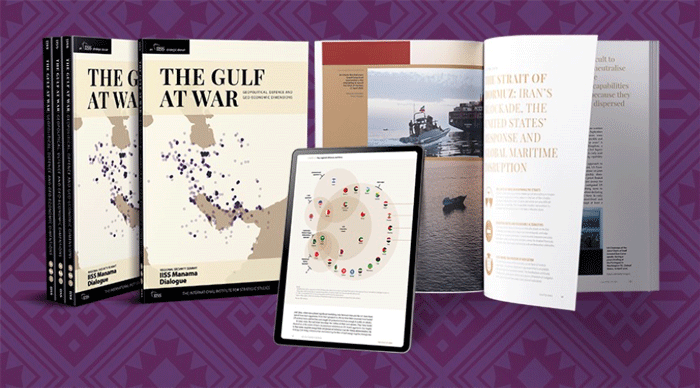
Published October 31, 2026, on the eve of the 2026 IISS Manama Dialogue, "The Gulf at War" examines the conflict's consequences for Bahrain, Qatar, Oman, Kuwait, Saudi Arabia and the United Arab Emirates. It assesses their military performance, economic resilience and relations with outside partners, particularly the United States.
The report argues that these countries had counted on a combination of close US ties, essential energy supplies, Arab leadership, wealth, a central role in the global economy and carefully managed engagement with Iran to shield them from regional war. Although they have avoided the worst-case outcomes, those protections no longer appear sufficient for the more volatile conditions they face.
IISS identifies Iran's threat across multiple domains as a central challenge for Gulf security. Yet the Gulf states disagree over how much to rely on accommodation, engagement or deterrence in responding to Tehran.
Their partnerships are also under review. Doubts about US security guarantees coexist with continued dependence on American technology, military integration and power. Gulf states are broadening their strategic and defense relationships to balance that reliance, while debating the value of ties with Israel, which the report describes as a disruptive power.
Missile attacks expose defense needs
The dossier dates the war's first high-intensity phase from February 28 through the April 8, 2026, ceasefire. During those six weeks, the United States, Israel and Iran fought predominantly with aircraft and missiles.
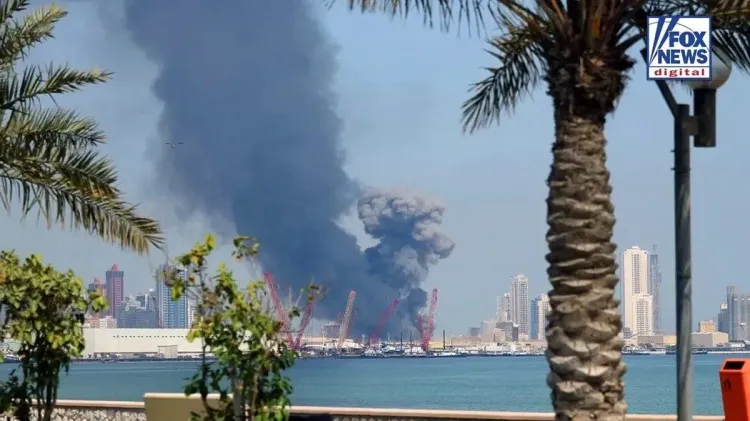
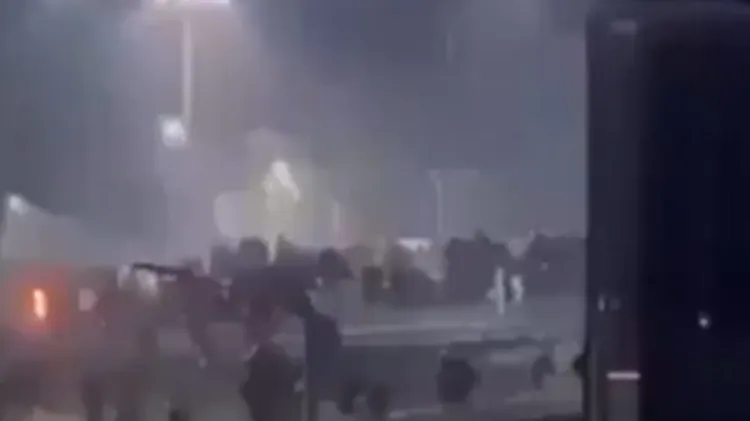
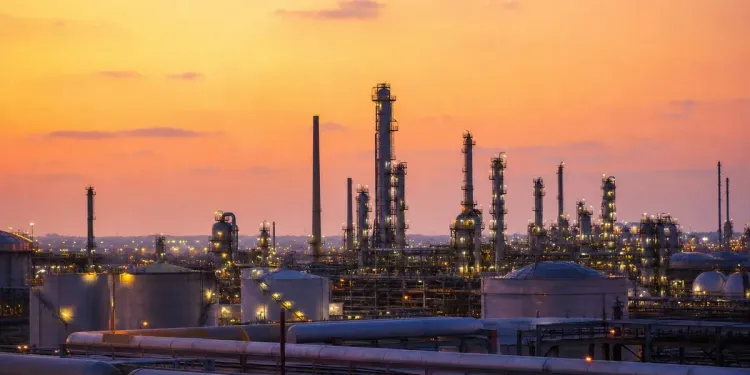
Iran launched more than 6,000 ballistic missiles and drones at 12 countries before the ceasefire, according to IISS. Its campaign systematically targeted energy infrastructure supplying almost one-third of the world's oil, more than 10% of its natural gas and 19% of global liquefied natural gas exports.
The report finds that Iran has been prepared to endure severe US attacks while maintaining a stalemate over the Strait of Hormuz that harms both sides. A chapter titled "War and Brinkmanship: The View from Iran" argues that attacks on Gulf states and disruption of the strait gave Tehran strategic leverage, and that Iran is emerging from the war more emboldened and hardline.
For Gulf militaries, IISS identifies four urgent capability gaps: replacing air-defense stocks despite worldwide shortages, defeating mass attacks by inexpensive drones, acquiring long-range strike weapons to rebuild deterrence, and strengthening maritime capabilities. The conflict has increased the priority placed on defense solutions and prompted a reassessment of deterrence.
Hormuz remains unresolved
The disruption of the Strait of Hormuz has changed the region's maritime security conditions, with no firm resolution expected, the dossier says. Washington and Tehran have each pursued costly strategies to deny the other access or freedom of action. Regional powers, meanwhile, are seeking a diplomatic settlement that would not recognize Iranian control of the waterway.
IISS assesses that Iran's leverage over the strait is diminishing, but that uninterrupted shipping still depends on Washington's willingness to maintain its naval effort. Gulf states therefore remain exposed to US decisions about costs, force posture and wider strategic priorities.
Iran, by contrast, has repeatedly demonstrated both the ability and willingness to impose costs on shipping and on Gulf energy and civilian infrastructure. The report says those threats damage the states' reputations and appeal to investors.
The strait accounted for 25% of global seaborne oil trade and carried up to 30% of internationally traded fertilizers in the years before the war. The dossier reports that an IRGC spokesperson declared in early March 2026 that "not a litre of oil" would be permitted through it and warned that oil should be expected to reach "$200 per barrel".
An energy shock with uneven consequences
The dossier cites the International Energy Agency's description of the Hormuz shock as "the largest supply disruption in the history of the global oil market". On March 11, 2026, IEA members agreed to make 400 million barrels from oil reserves available for release, the largest such action in the agency's history, to cushion the loss of more than 13 million barrels a day of Gulf supplies.
Geography divided the economic effects within the Gulf. Oman, Saudi Arabia and the UAE depend only partly on Hormuz, allowing them to keep exporting hydrocarbons and benefit from higher prices. Bahrain, Kuwait and Qatar, whose exports rely entirely on the strait, did not share those benefits, IISS finds.
The disruption also reached key Asian customers. The report cites shortages of liquefied petroleum gas in India, lines at fuel stations in Bangladesh and Sri Lanka, a Philippine state of emergency and rationing in Myanmar. It warns of lasting consequences from declining confidence, especially in Asia, in the security and reliability of Gulf energy supplies.
The market's reserve cushion had also weakened. In early July 2026, the US Strategic Petroleum Reserve fell to its lowest level since 1983. A US-Iran memorandum of understanding signed June 17 collapsed in mid-July, leaving oil markets exposed without deep buffers, according to the dossier.
By late September, Brent crude had reached $100 a barrel on multiple occasions, while US diesel prices had exceeded $200 a barrel. Compared with prewar levels, jet fuel prices had tripled and sulfur and LNG prices had nearly doubled.
Resilience and reform
Despite the attacks and the strait's closure, IISS judges that Gulf states have demonstrated resilience both in defending themselves and in sustaining their economies. But the war has reinforced the need to reduce excessive dependence on hydrocarbons even as it strains the assumptions underpinning their economic development plans.
Disagreements within the Gulf leave investment in regional bypass routes and resilience infrastructure uncertain. With no conclusive outcome to the war, the report calls for more decentralized critical infrastructure with backup capacity, substantially larger strategic reserves, and increased domestic food and water production.
The dossier's lead editors, IISS Senior Fellow for Middle East Policy Dr. Hasan Alhasan and IISS Director of Regional Security Emile Hokayem, say: "The war has upended the Gulf States' basic assumptions about their security and prosperity and they now face a more tumultuous horizon. They have the tools and means to adapt and adjust, from investing in resilience to building deterrence, but they have first to align politically and strategically."