Bapco Energies Presents Bahrain's Diversification Priorities at ADIPEC 2026
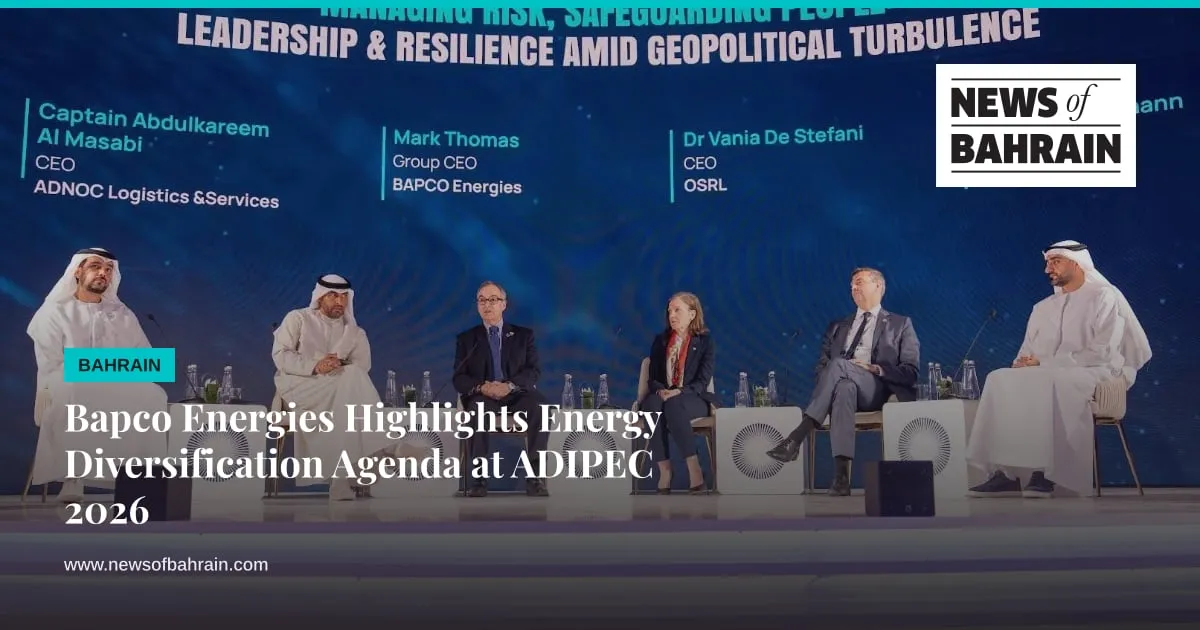
Bapco Energies outlined its work to diversify Bahrain's energy sector at ADIPEC 2026, with its delegation joining discussions on reliable supply, investment and the technologies needed to strengthen energy systems.
Key points
- Bapco Energies' delegation at ADIPEC 2026 discussed varied supply sources, strategic infrastructure and sustained investment to keep energy available and markets stable.
- According to MEED, Bahrain produces about 200,000 barrels of oil per day, with about 145,000 barrels per day from the offshore Abu Safah field.
- Bahrain also imports about 350,000 barrels per day from Aramco through the AB-4 pipeline, which MEED cited as reflecting reliance on Saudi Arabia.
- Bapco Energies lists joint wind exploration with Masdar among its diversification efforts, with potential projects of up to 2 GW capacity.
- MEED reported in July 2026 that Bahrain is examining nuclear power, with Bapco Energies assigned to study a modular nuclear power plant.
Energy security and industry cooperation
The integrated energy group presented diversification as a way to create value across Bahrain's energy sector while bolstering the country's energy security and long-term competitiveness. ADNOC hosted the Abu Dhabi International Petroleum Exhibition and Conference under the patronage of United Arab Emirates President Sheikh Mohamed bin Zayed Al Nahyan.
The company's senior delegation took part in discussions about how regional developments have underscored the need for varied sources of supply, strategic infrastructure and sustained investment to keep energy available and markets stable. Participants also examined how emerging technologies and partnerships could make energy systems more resilient, support sustainable growth and balance energy security with economic growth as global demand is met.
Bapco Energies met with policymakers, investors, industry leaders and innovators during the conference as part of its commitment to cooperation and knowledge sharing.
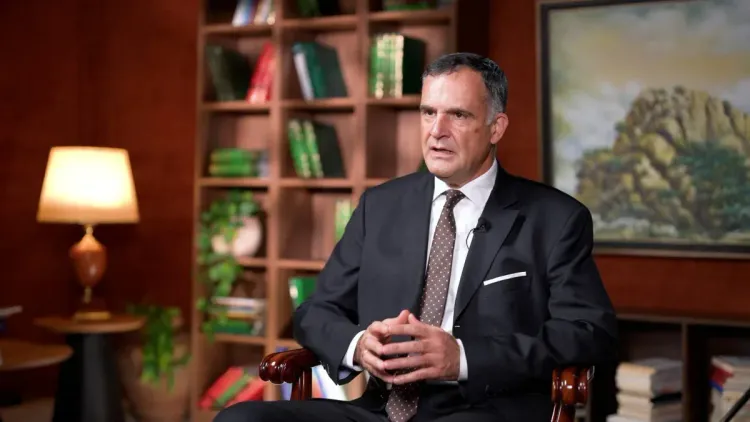
Group CEO Mark Thomas said the conference's value lay in bringing energy decision-makers together. "It provides an opportunity not only to exchange ideas, but also to develop the connections and insights needed to navigate a rapidly transforming industry," he said. "For the Kingdom of Bahrain, these engagements help ensure we remain well positioned to meet future energy needs while advancing our diversification ambitions."
Bahrain's supply mix and wind exploration
Bahrain's energy supply remains closely tied to Saudi Arabia. According to MEED, the kingdom produces about 200,000 barrels of oil per day, including roughly 42,400 barrels per day from the Awali Field, also known as the Bahrain Field. About 145,000 barrels per day comes from the offshore Abu Safah field, shared between Bapco Upstream and Saudi Aramco.
Bahrain also imports about 350,000 barrels per day from Aramco through the AB-4 pipeline. MEED cited those imports as reflecting the kingdom's reliance on Saudi Arabia for oil and gas supplies.
Among the diversification efforts listed on Bapco Energies' website is joint exploration with Masdar of wind development and investment in Bahrain. The potential projects would have a capacity of up to 2 GW.
Nuclear power remains at the study stage
MEED reported on July 17, 2026, that Bahrain was examining nuclear power for domestic consumption and possible exports of surplus electricity. Bapco Energies had been assigned to study a modular nuclear power plant.
The report identified BeVentures, Bapco Energies' venture arm launched in July 2024, as leading the effort. It had approached Bechtel, Fluor, Kent, Technip Energies and Wood about a concept study and early-stage planning. The electricity would primarily serve industrial complexes, including Aluminium Bahrain (Alba) and Bapco Refining. Bapco Energies did not respond to MEED's request for comment.
Financing transition projects
Bapco Energies has launched a transition finance framework covering funding for renewable energy, carbon capture and storage, no- and low-emission fuels, and energy-efficiency projects. Published on the sidelines of the World Economic Forum in Davos, it was developed with Standard Chartered as ESG advisor and received a favorable second-party opinion from ISS Corporate Solutions.
The company described itself as the first national energy company in the region to publish such a framework. In July 2023, it had also become the first national energy company to publish a sustainability-linked financing framework.
National and company emissions targets
Bahrain has committed to net-zero emissions by 2060. Its 2035 goals include a 30% emissions reduction through decarbonization and efficiency measures, doubling renewable-energy deployment and afforestation efforts, and quadrupling mangroves in the kingdom. Bapco Energies says it is positioned to contribute to those national commitments.
The company has separate targets using 2017 as the baseline. According to MEED, it has committed to a 30% reduction in absolute Scope 3 emissions in Bahrain by 2035 and net-zero Scope 3 emissions by 2060.
For Scope 1 and 2, Bapco Energies set net emissions-intensity reduction targets of 15% by 2025, 25% by 2030, 30% by 2035, 50% by 2040 and 75% by 2050, also measured against 2017. Its goal is net-zero Scope 1 and 2 emissions by 2060.