GCC leaders reject claims that bypass routes could make Hormuz irrelevant
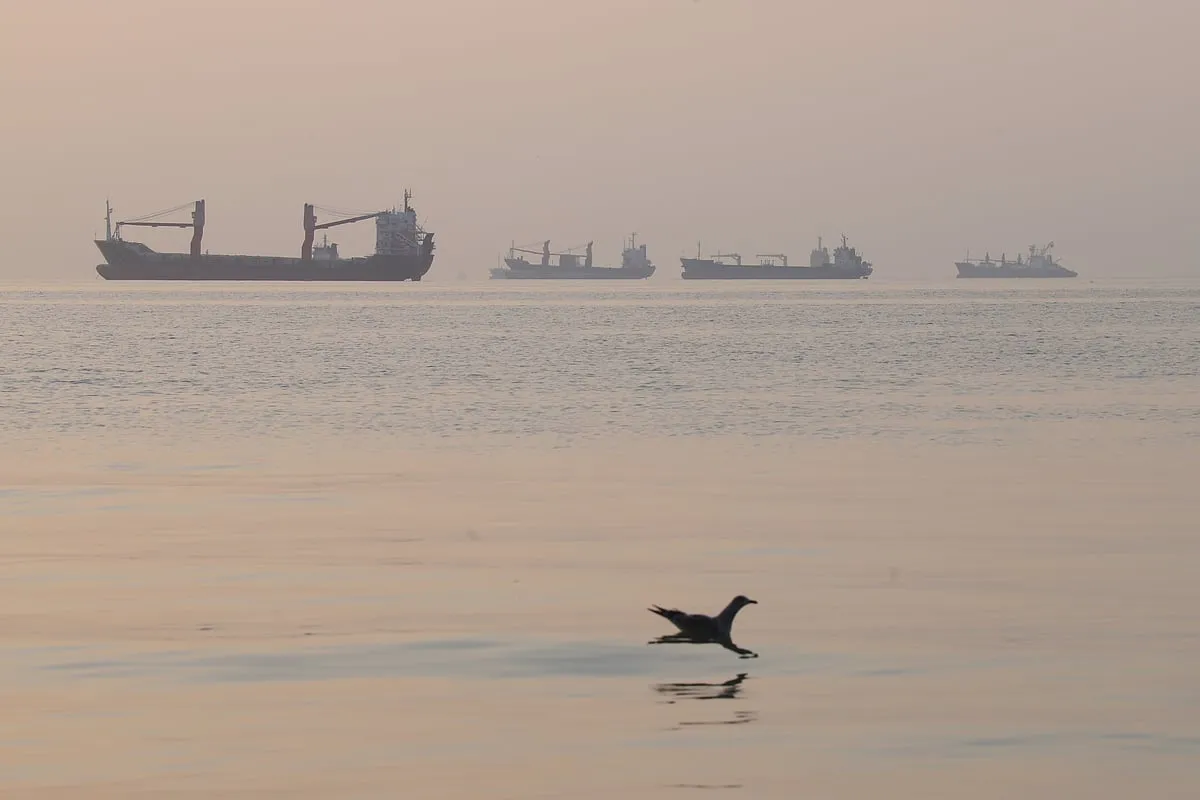
Gulf leaders at the fourth Gateway Gulf event in Bahrain said new pipelines and trade routes would not displace the Strait of Hormuz. With the waterway closed or operating only partially since the Iran-US conflict began in February 2026, they called fo...
Key points
- GCC Secretary General Jassim Mohammed Al-Budaiwi said responsibility for access through Hormuz extends beyond Gulf countries and cited the 1982 UN Convention on the Law of the Sea.
- Bahrain's finance minister Sheikh Salman bin Khalifa Al Khalifa called the strait non-negotiable and said three GCC countries have no other waterway access to the sea.
- Sheikh Salman described pipelines and other routes as backup capacity that can improve supply security rather than a replacement for Hormuz.
- An EY-Parthenon analysis put active alternative export capacity at about 8.8 million barrels a day, only 45% of the roughly 19.9 million barrels normally exported daily through the strait.
- Kuwait, Qatar and Bahrain have no alternative export capacity, according to the US Energy Information Administration, as cited by Anadolu Agency.
An international responsibility
GCC Secretary General Jassim Mohammed Al-Budaiwi said responsibility for access through Hormuz extended beyond the Gulf countries. He called for respect for international law and the 1982 United Nations Convention on the Law of the Sea. "We will get the pipelines, we will get the GCC railway, but that doesn't mean Hormuz is nobody's business," he said.
Bahrain's Finance and National Economy Minister Sheikh Salman bin Khalifa Al Khalifa described the international waterway as "non-negotiable" and said the international community was responsible for keeping it open. Three GCC countries have no other waterway access to the sea, he said. He put the strait's share of global exports at around 30% for liquefied natural gas, 27% for aluminum and 30% for fertilizer.
For Sheikh Salman, pipelines and other routes offer backup capacity that can improve supply security, not a replacement for Hormuz. UAE Minister of Economy and Tourism Abdullah bin Touq Al Marri likewise said the strait would retain its importance even as the UAE developed alternatives, including an East Coast route. "An economy that depends on only one trade route is at risk," Al Marri said, warning against reliance on a single route or point of access.
Disruption to supplies and revenues
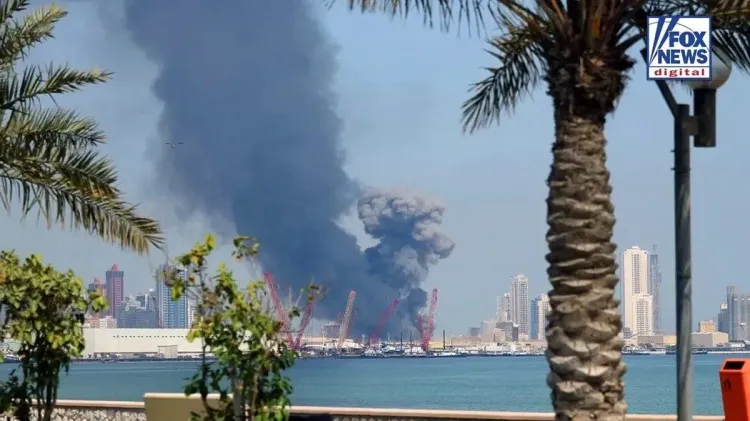
The conflict, which began on February 28, 2026, disrupted nearly 20% of global crude oil and gas supplies. Before the war, India received around 90% of its liquefied petroleum gas imports, 60% of its liquefied natural gas imports and 40% of its crude oil imports through Hormuz.
The Turkish Center for Energy Strategies and Policy Research estimated that crude exports from Gulf nations dependent on Hormuz dropped 36.4% in the crisis's first month, with lost oil revenues totaling $15.2 billion. Anadolu Agency cited those figures in September 2026.
EY-Parthenon estimates put Brent crude's peak average price in April 2026 at $117 a barrel. The firm also estimated that a sustained 90-day disruption at Hormuz could place an $81 billion burden on Gulf producers and major Asian energy-importing economies.
Existing bypasses and countries without alternatives
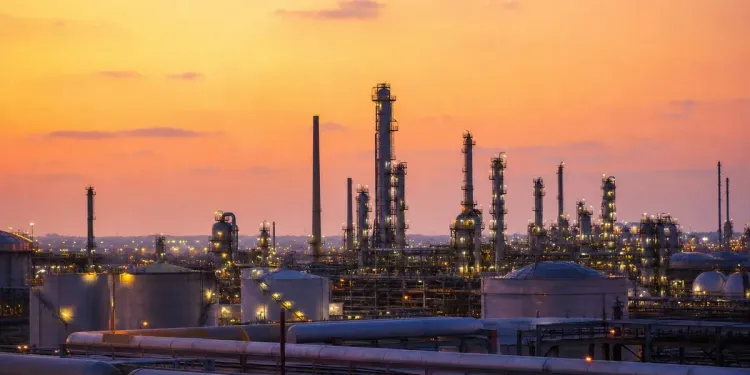
Saudi Arabia and the UAE operate the main pipeline alternatives to Hormuz, according to EY-Parthenon. In the UAE, the Habshan-Fujairah pipeline can transport up to about 1.8 million barrels of crude a day from Abu Dhabi to the Gulf of Oman, avoiding the strait. A Kuehne+Nagel market report said Abu Dhabi was accelerating a parallel West-East pipeline intended to double Fujairah's export capacity by 2027.
Saudi Arabia's East-West Crude Oil Pipeline extends 1,200 kilometers to Yanbu on the Red Sea and can carry up to about 7 million barrels a day. But Anadolu Agency reported that September 11, 2026, drone strikes attributed to Iranian-backed Yemeni Houthi forces damaged pumping stations. Saudi Aramco shut the system and canceled October deliveries to at least two European refineries.
Saudi shipments subsequently shifted back toward Hormuz, according to Anadolu. Daily Saudi transit through the strait rose from 700,000 barrels in August to 2.9 million barrels in September.
Kuwait, Qatar and Bahrain have no alternative export capacity, the US Energy Information Administration said, as cited by Anadolu. All three rely on maritime passage through Hormuz. Anadolu reported that Kuwait's daily crude output reached a low of 573,000 barrels in May 2026, down from 2.6 million barrels before the war.
Qatar has said it will not pursue bypass pipelines. Instead, it is working alongside Pakistan to mediate US-Iran diplomatic talks aimed at reopening the strait, Anadolu reported.
Capacity limits and proposed routes
An EY-Parthenon analysis published October 15, 2026, assessed active alternative export capacity at about 8.8 million barrels a day. That covers only 45% of the roughly 19.9 million barrels normally exported daily through Hormuz, leaving what the analysis described as a structural deficit of 11.1 million barrels a day.
EY-Parthenon has proposed a GCC energy corridor as a complement to Hormuz, rather than a substitute. Its outline calls for two large pipelines with combined capacity of about 10 million barrels a day, stretching from southern Iraq through Kuwait and along the Gulf coast to terminals in Oman. The estimated investment is about $50 billion.
Kuehne+Nagel offered a separate assessment of projects across the Middle East and Gulf: they could eventually divert around 10 million barrels a day from the roughly 17 million barrels it said typically pass through Hormuz.
The logistics company's report also identified port investments. DP World is exploring a new port and additional container capacity at Fujairah, while Gulftainer is expanding Khor Fakkan in a $2 billion project. CMA CGM and Asyad Group have agreed to a $400 million multipurpose logistics terminal at Sohar in Oman.
Regional integration and delayed connections
Al-Budaiwi said the events since February 28 had reshaped how GCC countries viewed regional integration. Drawing comparisons with the 1990 invasion of Kuwait and the 2011 Gulf uprising, he described the latest attacks as a game changer for the region.
"If we were 100% convinced earlier that regional integration was important, the February 28 attacks have made us 1,000% certain that we need to work together," he said. All three officials urged faster economic integration, citing the crisis as evidence of the need to strengthen regional supply chains, transportation networks, power infrastructure and digital connections.
Some planned connections remain delayed or uncertain. Al-Monitor reported that the GCC rail network, intended to connect all six member states by 2030, has suffered repeated delays. The India-Middle East-Europe Economic Corridor, launched in 2023, was partly intended to bypass Hormuz and the Suez Canal. But analysts cited by Al-Monitor in May 2026 described the IMEC idea as "tenuous, if not hypothetical".