Iran claims drone attack on US radar in Bahrain; CENTCOM reports no damage
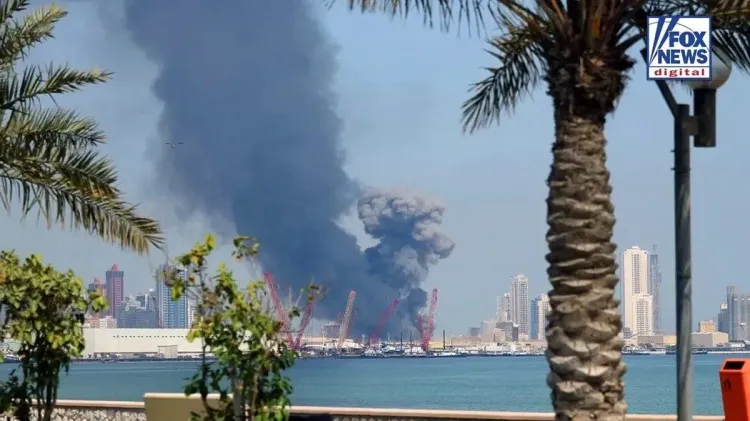
The US military said it intercepted Iranian drones headed toward Bahrain on November 17, 2026, after Iran's Islamic Revolutionary Guard Corps claimed an attack on an American radar system at Sheikh Isa Air Base. Bahrain also reported intercepting the a...
Key points
- Iran's Islamic Revolutionary Guard Corps called the operation retaliation for repeated US drone incursions into Iranian airspace, an accusation Tehran made.
- US Central Command said the one-way attack drones launched toward Bahrain were intercepted, with no damage to US equipment or injuries to personnel.
- Bahraini authorities warned residents of an unidentified threat and told them to seek the nearest safe location before announcing the interceptions.
- Saudi Arabia, Qatar, Jordan, and Egypt condemned the drone attacks and voiced support for Bahrain.
- The November 17 incident was the third Iranian strike on Bahrain in five days, according to ABC News, following attacks on November 13 and 15.
Iran cites airspace violations
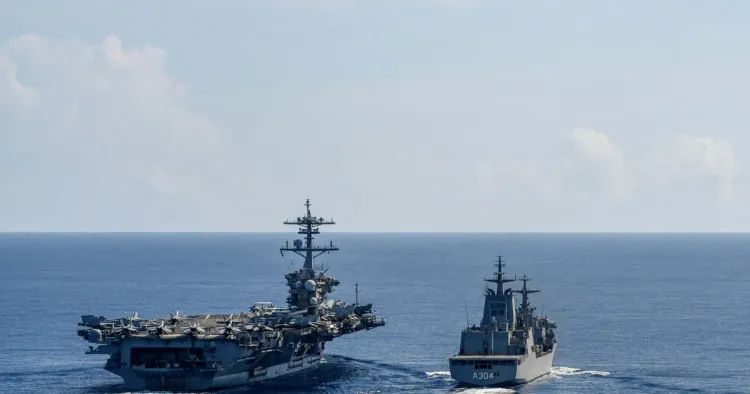
Reuters reported that the Islamic Revolutionary Guard Corps, or IRGC, described the operation as retaliation for repeated incursions by US military drones into Iranian airspace, an accusation made by Tehran. The targeted radar was US-operated, the IRGC said. Bahrain is home to the US Navy's 5th Fleet headquarters.
US Central Command disputed Iran's account, saying in a social media post: "Multiple one-way attack drones launched by the IRGC toward Bahrain today were intercepted, causing no damage to U.S. equipment or injuring U.S. personnel."
Before announcing the interceptions, Bahraini authorities had alerted residents to an unidentified threat and told them to seek the nearest safe location. Saudi Arabia, Qatar, Jordan, and Egypt condemned the drone attacks and voiced support for Bahrain.
Repeated attacks on Bahrain
The November 17 operation was Iran's second claim of an attack on US radar in Bahrain in three days. On November 15, the IRGC said it had sent six drones against a radar at the Al-Rifaa helicopter base in response to what Tehran called hostile US actions. It also threatened a stronger response. The US Embassy urged Americans in Bahrain to remain alert to possible security threats.
Over the broader five-day period, the latest incident was the third Iranian strike on Bahrain, according to ABC News. The earlier attack occurred on Friday, November 13, when Iran claimed to have hit an American early-warning radar facility. CENTCOM said it shot down two drones that day and reported neither injuries nor damage.
Stalled negotiations and US military pressure
The attacks came during a nearly nine-month stalemate in the conflict involving the US, Israel, and Iran. The war opened on February 28, 2026, with joint US-Israeli strikes that killed numerous senior Iranian officials and commanders, among them Supreme Leader Ayatollah Ali Khamenei.
Washington and Tehran signed a memorandum of understanding in June intended to end the war. Negotiations nevertheless remained stalled as of November 17.
President Donald Trump recently said he could temporarily defer attacks on Iran, provided Tehran and the Houthi forces in Yemen refrained from further provocative actions. He said the US would keep its naval blockade of Iran in place in response to Tehran's disruption of shipping through the Strait of Hormuz.
Speaking to Fox News on Monday, November 16, Vice President JD Vance said he did not believe Trump would let the conflict become "a forever war." Vance described two possible courses: declaring the operation finished or increasing military and diplomatic pressure.
Shipping risks and talks in Oman
Shipping through the Strait of Hormuz has faced restrictions since the war began in February. The waterway ordinarily carries roughly one-fifth of global oil and gas supplies.
The UK Maritime Trade Operations Centre reported an attack on a second tanker on November 16 as it passed through the strait north of Khasab, Oman. According to the alert, an engine room fire left the vessel disabled; its crew were reported safe.
Iranian Foreign Minister Abbas Araqchi reached Oman on November 17 for discussions with Omani Foreign Minister Badr Albusaidi on measures to keep navigation through Hormuz safe.