Iran Claims It Destroyed US Radar in Bahrain; Strike Remains Unverified
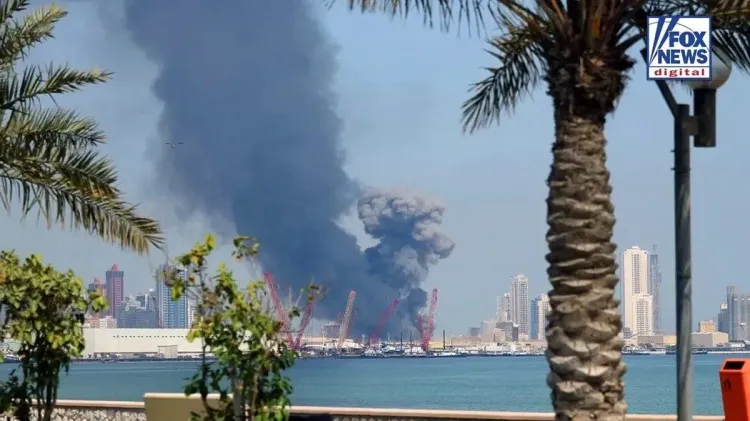
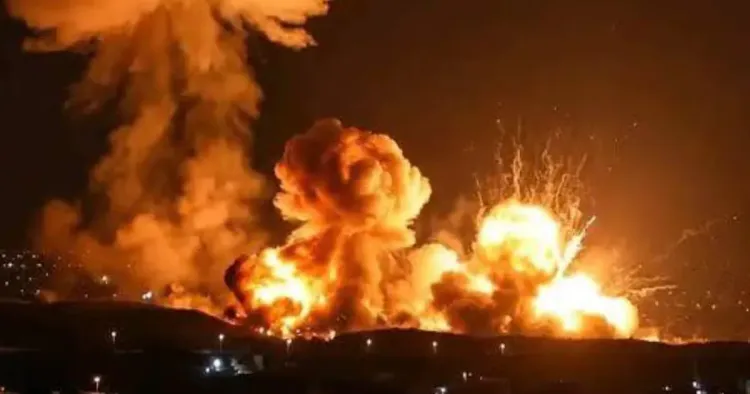
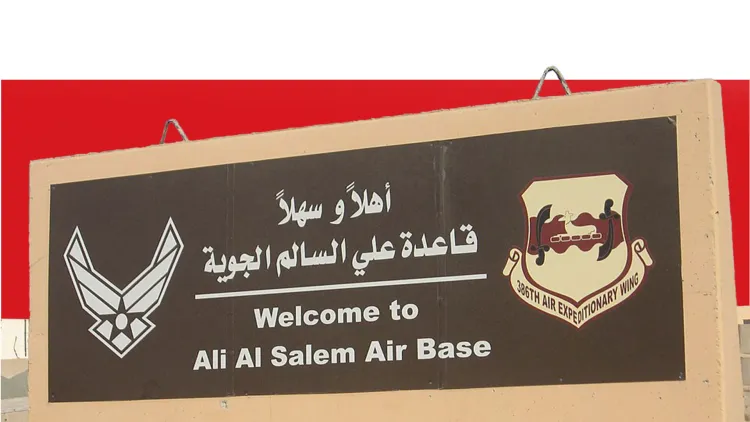
Iran's Islamic Revolutionary Guard Corps says it destroyed a US early-warning radar in Bahrain in retaliation for an attack on a telecommunications tower in southern Iran. The reports date the strike to Friday, January 13, 2026. There is no independent...
Key points
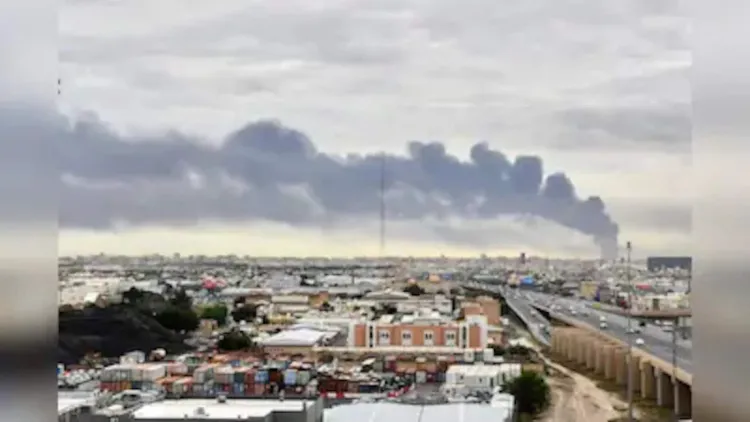
- The IRGC Air Force carried out the operation, which Iran said was retaliation for an attack on a telecommunications tower in Sirik, Hormozgan Province.
- No casualties were reported after the tower incident, according to detikNews.
- Bahrain reported that no air-raid sirens sounded overnight, and how the strike was carried out remains unclear.
- Iran's IRGC called American forces in the region terrorist and aggressor and warned against further provocations in the Strait of Hormuz.
- According to detikNews, this was Iran's first claimed direct attack on US military assets in the Gulf since early September.
Retaliation claim and unanswered questions
Reports from detikNews and Reuters identified the IRGC Air Force as the force behind the operation. The IRGC said it was responding to "air aggression" against a telecommunications tower in Sirik, in Iran's Hormozgan Province. No casualties were reported after the tower incident, according to detikNews.
Hamer Intel reported that the radar destruction claim remained unverified. Reports from Bahrain said no air-raid sirens sounded overnight. How the strike was carried out, whether air defenses detected it and whether the radar sustained any damage remain unclear.
In its Friday morning statement, the IRGC called American forces in the region "terrorist" and "aggressor." It also warned the United States against further provocations in the Strait of Hormuz, declaring "full readiness to act without limitations" in response to additional aggression. According to detikNews, this was Iran's first claim of a direct attack on US military assets in the Gulf since early September.
Diplomacy amid a fragile calm
The broader conflict began with US and Israeli strikes on Iran on February 28, 2026. Supreme Leader Ayatollah Ali Khamenei was killed in that opening offensive, Kompas.com reported.
During a fragile period of de-escalation, Qatar and Pakistan are facilitating negotiations for a lasting end to the war. ANTARA News Sulteng reported that disagreements over sanctions, naval blockades and security arrangements in the Strait of Hormuz continue to obstruct those efforts.
US President Donald Trump offered his assessment to reporters on November 9, 2026, saying the war "militarily is effectively over." He also repeated his claim that Iran "would love to make a deal."
Bloomberg's estimates put Iran's wartime launches at more than 4,900 Shahed drones and at least 2,200 ballistic missiles since February 28. It also estimated that Iranian attacks on US forces and their Middle Eastern allies had consumed at least 1,000 Patriot interceptors.
Missile production and an underground facility
Despite the US-Israeli air campaign, Iran likely still holds at least 1,700 ballistic missiles, according to Western intelligence estimates reported by Bloomberg on November 11, 2026. Those estimates put production at up to 50 ballistic missiles per month, roughly half the country's prewar capacity.
A day earlier, on November 10, the IRGC unveiled an underground "missile city." CNN Indonesia reported that the facility was designed for ballistic- and cruise-missile storage and production, with the aim of shielding weapons manufacturing from airstrikes. Iran also remains under significant pressure from US naval blockades.
The IRGC-linked Tasnim news agency said the site contained ballistic and cruise missiles along with their launch systems. The unveiling, held during the IRGC's Aerospace Week, was attended by Major General Ali Abdollahi, chief of staff of the Iranian Armed Forces, and Brigadier General Majid Mousavi, commander of the IRGC Aerospace Force.
Warnings extend to bases beyond the Gulf
Mohsen Rezaei, secretary of Iran's Supreme National Security Council, warned on November 11, 2026, that foreign bases used in attacks on Iran would be legitimate targets, including bases in Europe. "There is no safe distance. There is no safe haven. There is no immunity," he wrote on X, according to ANTARA News Sulteng.
In televised remarks that day, Rezaei also said Iran would not permit even a single particle of enriched nuclear material to leave the country. He warned that renewed US attacks would bring strikes on distant US bases.
The warnings followed Iran's removal of its self-imposed 2,000-kilometer limit on ballistic-missile range. IRGC spokesman Brigadier General Hossein Mohebbi announced the change at a Tehran news conference on November 7, 2026, Al Jazeera reported. Days earlier, Supreme Leader Mojtaba Khamenei had warned that Iran's response to any US or Israeli threat would not be constrained by geography.
Al Jazeera reported that Iran's missiles with a 2,000-kilometer range can reach all of the Arabian Peninsula and the Levant, most of Egypt, and parts of southeastern Europe. Those European areas include parts of Greece, Bulgaria, Romania, Albania, North Macedonia and Serbia.
The question of longer-range attacks had already arisen in March 2026, when the United Kingdom accused Iran of launching missiles toward the joint US-UK base at Diego Garcia in the Indian Ocean, about 4,000 kilometers from Iran. Tehran denied targeting the base, describing the episode as an "Israeli false flag" operation.